Of Stains, Scrap & Tires

Of Stains, Scrap & Tires

2014 · 19 min · Documentary

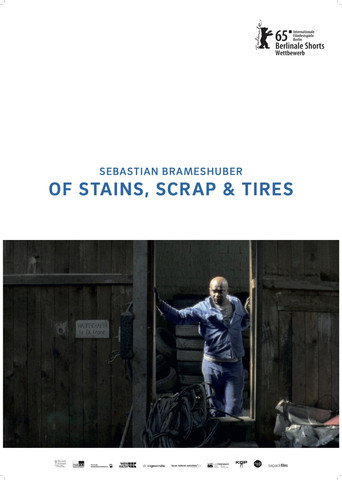
Short documentary about people who sell cars from Europe to Africa.

Directed by Sebastian Brameshuber · Written by Sebastian Brameshuber

Your Rating

Make it a double feature

20m together
Of Stains, Scrap & Tires
The Arrival of a Train at La Ciotat

A close match in mood and era.
More from Sebastian BrameshuberSee all →

Preserving Cultural Traditions in a Period of InstabilityPreserving Cultural Traditions in a Period of Instability · 2004
Preserving Cultural Traditions in a Period of Instability
★ 10.02004
Movie
In a voiceover Stan Brakhage articulates his resentments about the use of computers for art production and in general. This comment is contrasted by video imagery turning more and more abstract until it bursts into a sea of square pixels. The video is an ironic illustration of Brakhage's views as these "defunct" images reveal a kind of beauty of their own.
And There We Are, in the MiddleAnd There We Are, in the Middle · 2014
And There We Are, in the Middle
★ 8.02014
MovieDocumentaryDrama
Documentary about young people in a small town in Austria.
London
NEW
London · 2026
London
2026
MovieDramaComedy
Bobby drives back and forth between Vienna and Salzburg, giving lifts to strangers on the way, sharing conversations that drift from the mundane to the deeply personal. In this tender portrait of today’s Europe, anonymity and warmth still go hand in hand.
MuezzinMuezzin · 2010
Muezzin
2010
MovieDocumentary
Documentary about a comptetition in Turkey for the best muezzin.
In, Over & OutIn, Over & Out · 2017
In, Over & Out
2017
Movie
There have been countless tributes made to the Lumière Brothers´ Workers Leaving the Factory since it was first exhibited in 1895, but few have been as technically ambitious, aesthetically assaultive or conceptually compelling as Sebastian Brameshuber´s In, Over & Out.
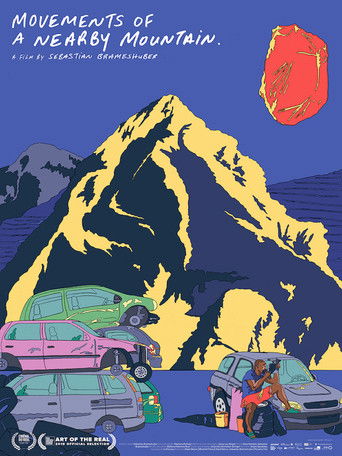
Movements of a Nearby MountainMovements of a Nearby Mountain · 2019
Movements of a Nearby Mountain
2019
MovieDocumentary
In a remote, abandoned industrial site near a centuries-old ore mine in the Austrian Alps, a self-taught mechanic runs a business exporting used cars to his native Nigeria. As he pursues his lonely day-to-day activities with wondrous serenity, past, present and future begin to overlap, and memories of a lost friendship resurface against the backdrop of a mysterious promise of everlasting resources.

More Like This

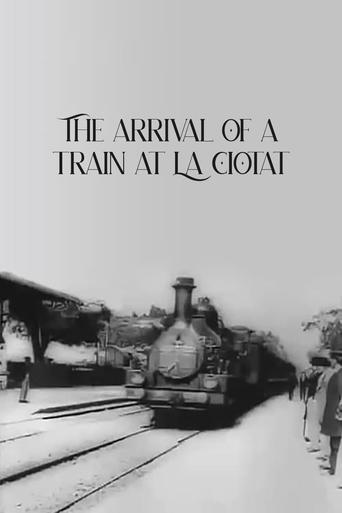
The Arrival of a Train at La CiotatThe Arrival of a Train at La Ciotat · 1896
The Arrival of a Train at La Ciotat
★ 7.11896
MovieHistoryDocumentary
A group of people are standing along the platform of a railway station in La Ciotat, waiting for a train. One is seen coming, at some distance, and eventually stops at the platform. Doors of the railway-cars open and attendants help passengers off and on. Popular legend has it that, when this film was shown, the first-night audience fled the café in terror, fearing being run over by the "approaching" train. This legend has since been identified as promotional embellishment, though there is evidence to suggest that people were astounded at the capabilities of the Lumières' cinématographe.
Workers Leaving the Lumière FactoryWorkers Leaving the Lumière Factory · 1895
Workers Leaving the Lumière Factory
★ 6.71895
MovieHistoryDocumentary
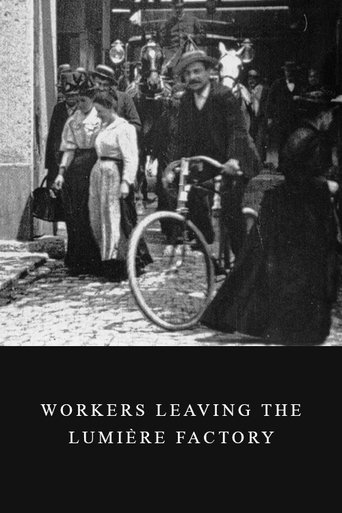
Working men and women leave through the main gate of the Lumière factory in Lyon, France. Filmed on 22 March 1895, it is often referred to as the first real motion picture ever made, although Louis Le Prince's 1888 Roundhay Garden Scene pre-dated it by seven years. Three separate versions of this film exist, which differ from one another in numerous ways. The first version features a carriage drawn by one horse, while in the second version the carriage is drawn by two horses, and there is no carriage at all in the third version. The clothing style is also different between the three versions, demonstrating the different seasons in which each was filmed. This film was made in the 35 mm format with an aspect ratio of 1.33:1, and at a speed of 16 frames per second. At that rate, the 17 meters of film length provided a duration of 46 seconds, holding a total of 800 frames.

Rate this film

Your ratings make Midnight smarter