Man Is in Pain
1954 · 5 min · ★ 5.0
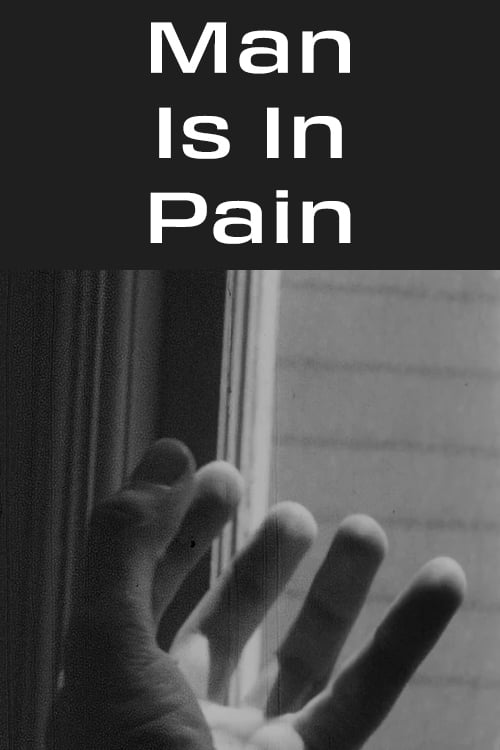
A woman reads Philip Lamantia's poem (from which the film gets its title), which evokes masculine angst as the hand acts out the scenario of the poem.
Directed by Lawrence Jordan
Your Rating
Make it a double feature
10h 47m together
Both from Lawrence Jordan.
More from Lawrence JordanSee all →
 Oz · 2019
Oz
★ 10.02019
Movie
A new and original collage film by Lawrence Jordan.
 Three · 1956
Three
★ 10.01956
Movie
In the rarely-seen THREE, one begat three became two and then one again.
 Circus Savage · 2009
Circus Savage
★ 8.82009
Movie
If there is such an old-fashioned thing as "stream of consciousness" in cinema, I suppose this is it. It certainly felt like a flowing stream or river while I was editing day after day, fitting found-sound to found (out-take) footage accumulated over almost sixty years of filmmaking. All the images and sounds buried on reels and spools in the studio came into the light. I felt singularly blessed to be making a non-linear visual autobiography; for it is a fact that most of my life in film is there. The one guiding principle for the construction of the film was the ancient Russian proposal: "instead of canned plays, see a rose, hear a bomb." - Lawrence Jordan
 Visions of a City · 1978
Visions of a City
★ 8.01978
MovieDocumentary
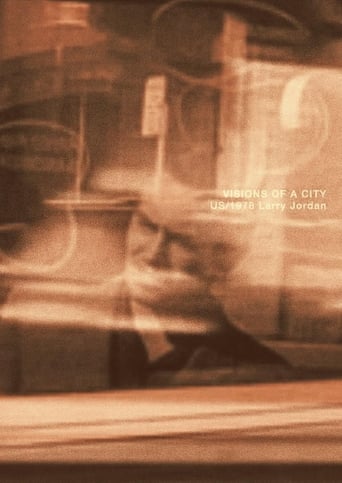
Sepia toning lends a romantic (even wistful) quality to Larry Jordan's film Visions of a City, which he shot in San Francisco in 1957 and edited in 1978. The pace is un-irritating, in contrast to the San Francisco of today; but unlike the equal weight Helen Levill gives to all her subjects, there is an internal evolutionary development in the Jordan film that ultimately delivers a story. Until the introduction of the human protagonist, poet Michael McClure, we are treated to an extravagant display of visual delights.
 Masquerade · 1981
Masquerade
★ 8.01981
MovieAnimation
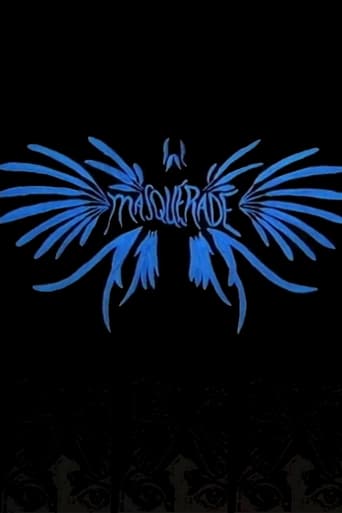
For the first time I am animating hand-painted engraved cut-outs on a full-color background. The film is mood-filled: A duel scene in a snowy forest, obviously the morning after a masquerade ball. Harlequin lies dying, while Red Indian walks away with the wings of victory. The woman between them appears, cat-masked. The mask dissolves away. Her spirit passes into the face of the sun upon the sun upon the sun flower. But Harlequin cannot escape death. The blue world engulfs him.
 The Rime of the Ancient Mariner · 1977
The Rime of the Ancient Mariner
★ 7.51977
MovieDramaFantasy
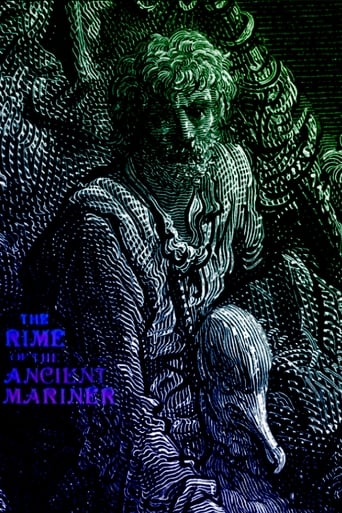
Orson Welles reads the poem especially for this film by Larry Jordan, which is dedicated to the late Wallace Berman, and is made possible by a grant from The National Endowment Of The Arts.
 Unglassed Windows Cast a Terrible Reflection · 1953
Unglassed Windows Cast a Terrible Reflection
★ 6.81953
MovieDrama
An anatomy of violence. Four young men and two young women are on a drive. There's a rivalry between two guys for one of the girls. On a remote road, the car stalls. The driver hitchhikes for help. Led by the intrepid girl, the others walk toward abandoned buildings, perhaps a mining operation. One of the three guys sits and reads. The intrepid one explores the building and sees something that scares her. She screams; the two rivals and the second girl run to find her. Something she says starts a fight between her two suitors. The one reading a book walks away in disgust. After stopping the fight, the two young women follow. How can this end? Preserved by the Academy Film Archive in 2005.
 Spectre Mystagogic · 1957
Spectre Mystagogic
★ 6.01957
Movie
"Human qualities migrate through light and shadow... Like flames and waves, the dead and the living course through this world... without weight through space and time."
 For Life, Against the War · 1967
For Life, Against the War
★ 6.01967
MovieAnimation
First shown on January 30, 1967, FOR LIFE AGAINST THE WAR was an open-call, collective statement from American independent filmmakers disparate in style and sensibility but united by their opposition to the Vietnam War. Part of the protest festival Week of the Angry Arts, the epic compilation film incorporated minute-long segments which were sent from many corners of the country, spliced together and projected. The original presentation of the works was more of an open forum with no curation or selection, and in 2000 Anthology Film Archives preserved a print featuring around 40 films from over 60 submissions.
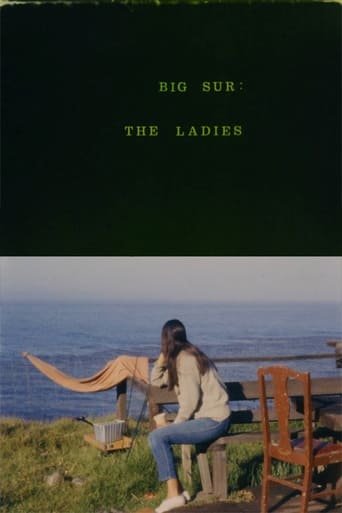 Big Sur: The Ladies · 1966
Big Sur: The Ladies
★ 6.01966
MovieDocumentary
Against the coastline of the Big Sur country the camera catches swiftly shifting fragments of the nude women at the baths, playing the guitar, cutting the hair, sleeping. The camera movement is used to slightly smear the images onto the film emulsion in a manner parallel with the use of broad different medium from music or painting.
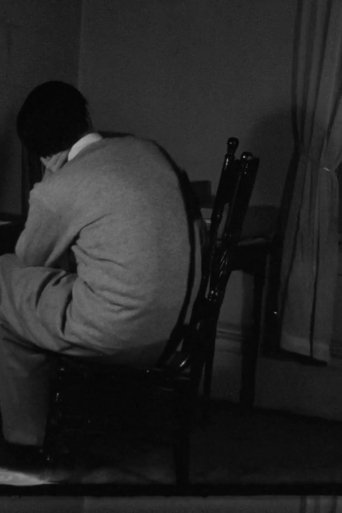 The One Romantic Venture of Edward · 1956
The One Romantic Venture of Edward
★ 6.01956
Movie
The young man, played by Stan Brakhage, gets himself into a seriously comic mix-up by indulging in semi-sexual fantasies, and allowing the fantasies to take over. This is the best of my very early films and includes my first footage.
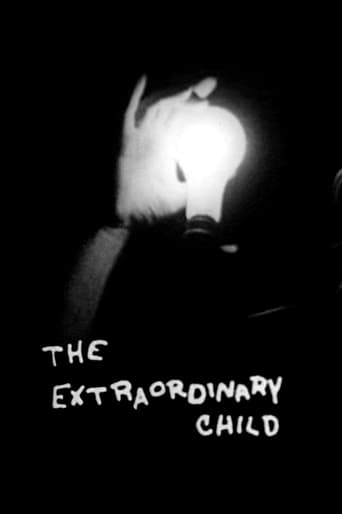 The Extraordinary Child · 1954
The Extraordinary Child
★ 5.91954
MovieComedy
The Extraordinary Child applies his developing style to broad slapstick. His friends from the previous films and the director himself play out a riotous farce about an overgrown baby who steals his father’s cigars. Everyone mugs hilariously. The movie could be taken as another example of the Romantic notion of the artist as a monstrous child or misfit, or a parody of the same rather than the personal confessional statement seen so often in these film movements.
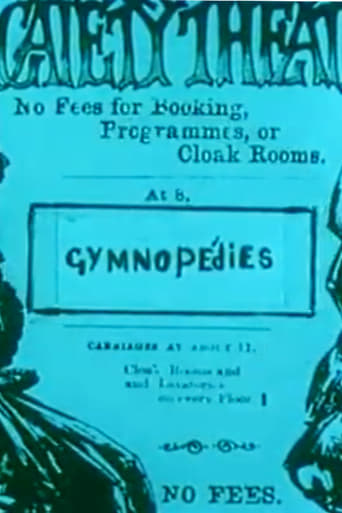 Gymnopédies · 1965
Gymnopédies
★ 5.81965
MovieAnimationMusic
Animation. The theme is Weightlessness. Objects and characters are cut loose from habitual meanings, also from tensions and gravitational limitations. A lyric Eric Satie track accompanies the film. Such a portrait seems necessary from time to time to remind us that equilibrium and harmony are possible, and that we will not dissolve into a jelly if we allow ourselves to relax into them: A horseman rides through the landscape, through the town, but never arrives anywhere in particular. An acrobat swings on a rope above a canal in Venice, and is content just to swing there. Nothing threatens to disturb them. This film is a total contrast to the Kafka-like oddities of Eastern European animation. —Canyon Cinema
 Desistfilm · 1954
Desistfilm
★ 5.51954
MovieDrama
Four young men and a young woman sit in boredom. She smokes while one strums a lute, one looks at a magazine, and two fiddle with string. The door opens and in comes a young man, cigarette between his lips, a swagger on his face. The young woman laughs. As the four young men continue disconnected activities, the other two become a couple. When the four realize something has changed, first they stare at the couple who have kissed and now are dancing slowly. The four run from the house in a kind of frenzy and return to stare. The power of sex has unnerved them.
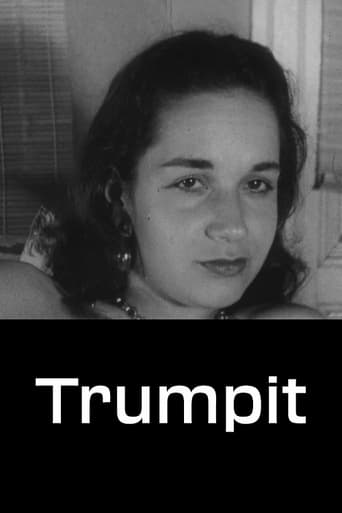 Trumpit · 1956
Trumpit
★ 4.01956
Movie
Featuring a card game played on the body of a naked woman, Lawrence Jordan portrays male sexual frustration while slyly satirizing Hollywood reaction shots.
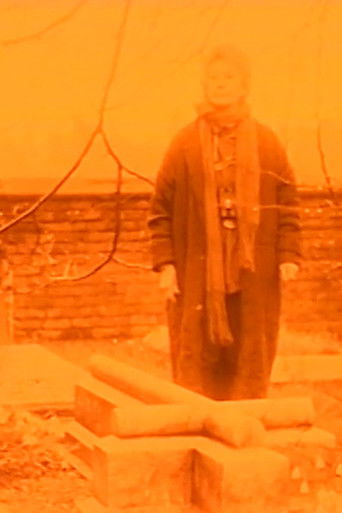 The Grove · 1993
The Grove
1993
MovieDrama
The Grove is the second part of Lawrence Jordan's H.D. Trilogy. It continues what began with THE BLACK OUD (again featuring Joanna McClure as the catalyst) and concludes in STAR OF DAY.
More Like This
Couldn't load this row right now.
