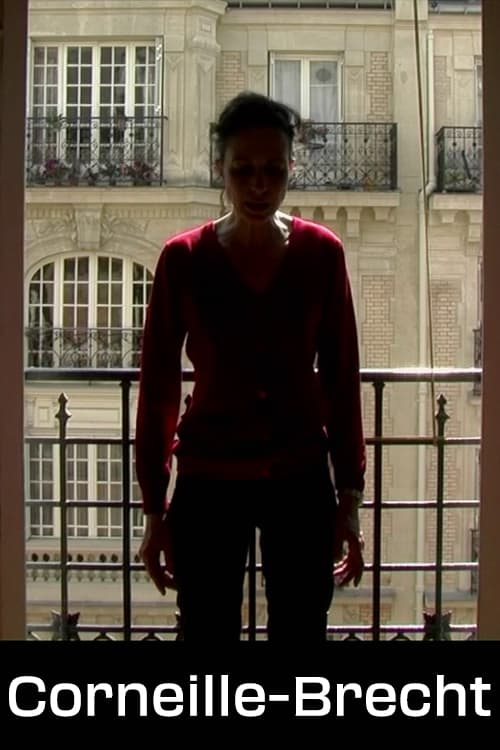
Corneille-Brecht ou Rome l'unique objet de mon ressentiment

Corneille-Brecht ou Rome l'unique objet de mon ressentiment

2009 · 29 min

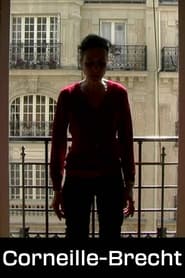
Co-director Cornelia Geiser sits by a window on an easy chair reading aloud a few verses by Corneille, then a somewhat longer excerpt from Brecht - each writer referencing Rome but really condemning injustice in his own era.

Directed by Jean-Marie Straub · Written by Jean-Marie Straub

Your Rating

Cast

Make it a double feature

1h 18m together
Corneille-Brecht ou Rome l'unique objet de mon ressentiment

A Visit to the Louvre

Both from Jean-Marie Straub.

More from Jean-Marie StraubSee all →
The Enclosed ValleyThe Enclosed Valley · 1995
The Enclosed Valley
7.51995
MovieDocumentary
My films are like that: in a room, but looking out onto an open sky. [...] I can’t really say it except to repeat that Bresson note, ‘that without a thing changing, everything is different.’ The film exists. The fiction is set up, and we believe in it. The justness of the agreement leads us to believe it, because everything plays equally at being a sign. That’s the arrangement of the elements. It’s an act of faith. La vallée close is just this: elements treated above all as if in a documentary that, without being changed, portray the story and reveal between them the elements of fiction. But above all seen as they are, insignificant. And then in the relations they set up, they can satisfy our desire for a story. -- Rousseau
Class RelationsClass Relations · 1984
Class Relations
6.81984
MovieDrama
A young man, recently arrived in New York from Europe, becomes swept up in a series of events that are beyond his knowledge or control.
Sicily!Sicily! · 1999
Sicily!
6.81999
MovieDrama
A man returns to visit his native Sicily after living in New York for a long time. He learns about the Sicilian way of life from stylized conversations with an orange picker, his fellow train passengers, his mother, and a knife-sharpener.
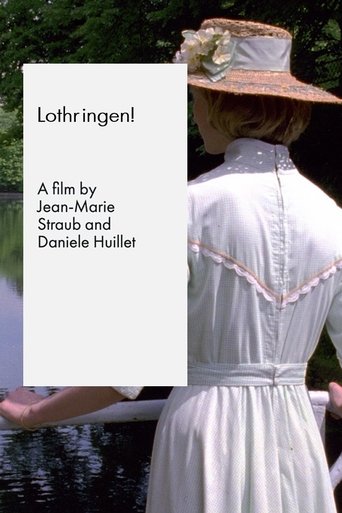
Lothringen!Lothringen! · 1994
Lothringen!
6.51994
MovieDrama
About the history of the French region of Lorraine, called Lothringen in German.
Cézanne: Conversation with Joachim GasquetCézanne: Conversation with Joachim Gasquet · 1990
Cézanne: Conversation with Joachim Gasquet
6.51990
MovieDocumentary
A landmark work of symbolistic imagery. The words that the filmmakers speak offscreen are imaginary conversation with Cézanne quoted from a critique by Joachim Gasquet. An exchange of memories spanning over 250 years interweaves everything from the philosophy of Empedocles to excerpts from the film Madame Bovary, to extant paintings by Cézanne, to the buildings of the artists’ village at Mont Sainte-Victoire. —ntticc.or.jp
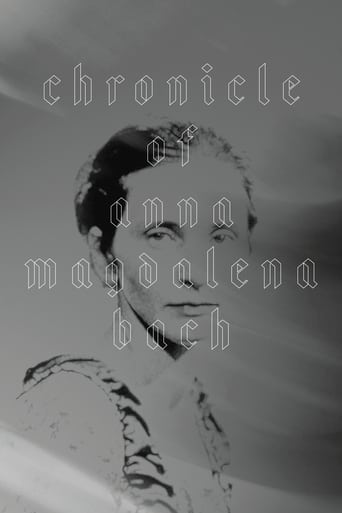
Chronicle of Anna Magdalena BachChronicle of Anna Magdalena Bach · 1968
Chronicle of Anna Magdalena Bach
6.31968
MovieMusicDrama
The life and music of Johann Sebastian Bach as presented by his wife, Anna.
A Visit to the LouvreA Visit to the Louvre · 2004
A Visit to the Louvre
6.32004
MovieDocumentary
A visit to the Louvre in Paris commentated by an actor reading Cézanne.
History LessonsHistory Lessons · 1972
History Lessons
6.21972
MovieDrama
Set in contemporary Rome, the film shows through a series of encounters with “ancient” Romans, how the economic and political manipulation by ancient Roman society led to Caesar’s dictatorship. - British Film Institute
Machorka-MuffMachorka-Muff · 1963
Machorka-Muff
6.11963
MovieDramaComedy
A satirical attack on West Germany's re-armament and revival of militaristic tradition in the Adenauer era.
Il viandanteIl viandante · 2001
Il viandante
5.72001
Movie
An alternate look at a part of Sicilia, perhaps left out for its more straightforward didactic quality. Interesting to again see the long gaps. Also note the extra use of close-up (for them) on the old woman.
Fortini/CaniFortini/Cani · 1977
Fortini/Cani
5.71977
MovieDocumentary
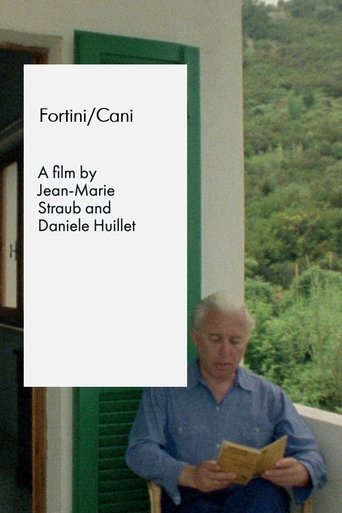
The film is a sort of presentation of Franco Fortini's book 'I Cani del Sinai'. Fortini, an Italian Jew, reads excerpts from the book about his alienation from Judaism and from the social relations around him, the rise of Fascism in Italy, the anti-Arab attitude of European culture. The images, mostly a series of Italian landscape shots, provide a backdrop that highlights the meaning of the text. - Fabrizio Sabidussi
Concerning VeniceConcerning Venice · 2014
Concerning Venice
5.52014
Movie
The glory and collapse of the grand Republic of Venice: the reasons are numerous, complex, human and all too human. Are these the same ingredients, the mélange that might determine whether the current Europe will survive? And if so, under what conditions? Jean-Marie Straub poses the question in this film, more austere and concentrated than ever.
En rachâchantEn rachâchant · 1982
En rachâchant
5.41982
MovieComedy
The child Ernesto doesn't want to go to school any more because, as he says, all he is taught there is things he doesn't know.
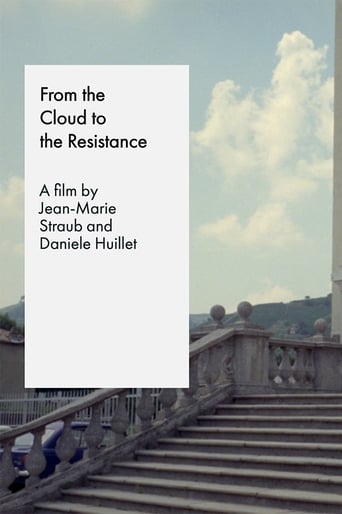
From the Clouds to the ResistanceFrom the Clouds to the Resistance · 1979
From the Clouds to the Resistance
5.31979
MovieDrama
Two segments. The first one arranges six stories from Cesare Pavese’s «Dialoghi con Leucò», taken from classical mythology. The second segment is taken from Pavese’s novel «La luna e i falò»: after World War II the emigrant «The Bastard» comes back to his village in the Langhe (northern Italy) to find out that everyone he knew has died, and that the war has deeply changed relationships between people.
Venice 70: Future ReloadedVenice 70: Future Reloaded · 2013
Venice 70: Future Reloaded
5.02013
MovieDramaDocumentary
Made for the Venice Film Festival's 70th anniversary, seventy filmmakers made a short film between 60 and 90 seconds long on their interpretation of the future of cinema.
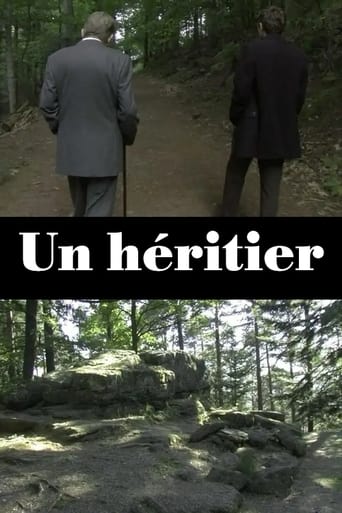
Un héritierUn héritier · 2012
Un héritier
5.02012
Movie
In 1994, Jean-Marie Straub and Danièle Huillet adapted the novel Colette Baudoche – Story of a Young Girl of Metz by Maurice Barrès as a film they titled Lothringren!. In 2010, Jean-Marie Straub returned to the eastern provinces of France, this time to Alsace, to film the second half of a diptych based on Barrès’s work. The text is derived from In the Service of Germany, a book about the mountain of Saint-Odile, which Barrès wrote in 1903. With Joseph Rottner in the principal role, Straub traces the path of a young country doctor as he tours Mont Saint-Odile, following the routes that Barrès himself took to the chateau of Ratsamhausen and around the ruins of the ancient fortification known as the "Pagan Wall,” which are unique in the area. Straub, himself born in Metz, plays the role of a resident of Lorraine whom the young Alsatian engages in conversation.

More Like This

Couldn't load this row right now.
Rate this film

Your ratings make Midnight smarter