Stop for Bud

Stop for Bud

1963 · 12 min · ★ 6.9 · Documentary, Music

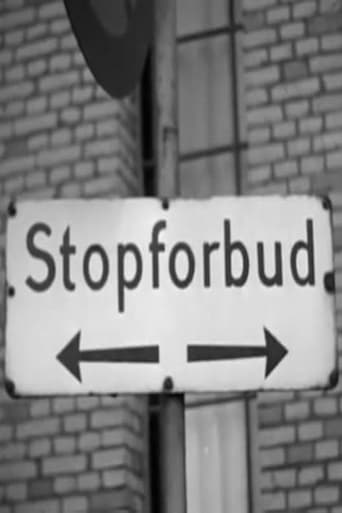
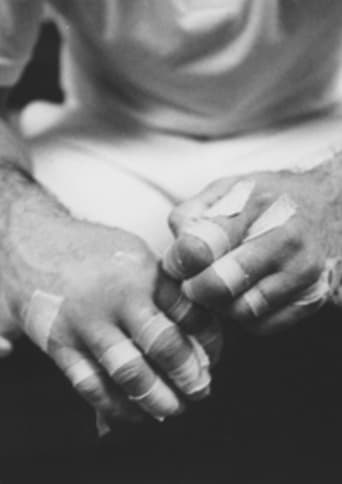
Stop for Bud is Jørgen Leth's first film and the first in his long collaboration with Ole John. […] they wanted to "blow up cinematic conventions and invent cinematic language from scratch". The jazz pianist Bud Powell moves around Copenhagen -- through King's Garden, along the quay at Kalkbrænderihavnen, across a waste dump. […] Bud is alone, accompanied only by his music. […] Image and sound are two different things -- that's Leth's and John's principle. Dexter Gordon, the narrator, tells stories about Powell's famous left hand. In an obituary for Powell, dated 3 August 1966, Leth wrote: "He quite willingly, or better still, unresistingly, mechanically, let himself be directed. The film attempts to depict his strange duality about his surroundings. His touch on the keys was like he was burning his fingers -- that's what it looked like, and that's how it sounded. But outside his playing, and often right in the middle of it, too, he was simply gone, not there."

Directed by Ole John · Written by Ole John

Your Rating

Cast

Make it a double feature

1h 15m together
Stop for Bud

Frændeløs

Both from Ole John.
More from Ole JohnSee all →

PelotaPelota · 1983
Pelota
★ 8.51983
MovieDocumentary
A documentary view of the Basque ball-game in which a small hard leather ball is hit against a wall. The film gives an impression of the game itself and of those who play it, not only the star performers (and the myths that surround them), but also those who just play in the streets and alleyways. The film sees the game it its cultural context and conveys the emotions and stories that are peculiar to the Basque country.
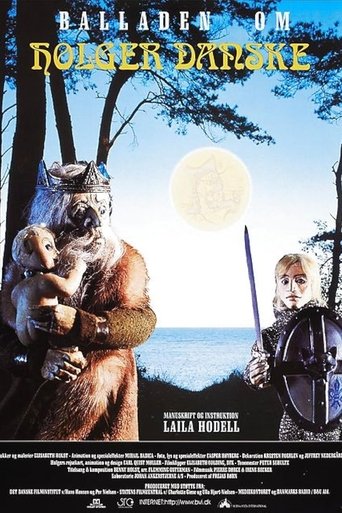
The Ballad of the Viking King, Holger the DaneThe Ballad of the Viking King, Holger the Dane · 1996
The Ballad of the Viking King, Holger the Dane
★ 8.01996
MovieAnimation
This puppet film is a visually rich interpretation of the national hero Holger Danske. The story begins with Holger's birth and baptism in pagan Denmark around the year 800. The little boy is kidnapped by the Franks, who, led by Charlemagne, are trying to unite the many peoples of Europe into one empire, under one faith. The film follows the open and charming Holger's encounter with war and love, foreign cultures and beliefs, thereby touching on some universal and eternally valid themes.
FrændeløsFrændeløs · 1970
Frændeløs
★ 7.51970
Movie
Anthology of six experimental films. 1) Allan de Waal: Investigation of an abandoned hippie house. 2) Bjørn Nørgaard and Lene Adler Petersen: The female Christ. Five subsections. a) The female Christ crucified by Roskilde Fjord. b) The female Christ on the Stock Exchange. c) The female Christ exposes herself in front of a cross in a backyard in Nørrebro. d) Female body with breasts and shot bare on a lawn. e) Exhibition of Bjørn Nørgaard's "fucking machines". The female Christ is hung naked in it and eventually has intercourse with Nørgaard. 3) Per Kirkeby: The primitive life in the forest. 4) Jørgen Leth: Interview with a hippie girl. 5) Vagn Lundbye: Paraphrase of spaghetti western. 6) Peter Louis-Jensen: Revolver section of picture and sound noise.
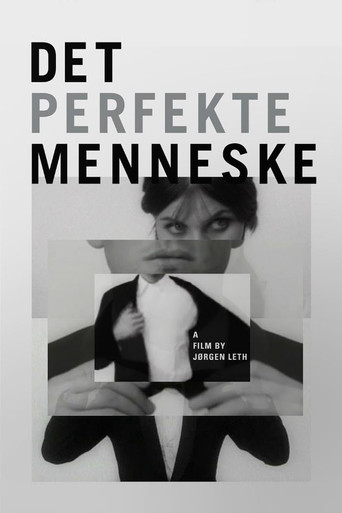
The Perfect HumanThe Perfect Human · 1968
The Perfect Human
★ 6.61968
MovieDrama
An elegant and humorous film—in the guise of a serious anthropological treatise—spotlights "The Perfect Human," a model of the modern Dane created by our wishful thinking.
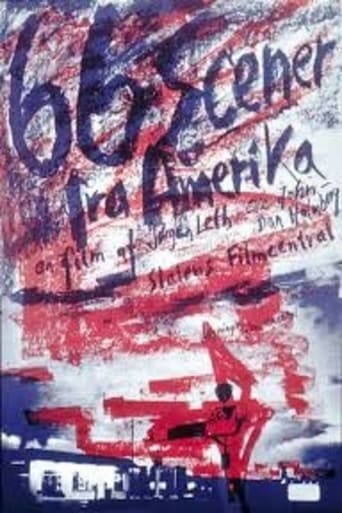
66 Scenes from America66 Scenes from America · 1982
66 Scenes from America
★ 5.91982
MovieDocumentary
As a visual narrative it is reminiscent of a pile of postcards from a journey, which indeed is what the film is. It consists of a series of lengthy shots of a tableau nature, each appearing to be a more or less random cross section of American reality, but which in total invoke a highly emblematic picture of the USA.
The SearchThe Search · 1970
The Search
★ 5.81970
MovieDocumentary
The Search is the ultimate happening film created by a group of ABCinema members during a camp on the Juttish heath. The film consists of loosely composed sequences. The landscape is the setting for a series of peculiar occurrences in which individual members were free to realize personal ideas, fantasies and themes: a man runs across the heath, shouting, a Molotov cocktail flares on a beach, a man repeatedly falls over, an angel-like woman makes a solitary procession, a burning pine, a man breaking a tree with a shovel, etc.
InsideInside · 1971
Inside
1971
Movie
A cinematic experiment that moves in several planes. Four people act out a human course, seen with white silhouettes on a black background. 'Inside' them - or behind them - a different process plays out, supported and contradicted by the sound side. (DFI)
RødovrefilmenRødovrefilmen · 1969
Rødovrefilmen
1969
Movie
Artist group ABCinema's footage from Rødovrecentret, Denmark's first large shopping center in Rødovre, a suburb of Copenhagen. A collage of super 8 footage, shot with multiple cameras. (DFI)
LoveLove · 1970
Love
1970
Movie
An existential pictorial poem about human life. "Can they stand it? Do they never feel?" (DFI)
Transsibirische BahnTranssibirische Bahn · 1970
Transsibirische Bahn
1970
Movie
A short film about an installation of the same name created by Joseph Beuys between 1961 and 1969, as well as an action of the same name that Beuys performed in February 1970 on the occasion of his exhibition "Tabernacle" at the Louisiana Museum of Modern Art in Humlebæk.
Krag-filmenKrag-filmen · 1969
Krag-filmen
1969
MovieDocumentary
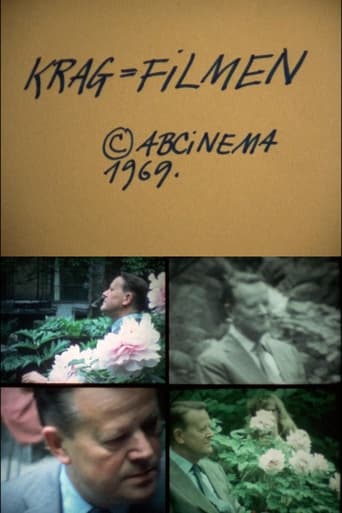
The ABCinema group dispatched Jørgen Leth to make the arrangements with Prime Minister Jens Otto Krag, who good-naturedly put himself at their disposal. Relaxing on a bench in the garden of Copenhagen's Royal Academy of Fine Arts, Krag is scrutinised by camera-wielding collective members almost like a model in a life-drawing class. Every possible angle, distance and framing is tried. The result is an image of the prime minister that is both fragmented and multi-facetted, describing his visual appearance as a man and an icon. At the same time, the ABCinema members film each other filming Krag, which gives the film a highly self-reflective character. Like "The Deer Garden," this is a film about a film being filmed. A showdown with the documentary portrait genre, "Jens Otto Krag" is devised according to the principle of keeping the material alive by not editing it but randomly piecing it together. (DFI)
Fargo. Slump I filmFargo. Slump I film · 1969
Fargo. Slump I film
1969
MovieDocumentary

More Like This

The Blues BrothersThe Blues Brothers · 1980
The Blues Brothers
★ 7.71980
MovieMusicComedy
Jake Blues, just released from prison, puts his old band back together to save the Catholic home where he and his brother Elwood were raised.
The Arrival of a Train at La CiotatThe Arrival of a Train at La Ciotat · 1896
The Arrival of a Train at La Ciotat
★ 7.11896
MovieHistoryDocumentary
A group of people are standing along the platform of a railway station in La Ciotat, waiting for a train. One is seen coming, at some distance, and eventually stops at the platform. Doors of the railway-cars open and attendants help passengers off and on. Popular legend has it that, when this film was shown, the first-night audience fled the café in terror, fearing being run over by the "approaching" train. This legend has since been identified as promotional embellishment, though there is evidence to suggest that people were astounded at the capabilities of the Lumières' cinématographe.
Workers Leaving the Lumière FactoryWorkers Leaving the Lumière Factory · 1895
Workers Leaving the Lumière Factory
★ 6.71895
MovieHistoryDocumentary
Working men and women leave through the main gate of the Lumière factory in Lyon, France. Filmed on 22 March 1895, it is often referred to as the first real motion picture ever made, although Louis Le Prince's 1888 Roundhay Garden Scene pre-dated it by seven years. Three separate versions of this film exist, which differ from one another in numerous ways. The first version features a carriage drawn by one horse, while in the second version the carriage is drawn by two horses, and there is no carriage at all in the third version. The clothing style is also different between the three versions, demonstrating the different seasons in which each was filmed. This film was made in the 35 mm format with an aspect ratio of 1.33:1, and at a speed of 16 frames per second. At that rate, the 17 meters of film length provided a duration of 46 seconds, holding a total of 800 frames.

Rate this film

Your ratings make Midnight smarter