The Sounds of Kaleva

The Sounds of Kaleva

1986 · 41 min · ★ 6.7 · Documentary

A three-act film-essay about memory and the historical-cultural ties of the Finno- Ugric peoples. The first chapter is dedicated to ancient Bearese of memory, such as Karelian cliff drawings, Kalevala runo song and Khanty bear feast rituals. the second act portrays the visit of Elias Lonnrot, compiler of the Finnish national epic Kalevala, to Estonia and his meetings with local intellectuals. Part three re-enacts an ancient smelting and blacksmith ritual set to Veljo Tormis' cantata 'curse upon iron'. Filmed in 1985 in Uhtuo, Karelia; in Khantia-Mansia at the Agan river, a tributary of the Ob; and in Estonia (Tallinn, Kuusalu, Tartu, Voru, Litsmetsa in Voru county, Lullemae, Karula, Rongu, Narva, and at a bend of the Pirita river). The third documentary in Lennart Meri's "Encyclopaedia Cinematographica Gentium Fenno - Ugricarum" series.

Directed by Lennart Meri · Written by Lennart Meri

Your Rating

Cast

Make it a double feature

1h 36m together
The Sounds of Kaleva
The Waterfowl People

Both from Lennart Meri.
More from Lennart MeriSee all →

The Winds of the Milky WayThe Winds of the Milky Way · 1978
The Winds of the Milky Way
7.51978
MovieDocumentary
Sequel to the "The Waterfowl People". The author interprets the kinship, linguistic and cultural relationships of the Finno-Ugric peoples. Finns, Vepsians, Votes, Setos, Erzya-Mordvinians, Mansi, Hungarians, Sami, Nganasans, and Estonians appear in the film. The film was shot in 1977 on location in northern Finland, Sapmi, Vepsia, Votia, Mordovia, Khantia-Mansia, Hungary, the Taymyr Peninsula, the Setomaa region in Estonia, and on the Estonian islands of Saaremaa and Muhu. Footage was also shot in 1970 in the Nenets Okrug. The second documentary in Lennart Meri's "Encyclopaedia Cinematographica Gentium Fenno - Ugricarum" series.
Between Three PlaguesBetween Three Plagues · 1970
Between Three Plagues
7.01970
MovieHistory
The story of Balthasar Russow, an Estonian pastor from the 16th century, his life and life's work - writing The Chronicle of Livonia.
The Waterfowl PeopleThe Waterfowl People · 1970
The Waterfowl People
7.01970
MovieDocumentary
A documentary about the histoy and linguistic ties of the Finno-Ugric, and Samoyedic peoples. Speakers of the Kamassian, Nenets, Khanty, Komi, Mari, and Karelian languages were filmed in their everyday settings in the late 1960s and early 1970s. The footage was shot in Altai Krai, the Nenets Okrug, Khantia-Mansia, Uzbekistan, the Komi Republic, Mari el, Karelia, and Estonia. The first documentary in Lennart Meri's "Encyclopaedia Cinematographica Gentium Fenno - Ugricarum (1970 - 1997)" series.
WerewolfWerewolf · 1969
Werewolf
6.71969
MovieDramaRomance
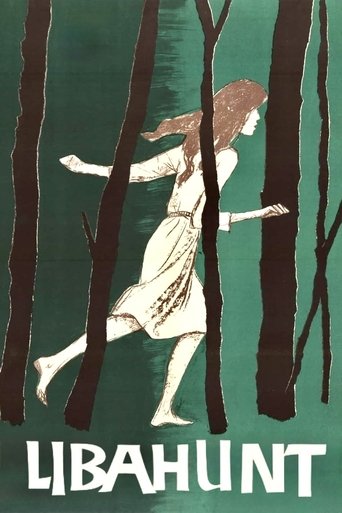
There are three children growing at Tammaru farm - one boy, Margus; and two orphan girls, Mari and Tiina. Margus' parents want him to marry Mari instead of Tiina as she is more their kind. Hotblooded Tiina is completely different from them and her mother was once executed for being a witch. Thinking that Tiina has bewitched Margus, Mari starts to publicly accuse her stepsister of being a werewolf.
The Last RelicThe Last Relic · 1970
The Last Relic
6.41970
MovieAdventureHistory
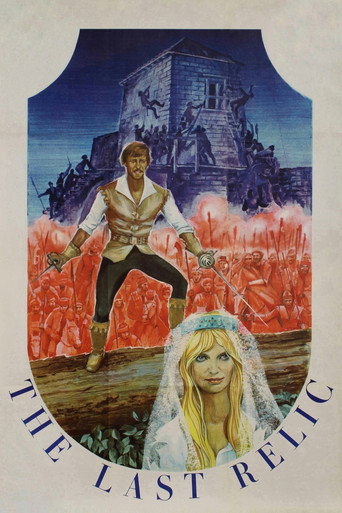
A medieval love story with lots of adventures. The times are troubled - there's a revolt of peasants going on. To secure its safety a monastery chases for a relics of a holy Brigitte. A nobleman promises to get it if he gets beautiful Agnes as a reward. But she fells in love with a handsome adventurer. The monastery has to act shrewd now and play double game.
Letters from the Island of the InsaneLetters from the Island of the Insane · 1967
Letters from the Island of the Insane
6.01967
MovieDrama
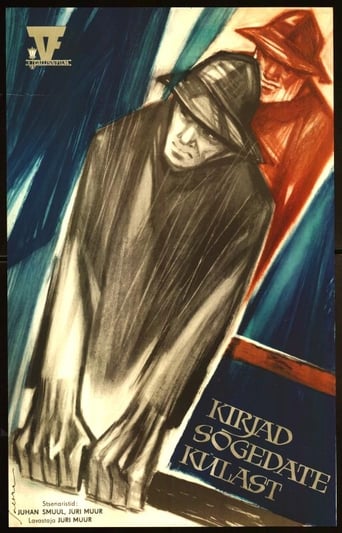
Martin Puri is an elderly fisherman who is told to retire because of his old age. When a group of people has to be saved from a boat in an autumn storm, Martin understands that one cannot act against the sea but together with it.
The Midday FerryThe Midday Ferry · 1967
The Midday Ferry
5.11967
MovieComedyDrama
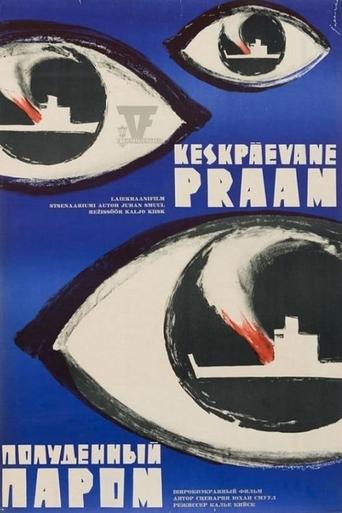
The events take place in Estonia in a summer in the 1960s. The Boy and the Girl want to go from mainland Estonia to the island of Saaremaa, but they do not have any money to buy the ticket to the ferry. They manage to hide themselves into a lorry that carries hay. Because they are smoking while they are on the lorry, a fire breaks out. The problem is, that the ferry is in the middle of the sea.
Pikk StreetPikk Street · 1966
Pikk Street
1966
MovieDocumentary
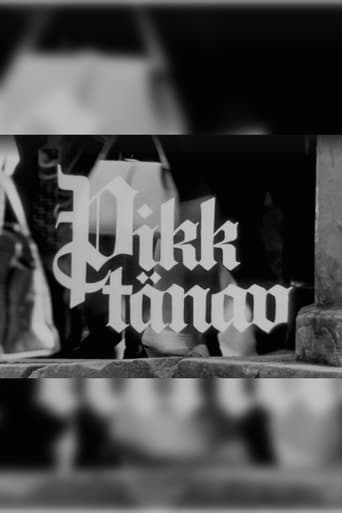
Pikk Street is one of the most important thoroughfares of Tallinn’s Old Town. The picture playfully combines hidden camera footage with more observational images, employing shots from unusual angles; these are accompanied by specific sounds and interesting musical themes. The result is a true cinematic adventure.
The ShamanThe Shaman · 1997
The Shaman
1997
MovieDocumentary
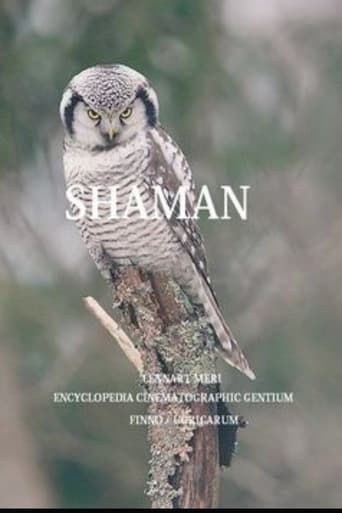
"Shaman" was filmed on July the 16th, 1977 in the northernmost corner of Eurasia, on the Taymyr Peninsula, at the Avam river, concurrently with the shooting of the documentary "The Winds of the Milky Way". The Nganasan Shaman Demnime (1913-1980) was 64 years old at the time. The documentary about Demnime's incarnation ritual was completed 20 years later. The fifth and final documentary in Lennart Meri's "Encyclopaedia Cinematographica Gentium Fenno - Uricarum" series.
Stories of the LivoniansStories of the Livonians · 1991
Stories of the Livonians
1991
MovieDocumentary
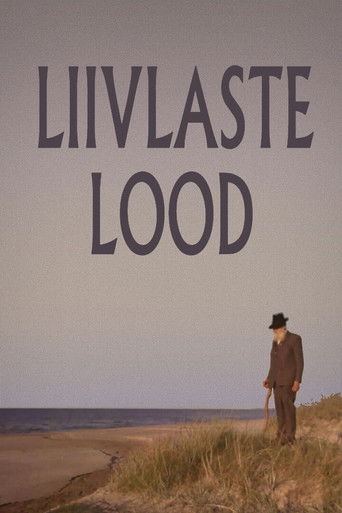
Livonians are among the smallest Finno-Ugric nations still existing today. They are the closest kindred people to Estonians and Livonian language is the closest one to Estonian language. Currently, there are only a few dozens of speakers of Livonian language left and even for them Livonian is not their native tongue. However, there are about 200 people who consider themselves as Livonians; most of them live in Riga, Ventspils and Kūolka, Latvia. Livonian coast in Courland (Kurzeme in Latvian) once had twelve villages inhabited by Livonian people - now there is no one left there who would fluently speak the language. Only a few people can speak the story of their small nation in their own native language. The documentary has been filmed in 1988 and 1990 in Livonian villages on Courland peninsula and in Riga, Latvia. Archival materials dating back to the years of 1940 and 1966 have been also used in the film.

More Like This

The Decline of Western Civilization Part II: The Metal YearsThe Decline of Western Civilization Part II: The Metal Years · 1988
The Decline of Western Civilization Part II: The Metal Years
6.81988
MovieDocumentaryMusic
An exploration of the heavy metal scene in Los Angeles, with particular emphasis on glam metal. It features concert footage and interviews of legendary heavy metal and hard rock bands and artists such as Aerosmith, Alice Cooper, Kiss, Megadeth, Motörhead, Ozzy Osbourne and W.A.S.P..
Statues Also DieStatues Also Die · 1953
Statues Also Die
6.91953
MovieDocumentary
Commissioned by the journal Présence Africaine, this short documentary examines how African art is devalued and alienated through colonial and museum contexts. Beginning with the question of why African works are confined to ethnographic displays while Greek or Egyptian art is celebrated, the film became a landmark of anti-colonial cinema and was banned in France for eight years.
Global MetalGlobal Metal · 2008
Global Metal
7.32008
MovieDocumentaryMusic
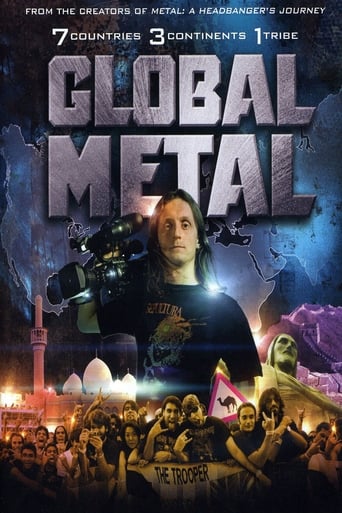
In GLOBAL METAL, directors Scot McFadyen and Sam Dunn set out to discover how the West's most maligned musical genre - heavy metal - has impacted the world's cultures beyond Europe and North America. The film follows metal fan and anthropologist Sam Dunn on a whirlwind journey through Asia, South America and the Middle East as he explores the underbelly of the world's emerging extreme music scenes; from Indonesian death metal to Chinese black metal to Iranian thrash metal. GLOBAL METAL reveals a worldwide community of metalheads who aren't just absorbing metal from the West - they're transforming it - creating a new form of cultural expression in societies dominated by conflict, corruption and mass-consumerism.

Rate this film

Your ratings make Midnight smarter