Phoenix Tapes
1999 · 45 min · ★ 5.6 · Documentary
The film comprises edited excerpts from 40 Hitchcock films in six chapters, each focusing on a different motif that reveals some of Hitchcock’s dark obsessions and techniques.
Directed by Christoph Girardet
Your Rating
Where to Watch
Rent or Buy

Make it a double feature
2h 6m together
A close match in mood and era.
More from Christoph GirardetSee all →
 Mirror · 2003
Mirror
★ 9.02003
Movie
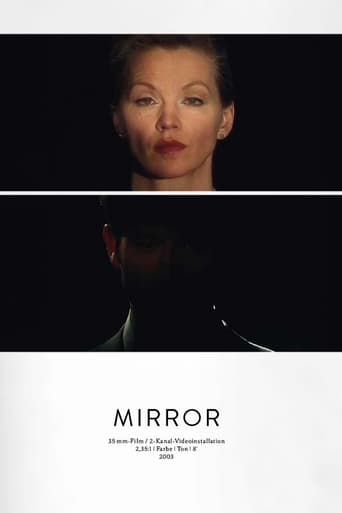
A woman, a man, guests at an evening party. Settings, which are gradually abandoned; the remains of an event, gazes that have lost their object.
 Beacon · 2002
Beacon
★ 8.02002
MovieDocumentary
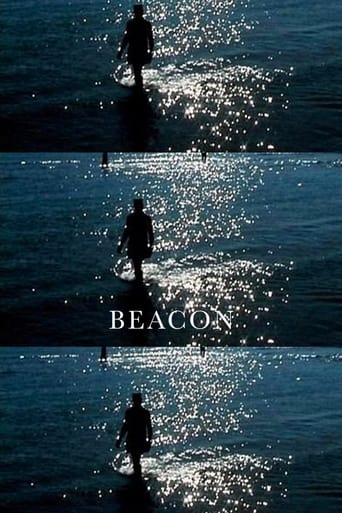
BEACON is a montage of location shots filmed at ten different places around the world. These sites are connected by the fact that each is located by the sea. Seamlessly combining travelogue footage and appropriated clips from feature films, BEACON produces a single, imaginary locale. Distant echoes of stories of the sea mingle with the banality of today's touristy beachlife. In its collage of places of expectation and with its seductive prospects of the sea, Beacon sets off on a journey with no distinct destination.
 Manual · 2002
Manual
★ 7.52002
Movie
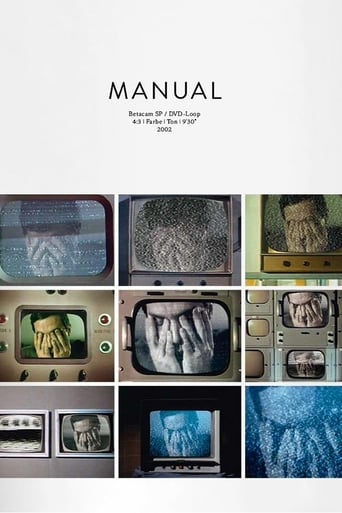
Combining close-ups of redundant technology gleaned from 60s US sci-fi television series with a female voice of a 40s Hollywood melodrama, Manual makes absolute detachment clash with magnified emotion. When its record of the minutae of endless buttons, switches and control panels Manual reduces the notion of any manageability of life to a sheer absurdity.
 Cut · 2013
Cut
★ 6.02013
MovieDocumentary
The body as a wound that never heals.
 Personne · 2016
Personne
★ 6.02016
Movie
This is somebody, nobody, anyone. This is us in the course of time. Persistently, in vain. The self is the need for permanent self-assertion.
 Hide · 2006
Hide
★ 5.52006
Movie
Composed of densely atmospheric and highly stylized recycled commercial footage of young, picture perfect models pleasurably applying personal hygiene and cosmetic products in a quick cut montage of disembodied, glistening skins, hairs, hands, and lips, juxtaposed against the sensual application of assorted foams, lotions, waxes, and creams, these carefully constructed, plastic images begin to fade, speckle, crack, distort, and burn with the material deterioration of the celluloid itself, before being reduced to the stark whiteness - and unadulterated purity - of an empty projection. At once idealized and grotesque, the disintegrating images become an integral reflection of the title's double entendre of hide as both an organic surface that inherently decays with time, and the deliberate act of concealing its irreversible plasticity
 Meteor · 2011
Meteor
★ 5.02011
Movie
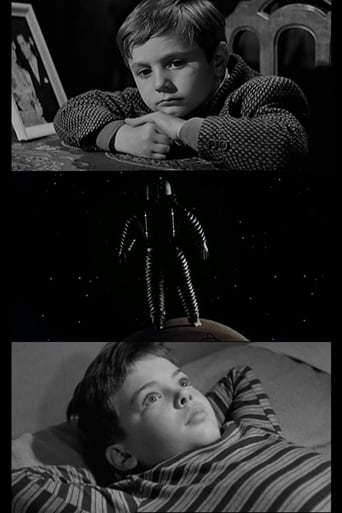
Nostalgic excerpts of fiction, fairytales and vintage science fiction from a child’s room to way out into the galaxy.
 Catch · 2005
Catch
★ 4.02005
Movie
Muller/Girardet short
 Kristall · 2006
Kristall
★ 3.02006
Movie
The film creates a melodrama inside seemingly claustrophobic mirrored cabinets. Like an anonymous viewer, the mirror observes scenes of intimacy. It creates an image within an image, providing a frame for the characters.
 Contre-jour · 2009
Contre-jour
2009
MovieDrama
A short feature about an optical experiment.
 Maybe Siam · 2010
Maybe Siam
2010
Movie
About blind people in Hollywood films
 No animal · 2022
No animal
2022
Movie
Time and again, the feature film places animal actors at the side of its human protagonists – sometimes as loyal companions, sometimes as fierce opponents. However, its stagings do not only instrumentalise animals to release emotions, but also raise a fundamental question of our anthropocentric self-image: how to deal with the experience of the otherness of the animal ?
 Play · 2003
Play
2003
Movie
"With their montage of found footage of audiences, Müller and Girardet shape a captivating dramatic arc. It contains condensed suspense with highs, lows, hesitations, peaks, tension and humour; it's all a bit uncanny, since our imagination can read fathoms deep into the faces."
(Anke Groenewold, Neue Westfälische, Bielefeld, 2003)
 Misty Picture · 2021
Misty Picture
2021
MovieDocumentary
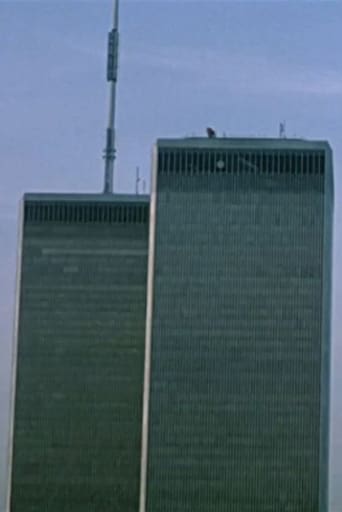
The television images of the collapse of the World Trade Center were preceded by manifold stagings of the building, either as a highly symbolic icon, a speculative destruction fantasy or merely as a spectacular backdrop. In Misty Picture, city symphony, disaster movie and media trauma therapy become one.
 Feverish Red · 1993
Feverish Red
1993
Movie
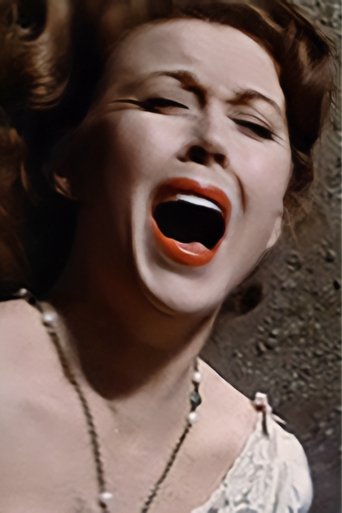
Chained up women are deprived of the narrative trappings of their film roles. You see red lips, fingernails digging in, a bosom rising and falling with the rhythm of the woman's breath, in short, all the essentials from horror films of the fifties and sixties and repeated insistently in serial collage.
 Screen · 2018
Screen
2018
MovieDocumentary
“While he mused on the effect of the flowing sands, he was seized from time to time by hallucinations in which he himself began to move with the flow.“ (Kōbō Abe) Liminal zones. Floating particles. Fire, water, earth, air. Voices of fictional characters: sometimes suggestive, sometimes strict, leading the viewer away from the here and now. Who's talking? The relationship between the hypnotized subject and the hypnotist is mirrored in the spectator's relationship to the screen.
More Like This
 Hitchcock/Truffaut · 2015
Hitchcock/Truffaut
★ 7.22015
MovieDocumentary
Filmmakers discuss the legacy of Alfred Hitchcock and the book “Hitchcock/Truffaut” (“Le cinéma selon Hitchcock”), written by François Truffaut and published in 1966.
 78/52 · 2017
78/52
★ 7.12017
MovieDocumentary
The most famous murder scene in movie history comprises 78 camera settings and 52 cuts: the shower scene in Alfred Hitchcock's Psycho. 78/52 tells the story of the man behind the curtain and his greatest obsession.
 Do You Like Hitchcock? · 2005
Do You Like Hitchcock?
★ 5.22005
MovieHorrorMystery
A nerdy film student and lifelong voyeur begins to believe that two lovely young strangers may have conspired to commit a brutal murder.
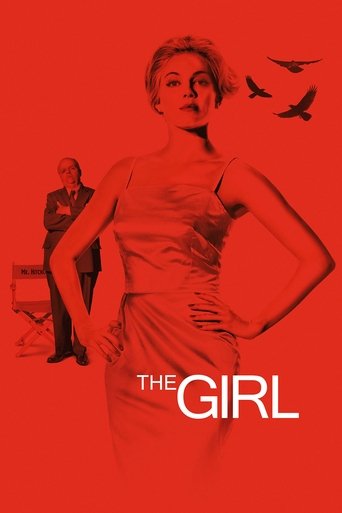 The Girl · 2012
The Girl
★ 6.12012
MovieDramaTV Movie
Director Alfred Hitchcock is revered as one of the greatest creative minds in the history of cinema. Known for his psychological thrillers, Hitchcock’s leading ladies were cool, beautiful and preferably blonde. One such actress was Tippi Hedren, an unknown fashion model given her big break when Hitchcock’s wife saw her on a TV commercial. Brought to Universal Studios, Hedren was shocked when the director, at the peak of his career, quickly cast her to star in his next feature, 1963’s The Birds. Little did Hedren know that as ambitious and terrifying as the production would be to shoot, the most daunting aspect of the film ended up coming from behind the camera.
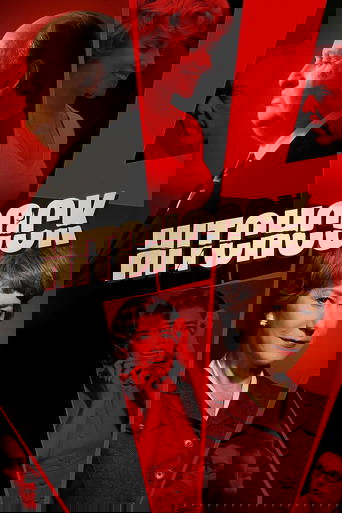 Hitchcock · 2012
Hitchcock
★ 6.62012
MovieDrama
Following his great success with "North by Northwest," director Alfred Hitchcock makes a daring choice for his next project: an adaptation of Robert Bloch's novel "Psycho." When the studio refuses to back the picture, Hitchcock decides to pay for it himself in exchange for a percentage of the profits. His wife, Alma Reville, has serious reservations about the film but supports him nonetheless. Still, the production strains the couple's marriage.