S/Título #2

S/Título #2

1968 · 3 min

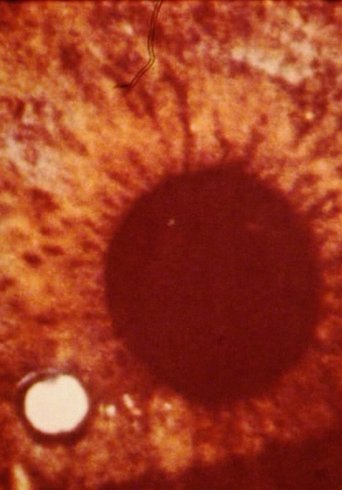
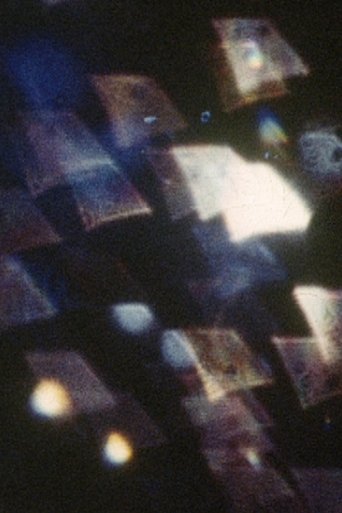
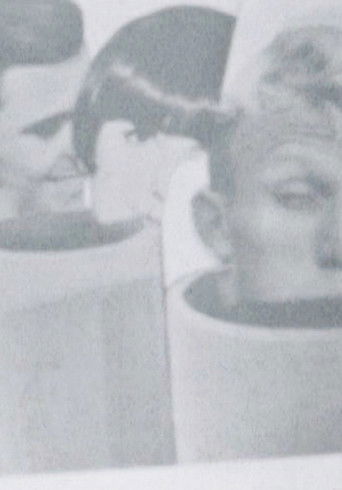
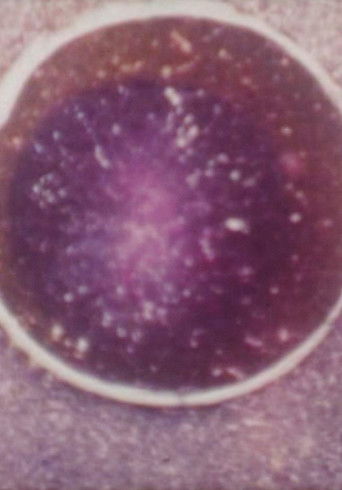
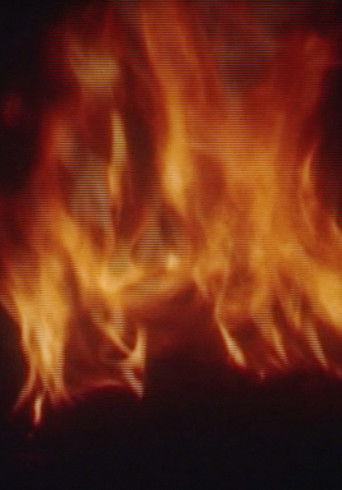
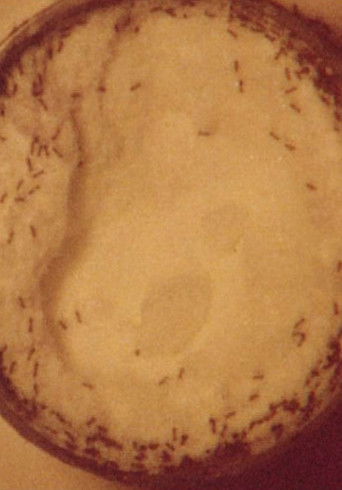
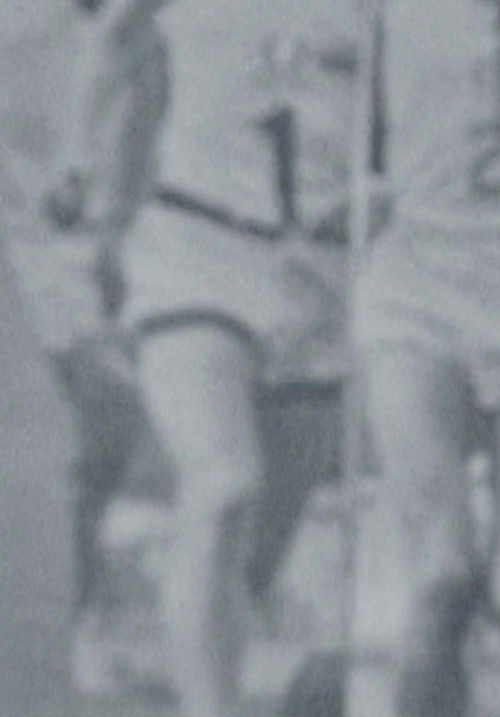
António Palolo's first films, shot in 8 mm, are black-and-white animations, constructed according to a cut-and-paste methodology and associating, with great sense of humour, images taken from magazines with geometric elements.

Directed by António Palolo

Your Rating

More from António PaloloSee all →

MetamorphosisMetamorphosis · 1969
Metamorphosis
1969
Movie
António Palolo's first films playfully recombine body parts cut out from magazines that Palolo placed in motion with geometrical shapes. These first engagements with the moving image are in a dialogue with Pop, Dada and Surrealism. Recurrent circles appear throughout the films, echoing Marcel Duchamp’s Anemic Cinema (1926).
S/Título #7S/Título #7 · 1972
S/Título #7
1972
Movie
In the films Untitled (#6), Untitled (#7) (both 1972–6) and Untitled (#8) (1976–7) images of cells mix with galaxies, underlining the circular shape as a crucial element of Palolo’s work.
S/Título #1S/Título #1 · 1968
S/Título #1
1968
Movie
António Palolo's first films, shot in 8 mm, are black-and-white animations, constructed according to a cut-and-paste methodology and associating, with great sense of humour, images taken from magazines with geometric elements.
OMOM · 1978
OM
1978
Movie
A mysterious genesis, in which abstract thought is constantly transformed into concrete substance, and the microscopic level of things interchanges with the macroscopic representation of the universe. - Culturgest
S/Título #8S/Título #8 · 1976
S/Título #8
1976
Movie
In the films Untitled (#6), Untitled (#7) (both 1972–6) and Untitled (#8) (1976–7) images of cells mix with galaxies, underlining the circular shape as a crucial element of Palolo’s work.
S/Título #6S/Título #6 · 1972
S/Título #6
1972
Movie
Under the sign of Amadeo. A century of art.
S/Título #5S/Título #5 · 1972
S/Título #5
1972
Movie
This film expands this approach to composition by adding an abstract layer of matter to the more representational experiments. The film has two parts. It focuses on the medium’s prime elements (light and motion) and documents several optical interferences with light sources (the sun, lamps, bulbs or candle-flames), creating an abstract collage built out of concrete elements. It’s a line of work that was further developed in Palolo’s later films and is also present in Lights (1972–6). The second half replaces the mundane light sources by magazine images of iconic figures such as Marilyn Monroe or Elizabeth Taylor portrayed by Andy Warhol. These quotes connect the film with a Pop art practice close to Derek Boshier’s Link (1970).
S/Título #4S/Título #4 · 1972
S/Título #4
1972
Movie
Short film by António Palolo.
S/Título #3S/Título #3 · 1970
S/Título #3
1970
Movie
Short film by António Palolo.
Drawings/LinesDrawings/Lines · 1971
Drawings/Lines
1971
Movie
“In Drawings/Lines, 1971, on top of previously printed film—was he just recycling material or was he deliberately experimenting with a new technique?—Palolo scratched lines directly on the celluloid, imprinting on it a choreography of rhythms and lights. The background images, unified by an overall tone of blue and purple, fluctuate from barely visible to perfectly recognizable, producing a fascinating layered effect with material as diverse as Marlene Dietrich, the Beatles’ yellow submarine, Adolf Hitler, Botticelli’s Venus, and a painting by Magritte.” (Filipa Oliveira)
LightsLights · 1976
Lights
1976
Movie
Manipulating the way the camera captures light and the use of filters, this film configures a kaleidoscope of abstract lights of different colours, reflections, fragmented irises, peepholes, circular forms, flashes of lights in the dark punctuated by images of almost white skies.
Palolo, Coisa de PintarPalolo, Coisa de Pintar · 1990
Palolo, Coisa de Pintar
1990
MovieDocumentary

More Like This

Couldn't load this row right now.
Rate this film

Your ratings make Midnight smarter