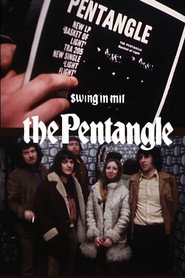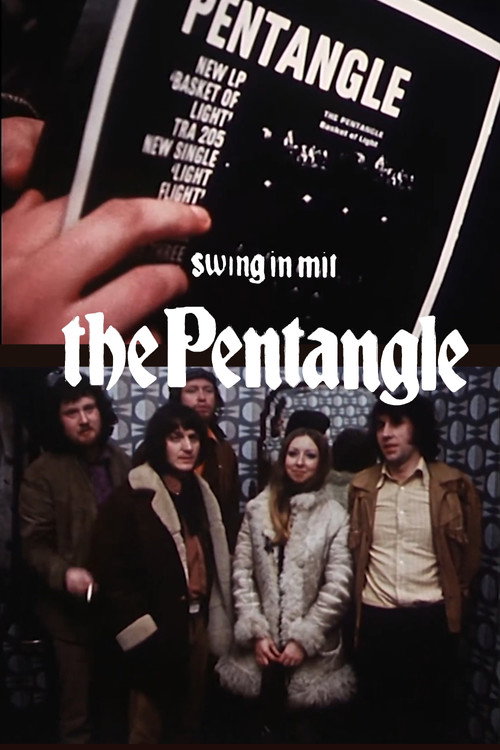
Swing In with The Pentangle
1970 · 28 min · Music, Documentary
Filmed by WDR, featuring excerpts of a concert, some backstage shots, autograph signing, various bits of banter, a train trip to Devon, and a visit to a Scottish castle.
Directed by Wim van der Linden
Your Rating
Cast
- B Bert Jansch Self
- J Jacqui McShee Self
- J John Renbourn Self
- T Terry Cox Self
- D Danny Thompson Self
More from Wim van der LindenSee all →
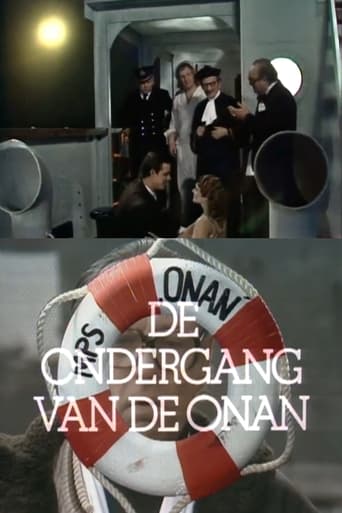 De ondergang van de Onan · 1976
De ondergang van de Onan
★ 10.01976
MovieTV Movie
Dick Bakker convinces Onno Bosman to produce a stage show about the sinking of the cruise ship 'Onan' and hires Fred Haché, Barend Servet, Sjef van Oekel and Ir. Van der Pik to star.
 Joszef Katús's Not Too Fortunate Return to the Land of Rembrandt · 1966
Joszef Katús's Not Too Fortunate Return to the Land of Rembrandt
★ 9.01966
MovieDrama
The dutchified Hungarian Joszef Katús returns, after a months-long absence, to Amsterdam on 29 April 1966. The arrival of the Provos changed a great deal in the Dutch capital. The film follows Katús, mostly roaming the streets, in a loose documentary style. The events are set against the backdrop of four national occasions - The Queen's Birthday, Labour Day, Liberation Day and Remembrance Day.
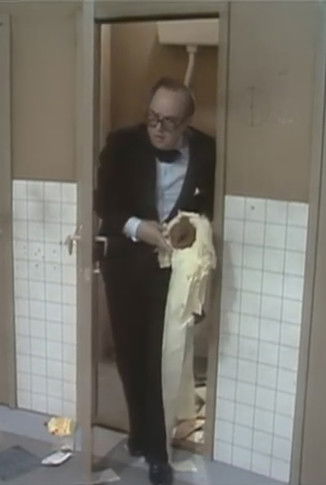 Grote Genade · 1976
Grote Genade
1976
MovieTV Movie
Sjef van Oekel escapes from prison and heads for a restaurant. Unfortunately there is nobody there to annoy. Even at the train station he is ignored by former colleagues and he ends up alone.
 Voices · 1972
Voices
1972
MovieComedyTV Movie
A nearly 30 minute long conversation in a living room party. Unlike in a regular TV play the jabber conversation can hardly be understood. Sometimes a line or two can be picked up. There's an intermezzo when Schippers alias Jacques Plafond comes to play one of his 'modern' piano pieces, to the disgust of the party's guests, whose chattering in the end isn't far removed from the piano play.
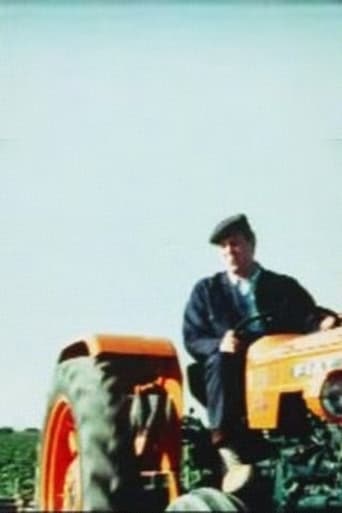 Summer in the Fields · 1967
Summer in the Fields
1967
Movie
A young farmer's wife brings her husband something to eat in the field during summer time.
 Tulips · 1966
Tulips
1966
Movie
The film shows, in an almost motionless camera setting, a frumpy 1960s interior. The viewer sees a dresser with a vase of tulips atop it. Swelling music accompanies the camera as it slowly zooms in on Holland’s national flower. In the carefully constructed staging, it is like a visual sledgehammer when a single petal suddenly comes loose and falls. Then the camera modestly pulls back.
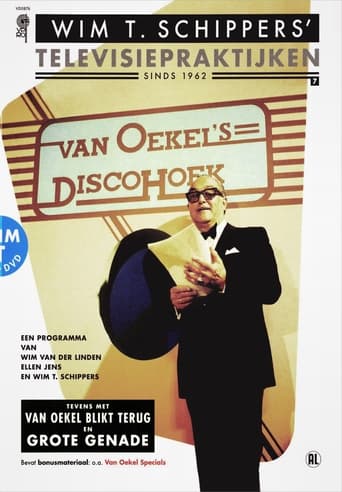 Van Oekel's Discohoek · 1974
Van Oekel's Discohoek
1974
SeriesComedy
Van Oekel's Discohoek was a Dutch television show, aired on VPRO in 1974-1975. The show, written by Wim T. Schippers and produced by Ellen Jens, starred Dolf Brouwers as Sjef van Oekel, and parodied music television programs of the era. Artists lip-synched their songs, but were frequently interrupted and insulted by van Oekel. The show had a real coup when Captain Beefheart made an appearance.
 Whoops · 1967
Whoops
1967
SeriesComedyKids
Rebellious youth program that causes a great stir by breaking societal taboos. 'Hoepla' portrays 'underground' culture, but the Netherlands is not yet ready for this in 1967. Public nudity and drunken soldiers cause many viewers and various members of the House of Representatives to condemn the program. Only three episodes are broadcast. Although 'Hoepla' gives the VPRO an innovative image, the broadcasting management decides to take the program off the air after much negative criticism and the associated loss of members.
'Hoepla' will always be mentioned in the same breath as the bare breasts of fashion model Phil Bloom. The program is produced by Hans Verhagen, Wim van der Linden, and Wim T. Schippers.
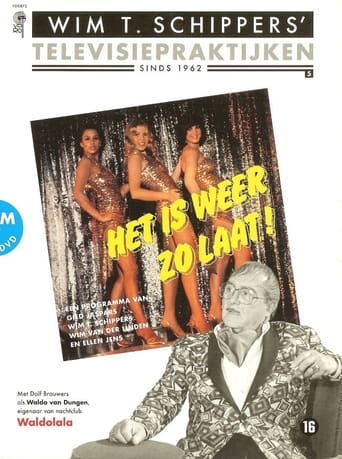 Het is weer zo laat · 1978
Het is weer zo laat
1978
SeriesComedy
Het is weer zo laat!, also known as Waldolala, is a Dutch television show from 1974, written and directed by Wim T. Schippers and co-produced by Schippers, Gied Jaspars, Wim van der Linden en Ellen Jens. It was the last TV show written for Dolf Brouwers, who had played the character Sjef van Oekel in previous shows.
The show ran for ten episodes, and featured Brouwers as Waldo van Dungen, formerly a waiter at the night club Waldolala, who had acquired the club after a rich woman fell in love with him and bought the place for him. The show featured other characters from the previous shows Schippers had done for the VPRO, and shared many other characteristics—nudity, vulgarity, linguistic games. The plot line and individual scenes were typically chaotic; in the end, van Dungen dies and it is revealed that the entire series of events was a kind of flashback told by van Dungen's psychiatrist.
The show's alternate name, Waldolala, was explained by Waldo van Dungen as a combination between his first name and the phrase "Oh-la-la". It was also part of the title of the theme song, a "megahit" for the girls group Luv', a group formed by producer Hans van Hemert, who had been commissioned to write the show's theme song. Luv' had had two modestly successful singles with ABBA-esque songs, but van Hemert wanted to try a different style of music; Schippers and Jaspars pushed him, and van Hemert agreed to have Luv' sing the tune. They performed "U.O.Me" on the show, and the song became a hit--in hindsight, van Hemert credited the VPRO with the band's commercial success.
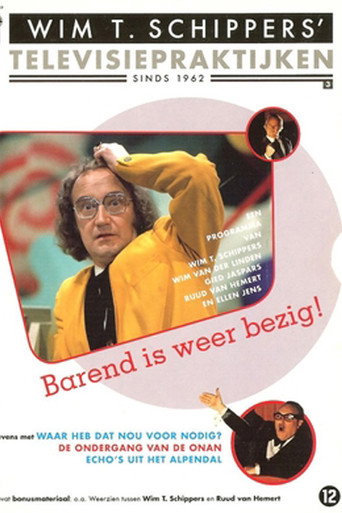 Barend is weer bezig · 1972
Barend is weer bezig
1972
SeriesComedy
The television program was built around the character Barend Servet, played by IJf Blokker, who had first appeared in De Fred Haché Show in 1971. Other characters returning from the Haché Show were Sjef van Oekel (played by Dolf Brouwers) and Fred Haché (played by Harry Touw). In typical Schippers fashion, the program, like its predecessor, derived its comedic effects from crude humor, silly costumes or nudity, chaos, and absurdism; it combined the trivial and banal with controversial content. There were four episodes and a Christmas special, "Waar heb dat nou voor nodig?". For the Christmas special, two songs were written by Wim T. Schippers and Clous van Mechelen for Dolf Brouwers: "Vette jus" and "Juliana onze vorstin".
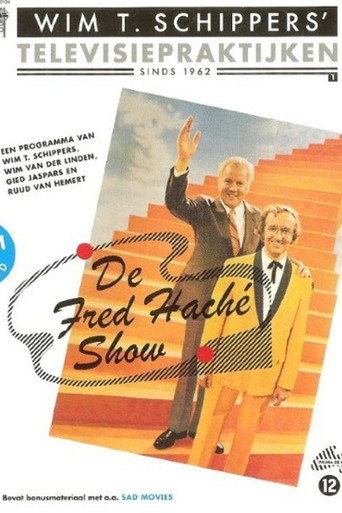 De Fred Haché Show · 1971
De Fred Haché Show
1971
SeriesComedy
The Fred Haché Show is an absurdist program with a lot of nudity (performances by naked dancers from the Helen Le Clerq Dancers), linguistic humor, nonsense, satirical sketches, and illogical plotlines.
More Like This
Couldn't load this row right now.