They Joined the Front

They Joined the Front

2012 · 61 min · ★ 10.0 · Documentary, History

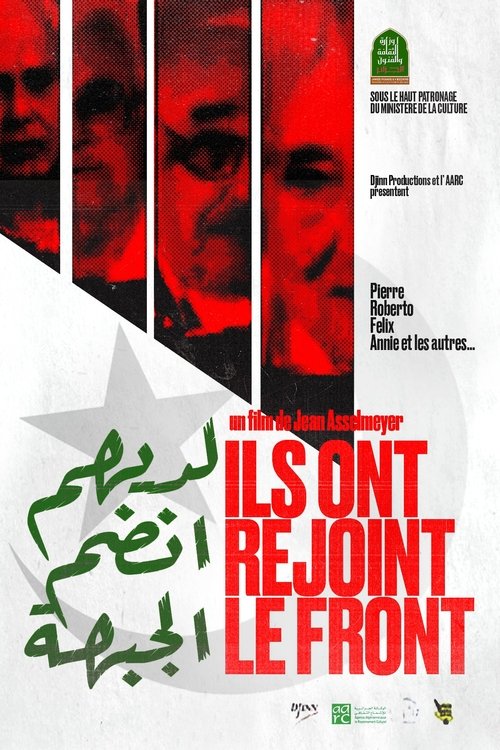
In this film, four key witnesses, who live in Algeria today, as full-fledged Agerians, show us what this colonization was really like, so "beneficial" that they themselves perceived it as the oppression of one people by another. Three of them, who today would be called "pieds noirs," in other words, those Europeans to whom France, the occupying power, gave the best land, taken from the indigenous populations, work, and exclusive rights, not shared by the entire population, lived rather well compared to the majority of the "natives." The fourth was far from all that and lived in Argentina. Annie Steiner, Felix Colozzi, Pierre Chaulet, and Roberto Muniz explain to us what led them to show solidarity with the struggle of the weak, the humiliated, and to risk their freedom and their lives by committing to liberate Algeria.

Directed by Jean Asselmeyer · Written by Jean Asselmeyer

Your Rating

Cast

Make it a double feature

1h 56m together
They Joined the Front
They Chose Algeria

Both from Jean Asselmeyer.
More from Jean AsselmeyerSee all →

They Chose AlgeriaThey Chose Algeria · 2007
They Chose Algeria
10.02007
MovieDocumentaryHistory
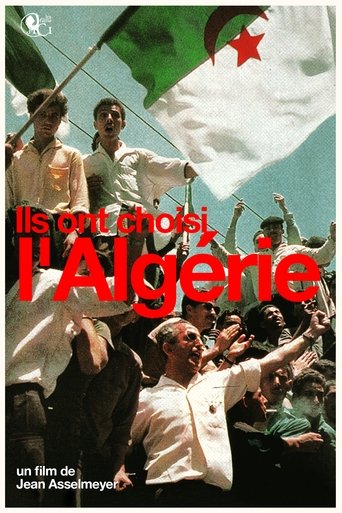
Many of them participated in the struggle for Algerian independence. There are "those who believed in heaven", priests, Christians committed against torture, friends of the "natives", there are "those who did not believe in it", communist activists, students, progressive intellectuals, others remained in this country because they could not imagine living anywhere other than in this land of all passions. They are European and chose to stay in Algeria after independence, most of them opted for Algerian nationality. The film is another vision of the history of Algeria from the end of the fifties to the present day, told by these Europeans filmed at home, or in the context of their activities, illustrated by unpublished archive documents.
Regards D'en Face - AlgerRegards D'en Face - Alger · 2003
Regards D'en Face - Alger
10.02003
MovieDocumentary
It is with the architect Jean-Jacques Deluz, that we visit Algiers, "his city" since 1960 and that he left only two years during the worst moments of terrorism. From the Casbah, in the 19th century center, including the cities of Fernand Pouillon and Bab El Oued to arrive at the new city of Maelma which he built today. Tender look, but without concessions at the same time architectural promenade and meetings with actors of art and culture: Djamel Allam, the singer Kabyle, Djamel Amrani, the poet, friend of Jean Sennac, Mohamed Ben Gettaf, Dramaturge and director of the theater of Algiers, Souad Delmi-Bourras, young designer Boudjemàa Kareche, director of the Algerian cinema, Amine Kouider, conductor, who relaunches the opera in Algeria, the painter Malek Salah, and others. A look at Algeria and the Algerians, far from the clichés of certain media, the bias being to seek signs of hope rather than "blood and tears".
André Ravéreau and AlgeriaAndré Ravéreau and Algeria · 2019
André Ravéreau and Algeria
10.02019
MovieDocumentary
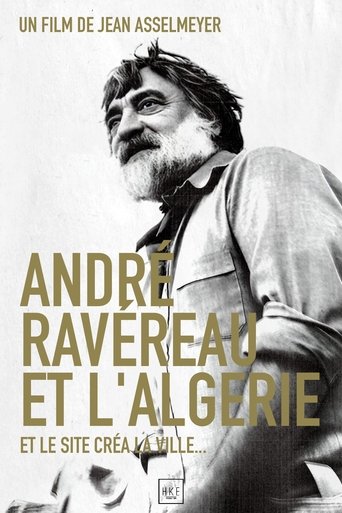
The architect André Ravéreau spent a large part of his life in Algeria, he is today an essential reference for Algerian builders of several generations. His daughter Maya, an architect herself, accompanies us to the places of his creations and his research, in the Mzab first where he lived, created, trained other architects in the "desert workshop" and had the oases of the Mzab classified as a UNESCO World Heritage Site. Inspired by tradition to better innovate as in the construction of the Ghardaïa post office, or in that of a very surprising villa... Then in Algiers where he worked to preserve the ancestral heritage of the Casbah, faithfully describing the principles of his construction in line with current concerns, such as the choice of environmentally friendly materials and avoiding energy waste, as testified by the architect Yasmine Terki, a great specialist in earth materials.
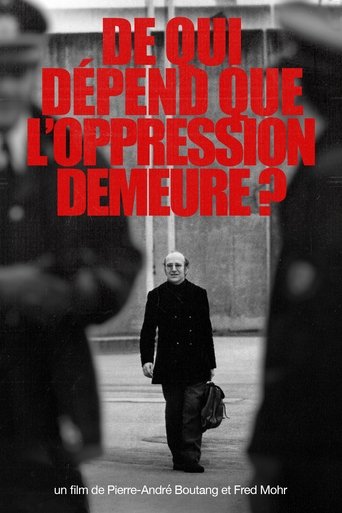
De qui dépend que l’oppression demeure ?De qui dépend que l’oppression demeure ? · 1975
De qui dépend que l’oppression demeure ?
10.01975
MovieDocumentaryHistory
On May 21, 1975, the trial of the members of the Red Army Faction (also known as the Baader-Meinstein Gang) began. Four members appeared before the Stuttgart court to answer for the attacks that had been raging for five years in the young Federal Republic of Germany. The documentary, whose title is borrowed from Berthold Brecht's In Praise of Dialectics, recounts the conditions of the trials and detention of the Baader-Meinstein Gang members and the disqualification of Klaus Croissant as their lawyer.
The Battle of ProductionThe Battle of Production · 1998
The Battle of Production
10.01998
MovieDocumentary
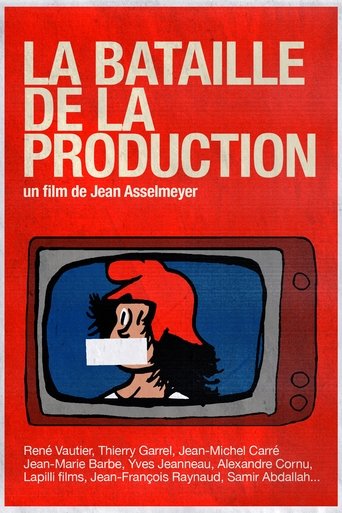
In 1997, the committed filmmaker Jean Asselmeyer, armed with his camera, posed the following question at the General Assembly of Documentary Film in Lussas and in Paris: Is it possible today to make a committed creative documentary?, to René Vautier, Thierry Garrel, Jean-Michel Carré, Jean-Marie Barbe, Yves Jeanneau, Alexandre Cornu, Lapilli films, Jean-François Raynaud, Samir Abdallah and many others, not the least of whom.
Two Lives for Algeria and All the Wretched of the EarthTwo Lives for Algeria and All the Wretched of the Earth · 2025
Two Lives for Algeria and All the Wretched of the Earth
8.02025
MovieDocumentaryHistory
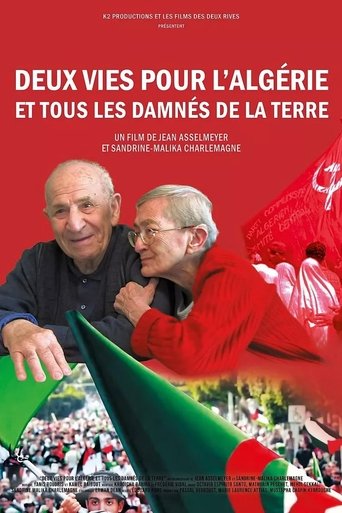
In 1994, at over seventy years old, Gilberte and William Sportisse, threatened by the FIS, arrived from Algeria. Of Jewish faith, he of Arabic mother tongue, they formed a fighting couple, started for the independence of Algeria, always with an unshakeable faith in humanity. They enjoy recounting the participation of Algerian Jews in the Second World War and the struggle for Algerian independence. They provide us with previously unpublished information on the public and clandestine struggles of the Algerian Communist Party before and after independence, and on the repression of activists who, like William and Gilberte Sportisse, were tortured and imprisoned after Colonel Boumédiène came to power. The film is an ode to understanding between people of different origins or cultures and a tribute to a couple whose youthful character and enthusiasm still astonish.

More Like This

Rate this film

Your ratings make Midnight smarter