Living with AIDS
2004 · 28 min · Documentary
The film has two parallel narrative lines. The first which follows the fate of a Slovenian "rebel without a cause" from the provinces, rocker and world traveler who contracted HIV in Africa. In the second line, in parallel, the history of the AIDS epidemic, the specific nature of the virus and the analysis of the drugs that enable the cure of the disease are presented. That virus is, for now, incurable, and is considered a plague of the modern world. Jovanović and his team recorded all the material in a large number of countries in America, Europe and Asia.
Directed by Jovan Jovanović · Written by Jovan Jovanović
Your Rating
Make it a double feature
2h 22m together
Both from Jovan Jovanović.
More from Jovan JovanovićSee all →
 The Decameron · 1971
The Decameron
★ 6.91971
MovieHistoryDrama
A young Sicilian is swindled twice, but ends up rich; a man poses as a deaf-mute in a convent of curious nuns; a woman must hide her lover when her husband comes home early; a scoundrel fools a priest on his deathbed; three brothers take revenge on their sister's lover; a young girl sleeps on the roof to meet her boyfriend at night; a group of painters wait for inspiration; a crafty priest attempts to seduce his friend's wife; and two friends make a pact to find out what happens after death.
 Landscapes in the Mist · 1984
Landscapes in the Mist
★ 6.51984
MovieDrama
Naturalistic and almost documentary account of the heroin addicts in Belgrade, in the form of a sad life story of young girl and her wasted life.
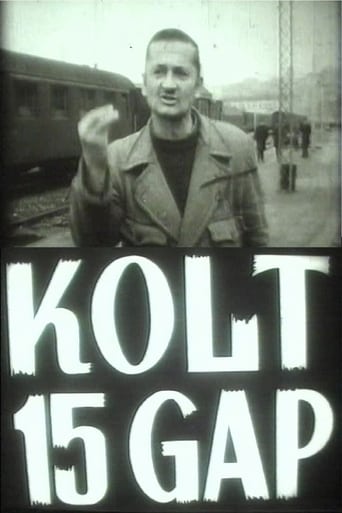 Kolt 15 GAP · 1971
Kolt 15 GAP
★ 5.71971
MovieDocumentary
A short documentary following Stanoje Ćebić, an unemployed Yugoslav metalworker and self-proclaimed Marxist, as he moves through Belgrade and its outskirts articulating his views on labor, socialism, and everyday survival. Directed by Jovan Jovanović and Miodrag Milošević, the film combines observation and direct address to present a satirical yet pointed portrait of working-class disillusionment in socialist Yugoslavia.
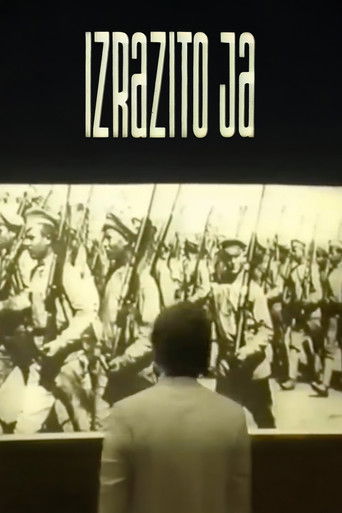 Distinctly Me · 1969
Distinctly Me
★ 5.61969
MovieDrama
A portrait of a restless young man in late-1960s Belgrade whose cool exterior masks deep dissatisfaction, violent imaginings, and a search for identity amid urban life.
 Young and Healthy as a Rose · 1971
Young and Healthy as a Rose
★ 5.21971
MovieDramaAction
Young and Healthy as a Rose follows Stevan Nikolić, "Stiv", a petty criminal born in Belgrade, and his rise to power along with drugs, sex and with the help of the local police.
 University Town · 1965
University Town
1965
MovieDocumentary
The film was banned from public screening for 43 years, it was censored by the Academy of Theatre, Film, Radio and Television (today's FDU). Before filming, Jovanović lived in a university town for several months, researching the life of students. The then head of the Academy, Vjekoslav Afrić, was shocked by the truth about the university city at the internal screening of the film. He addresses Jovanović verbally and aggressively, threatening him with a criminal report. Although he has never been to the university town, he accuses Jovanović of directing the students' lives and says that he will be held accountable for that. Afrić formed two commissions with the task of visiting the university town the next day and confirming Afrić's claims. The commissions determined that the film faithfully portrayed life in the university town. Despite this, Afrić insisted that a report be filed against Jovanović to the State Security Service (successors of OZNa and UDBA).
 Branislav Nušić · 1990
Branislav Nušić
1990
MovieDocumentary
The movie is inspired by the book "Nova Klasa" by Milovan Đilas, a close associate of Josip Broz Tito, who later became a famous dissident. The book analyzes the process in which former "revolutionaries" become petty bourgeois. Wanting to imitate the classical bourgeois class in Serbia (which they destroyed with genocide, ethnocide, culturocide and urbanocide), they only manage to reach the level of provincial petty bourgeois. Their world resembles the world from Branislav Nušić's comedies. The quasi-elite even has fun with the characters and situations, recognizes themselves and enjoys their stupidity. Two horses in front of the National Assembly unsuccessfully try to prevent other "horses" from entering. The absurdity of what is happening in today's National Assembly even exceeds the imagination of Nušić.
 Meeting of Friends · 2006
Meeting of Friends
2006
MovieDocumentary
The meeting of singers from Serbia Predrag 'Cune' Gojković and Minja Subota with their former friend, Slovenian singer Elda Viler. Pera Dimitrijević, a former singing star in Slovenia, organized the meeting. Dimitrijević has been unsuccessfully trying to create "a bridge of friendship" between Serbia and Slovenia for years. During the stay of Gojković and Subota, Slovenians were not interested in their concert.
 The Man Who Created Systems · 1990
The Man Who Created Systems
1990
MovieDocumentary
The film analyzes the Titoist (Stalinist) rituals that were used to manipulate public opinion and the masses. In parallel, the film shows the monument of Edvard Kardelj, the main Orwellian ideologue of Titoism in the center of Ljubljana. The workers surrounding Kardelj are beings without articulated faces. Kardelj has the only human face. They all go to the so-called happy future. The monument confirms in an astonishing and perverse way that the so-called self-governing socialism produced a mass of impersonal and authoritarian individuals in the crowd, which the so-called communist elites rule unscrupulously by manipulating the feelings of the masses "about a better future".
 Diary of a Generation · 1981
Diary of a Generation
1981
MovieDocumentary
Titoism abused the school system, as well as all institutions of culture and media in order to create obedient subjects who do not have their own opinion about reality and who live in a fictitious world of ideological constructions. Children from eight-year schools are forced to quote by heart the values of the so-called self-governing socialism as their own. This is the best way to create generations of conformists who the so-called elites can rule.
 Man from Vukovar · 1992
Man from Vukovar
1992
MovieDocumentary
This documentary film is the first and only Serbian film that provides a true picture of the drama of the Serbs in Vukovar and the status of the Serbs in Croatia. Having lost their status as a constituent nation in Croatia by overvoting in the assembly, the Serbs became prey to vampirized Croatian nationalism. During several months of filming in Vukovar, Jovanović documented all aspects of the tragedy of the Serbs in Vukovar with extensive (many hours) of material.
 Working Class Artists · 1975
Working Class Artists
1975
MovieDocumentary
The film shows works of art by people of various occupations who are engaged in fine art in their free time. It was achieved through interviews in which people talk about the world of work - a world of no freedom, necessity and coercion in which they do not see themselves as individuals. Painting enables them to escape from everyday banal reality into the world of beauty and freedom. So-called ordinary people of various occupations have a built-in awareness of the problematic nature of humanism in the modern world. Through interviews, the film articulates a story, kind of - it is a vision of the apocalyptic end of modern civilization that has no higher, metaphysical meaning. At the same time, there is hope that after the collapse of modern civilization, a society of meaning, love and freedom can be created.
 Revolution That Flows · 1972
Revolution That Flows
1972
MovieDocumentary
The film was banned for 18 years by the communist regime in Serbia because it did not want the film to show taboo subjects. Thematizing and problematizing the life of Serbs in Croatia was considered an expression of "Great Serbian chauvinism" and "disturbing the public" in Yugoslavia. The film unmasks the alleged struggle for a just society during the so-called National liberation struggles. The partisans from Kordun tell how, with false promises about a better life and a happy future, were deceived by the partisan elite led by Josip Broz Tito. Instead of a society of equality, after 1944 a society of class differences was created. Thus, people from the poor regions of Yugoslavia become cheap labor in capitalist countries because they cannot find work in their "socialist" country. The film is a prophetic anticipation, which is why socialist Yugoslavia failed and because of which Serbia has been collapsing for decades.
More Like This
Couldn't load this row right now.