Hojas de Maíz

Hojas de Maíz

2002 · 10 min

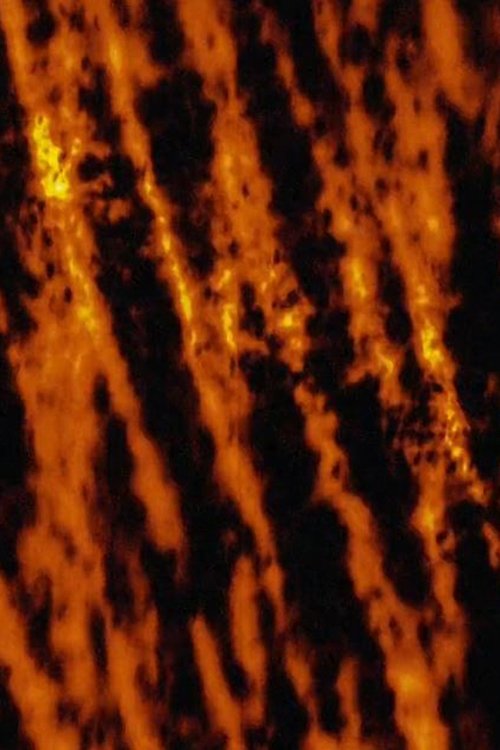
Hojas de Maíz was made at the request of Cincinnati composer and instrument-builder Anthony Luensman. The film was originally envisioned to be part of Tony's installation, Irato, in which each of his twenty-plus pieces, on exhibit in a civic art center, responded to viewers' pressing of a button. An exhibit of doorbells, imaginatively defined. One of Tony's stocks-in-trade is the use of discarded upright piano innards as electrified harps; my film contribution was to be projected amidst arrays of vibrating piano strings as art patrons took an elevator from the ground floor to a performing arts center. While this eventually proved infeasible due to ambient light conditions in the building, it did inspire the look and basic vocabulary of the film.

Directed by Eric Theise

Your Rating

More from Eric TheiseSee all →

A Roll for PeterA Roll for Peter · 2016
A Roll for Peter
6.02016
Movie
Twenty-plus former students, colleagues, and admirers of Peter Hutton answered an invitation to shoot A Roll For Peter. The parameters were simple: shoot a single 100 feet roll of black and white 16mm film. They were then strung together with black film separating the rolls, as Peter often separated the single shots in his films.It is a series of pieces that speak to Peter’s strong contemplative aesthetic ethos. Each filmmaker has 2 and half minutes of screen time to commune with Peter’s memory, and the collected rolls will become more than the sum of their parts.
GutterballGutterball · 2003
Gutterball
2003
Movie
Gutterball was made at the request of San Francisco Bay Area artists Dylan Bolles, Nathan Lynch, and Michael Barth Meyers. It was shot one afternoon soon after its 28 April 2002 performances at a Headlands Center for the Arts Open House, using available light and an unfamiliar camera.
Twelve Random Developments and Other StuffTwelve Random Developments and Other Stuff · 1981
Twelve Random Developments and Other Stuff
1981
Movie
By the end of 1980 I knew that I'd be entering the Ph.D program in the Department of Industrial Engineering and Management Sciences at Northwestern University. In retrospect it's perhaps surprising that I'd satisfied all my course requirements in the Business School at Loyola University Chicago and that two free electives remained. Innumerable interactions with Loyola are to that University's credit: one is that they put no obstacles in my way for transferring elective credits in from courses at the School of the Art Institute of Chicago (SAIC). And so I signed up for Animation I with Byron Grush and Drawing for Animation I with Dennis Wille. I remember being exceedingly nervous when I showed up at SAIC to register and pay for those courses as I had no portfolio, only a (one hopes) coherent verbal explanation of my interest in the subject. The gentleman seated at the film department table signed off on my application. That was my first meeting with Fred Camper
To No End GatheredTo No End Gathered · 2012
To No End Gathered
2012
Movie
"When San Francisco's landmark Emporium department store was gutted in 2003 to make room for the Westfield San Francisco Centre, the most spectacular feature of the site was its old dome, supported on a tower during construction after being hydraulically jacked into the air 60 feet above its original location in space. But a few hundred feet to the southwest was a wall covered with shredded wallpaper, bearing the imprint of former floors and walls, that came to life in the slightest breeze. I no longer remember what took me to that part of town in those days, but the sight transfixed me."
RengaRenga · 1989
Renga
1989
Movie
“Renga is a linked-verse form of Japanese poetry that, though still practiced today, reached its peak between the 13th and 16th centuries. It is characterized by being a group composition, typically in the presence of judges and an audience, with poets rapidly contributing stanzas such that each new stanza addresses only the previous stanza; there is no overarching plot development, and the overall structure is a chain, not a conventional, linear narrative… In 1989, I had the great privilege to be involved in a film renga that was produced in the graduate film seminar led by Nathaniel Dorsky at the San Francisco Art Institute.” —Eric Theise

More Like This

Couldn't load this row right now.
Rate this film

Your ratings make Midnight smarter