Directing
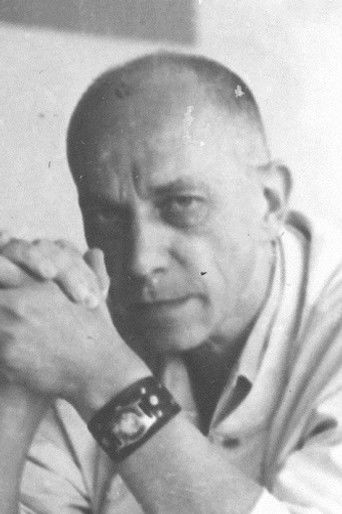
Chris Marker
Born July 29, 1921 · Neuilly-sur-Seine, Hauts-de-Seine, Île-de-France, France
Died July 29, 2012 · aged 91
Christian François Bouche-Villeneuve, better known as Chris Marker (France, 29 July 1921 – 29 July 2012), was a French writer, poet, activist, critic, photographer, traveler, journalist, film essayist, multimedia artist, and documentary filmmaker. He began his career as part of the French Rive Gauche group—parallel to but distinct from the Nouvelle Vague—with which he would later share certain th…
Known For
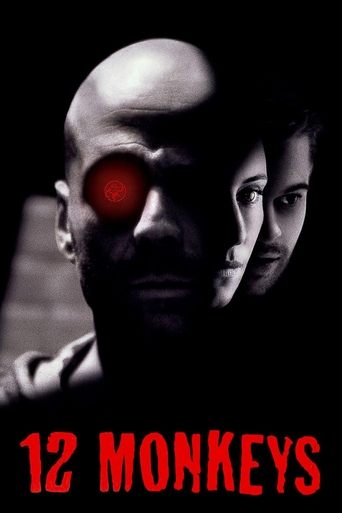 Twelve Monkeys · 1995
Twelve Monkeys
★ 7.61995
MovieScience FictionThriller
In the year 2035, convict James Cole reluctantly volunteers to be sent back in time to discover the origin of a deadly virus that wiped out nearly all of the earth's population and forced the survivors into underground communities. But when Cole is mistakenly sent to 1990 instead of 1996, he's arrested and locked up in a mental hospital. There he meets psychiatrist Dr. Kathryn Railly and the son of a famous virus expert who may hold the key to the Army of the 12 Monkeys; thought to be responsible for unleashing the killer disease.
 Night and Fog · 1956
Night and Fog
★ 8.31956
MovieDocumentaryHistory
Filmmaker Alain Resnais documents the atrocities behind the walls of Hitler's concentration camps.
 La Jetée · 1962
La Jetée
★ 7.91962
MovieDramaRomance
A man confronts his past during an experiment that attempts to find a solution to the problems of a post-apocalyptic world caused by a world war.
 Sans Soleil · 1983
Sans Soleil
★ 7.51983
MovieDocumentary
A woman narrates the thoughts of a world traveler, meditations on time and memory expressed in words and images from places as far-flung as Japan, Guinea-Bissau, Iceland, and San Francisco.
 The Case of the Grinning Cat · 2006
The Case of the Grinning Cat
★ 6.92006
MovieDocumentaryTV Movie
Chris Marker, intrigued by the sight of yellow cats perched on walls on the streets of Paris, films the major national and international sociopolitical events of the early 2000s.
 L’indispensable · 2026
L’indispensable
2026
MovieDocumentary
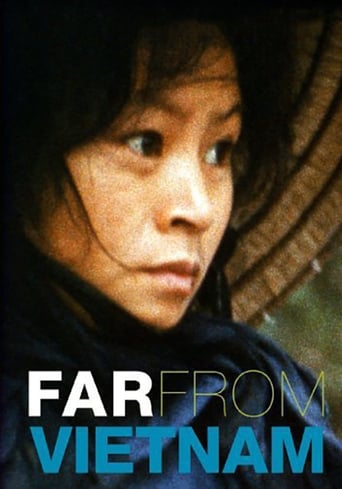 Far from Vietnam · 1967
Far from Vietnam
★ 7.21967
MovieDocumentaryWar
In seven different parts, Godard, Ivens, Klein, Lelouch, Marker, Resnais, and Varda show their sympathy for the North-Vietnamese army during the Vietnam War.
 The Confession · 1970
The Confession
★ 7.31970
MovieDramaThriller
In 1950s communist Czechoslovakia, a government minister, a war veteran long a loyal party man, leads a relatively comfortable life with his wife. However, he soon finds himself under surveillance, then under arrest. Unclear what his offense is, agents for the totalitarian regime interrogate and torture him, aiming to use their unending power to gain a false confession for these supposed crimes against the state.