C
Directing
Carlo Di Carlo
Born June 18, 1938 · Bologna, Italy
Died March 18, 2016 · aged 77
No biography available.
Known For
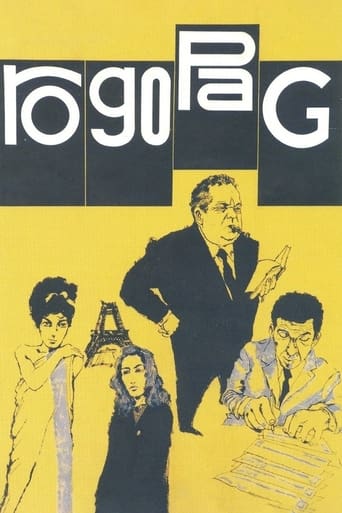 Ro.Go.Pa.G. · 1963
Ro.Go.Pa.G.
★ 7.21963
MovieComedyDrama
Four short films by four different directors dealing with the principles of modern life. "Illibatezza" (Rossellini): The hostess Anna Maria, to dissuade an aggressive suitor who prefers maternal tendencies, assumes an unscrupulous attitude, obeying the suggestions of her distant boyfriend. "The New World" (Godard): The deflagration of an atomic bomb causes strange effects on the inhabitants of a city. "La ricotta" (Pasolini): During the filming of a film about a religious subject, the extra Stracci dies hanging on the cross due to an indigestion of ricotta. "Il pollo spante" (Gregoretti): While an expert illustrates to a board of merchants the most modern techniques to increase sales through the discovery of the secret self of the average consumer, the human story of a bourgeois who, following these suggestions, focuses on the purchase of a plot of land in the countryside.
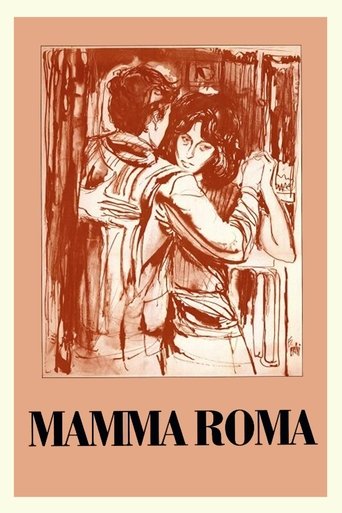 Mamma Roma · 1962
Mamma Roma
★ 7.91962
MovieDrama
After years spent working as a prostitute in her Italian village, middle-aged Mamma Roma has saved enough money to buy herself a fruit stand so that she can have a respectable middle-class life and reestablish contact with the 16-year-old son she abandoned when he was an infant. But her former pimp threatens to expose her sordid past, and her troubled son seems destined to fall into a life of crime and violence.
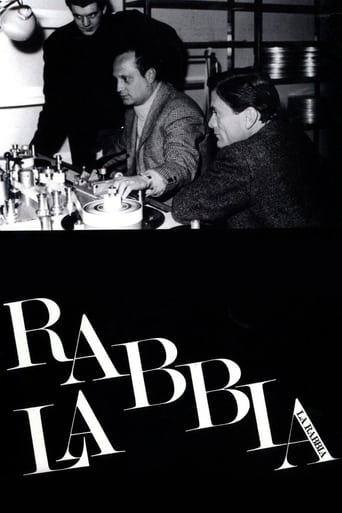 La Rabbia · 1963
La Rabbia
★ 7.01963
MovieDocumentary
Documentary footage (from the 1950s) and accompanying commentary to attempt to answer the existential question, Why are our lives characterized by discontent, anguish, and fear? The film is in two completely separate parts, and the directors of these respective sections, left-wing Pier Paolo Pasolini and conservative Giovanni Guareschi, offer the viewer contrasting analyses of and prescriptions for modern society. Part I, by Pasolini, is a denunciation of the offenses of Western culture, particularly those against colonized Africa. It is at the same time a chronicle of the liberation and independence of the former African colonies, portraying these peoples as the new protagonists of the world stage, holding up Marxism as their "salvation", and suggesting that their "innocent ferocity" will be the new religion of the era. Guareschi's part, by contrast, constitutes a defense of Western civilization and a word of hope, couched in traditional Christian terms, for man's future.
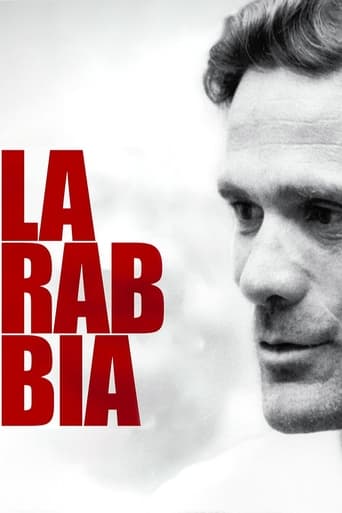 La Rabbia di Pasolini · 2008
La Rabbia di Pasolini
★ 7.52008
MovieDocumentary
An attempt to reconstruct the complete version of Pier Paolo Pasolini's segment of La rabbia.
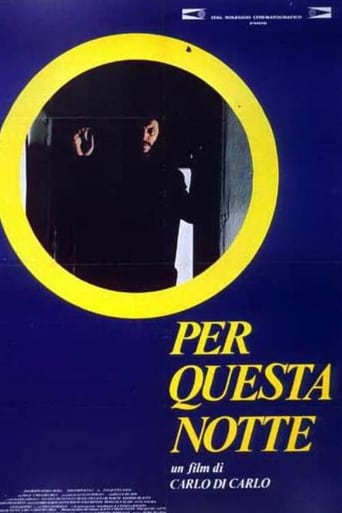 This Is the Night · 1977
This Is the Night
★ 7.01977
MovieDrama
Based on a book by Juan Carlo Onetti, the film tells the story of Ossario, a hunted revolutionary leader who sees his comrades die one after another.
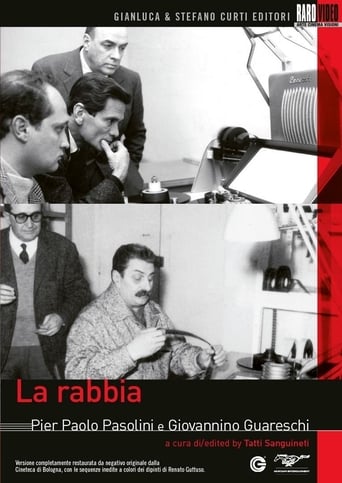 La rabbia 1, la rabbia 2, la rabbia 3... l'Arabia · 2008
La rabbia 1, la rabbia 2, la rabbia 3... l'Arabia
2008
MovieDocumentary
The story of La Rabbia by Pier Paolo Pasolini and Giovanni Guareschi, a movie lost in the archives of a laboratory in Rome, and recently re-discovered.
 Michelangelo Antonioni: The Eye That Changed Cinema · 2001
Michelangelo Antonioni: The Eye That Changed Cinema
★ 9.02001
MovieDocumentary
A look back at the life and works of Michelangelo Antonioni.
Filmography
Sort