F
Directing
Fred Barzyk
Born October 18, 1936 · Milwaukee, Wisconsin, USA (age 90)
Fred Barzyk is an American television director and producer known for his avant-garde work in public television. During his tenure at WGBH in Boston, he directed and produced innovative programs such as The Lathe of Heaven (1980) and Between Time and Timbuktu (1972), the latter based on the works of Kurt Vonnegut. Barzyk's contributions have been recognized with multiple awards, including the Ven…
Known For
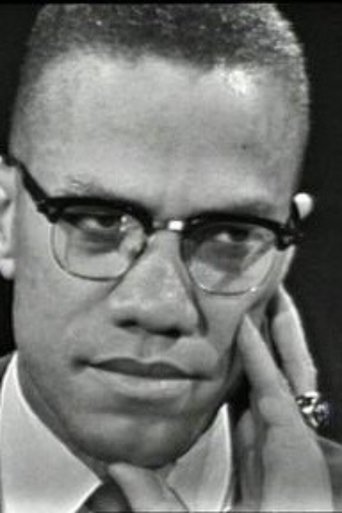 The Negro and the American Promise · 1963
The Negro and the American Promise
1963
MovieTV MovieDocumentary
Dr. Martin Luther King, Malcolm X, and James Baldwin -- three of the most highly regarded civil rights leaders of the 1960s -- were united in their quest for Black empowerment. But their methods of approach were polarizing.
 Countdown to Looking Glass · 1984
Countdown to Looking Glass
★ 6.11984
MovieDramaTV Movie
A fictional confrontation between the United States and the Soviet Union over the Strait of Hormuz, the gateway to the Persian Gulf. The narrative of the film details the events that lead up to the initial exchange of nuclear weapons from the perspective of an on-going news broadcast.
 The Lathe of Heaven · 1980
The Lathe of Heaven
★ 6.61980
MovieScience FictionFantasy
George Orr, a man whose dreams can change waking reality, tries to suppress this unpredictable gift with drugs. Dr. Haber, an assigned psychiatrist, discovers the gift to be real and hypnotically induces Mr. Orr to change reality for the benefit of mankind --- with bizarre and frightening results.
 The Great American Fourth of July and Other Disasters · 1982
The Great American Fourth of July and Other Disasters
★ 6.81982
MovieComedyFamily
An adult Ralphie Parker narrates several humorous stories about his teen years in an Indiana steel town.
 Video: The New Wave · 1975
Video: The New Wave
1975
MovieDocumentary
The New Wave is the seminal compendium of independent video work in the early 1970s. Written and narrated by Brian O'Doherty, this overview of the emerging video field includes examples of guerrilla television and "street" documentaries, early explorations with image-processing and synthesis, and performance video. This historical anthology includes excerpts of tapes by the following video pioneers: Stephen Beck and Warner Jepson, Peter Campus, Douglas Davis, Ed Emshwiller, Bill Etra, Frank Gillette, Don Hallock, Joan Jonas, Richard Serra, Paul Kos, Nam June Paik, Otto Piene, Willard Rosenquist, Dan Sandin, James Seawright, Steina Vasulka, TVTV, Stan Vanderbeek and William Wegman.
 The Medium Is the Medium · 1969
The Medium Is the Medium
1969
MovieTV Movie
Produced by WGBH-TV in Boston, the Medium Is the Medium is one of the earliest and most prescient examples of the collaboration between public television and the emerging field of video art in the U.S. WGBH commissioned artists — Allan Kaprow, Nam June Paik, Otto Piene, James Seawright, Thomas Tadlock and Aldo Tambellini — to create original works for broadcast television. Their works explored the parameters of the new medium, from image processing and interactivity to video dance and sculpture.
 The Star-Crossed Romance of Josephine Cosnowski (a Tale of Gothic Love) · 1985
The Star-Crossed Romance of Josephine Cosnowski (a Tale of Gothic Love)
★ 7.01985
MovieComedyRomance
A comedy written and Narrated by Jean Shepherd. The story involves several different events such as Ralph's first serious romance with his new neighbor, Randy playing a turkey in the school Thanksgiving Day play, The Old Man setting his sights on a yellow buick and the High School basketball rival game of the season.
 Art in Public Places · 1973
Art in Public Places
1973
MovieDocumentary
“It seems funny to say it, but long before there was an ‘art world,’ there was art in the world.” So begins the artist and writer Russell Connor’s meditative tour of public art in New York City.
Filmography
Sort