Acting
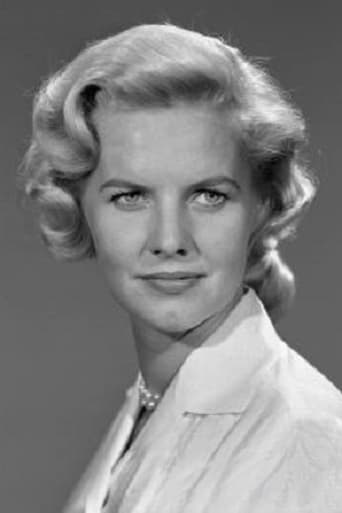
Patricia Cutts
Born July 20, 1926 · London, England, UK
Died September 6, 1974 · aged 48
Patricia Cutts (20 July 1926 – 6 September 1974) was an English film and television actress. She was the first person to portray the character of Blanche Hunt in the ITV soap opera Coronation Street. It would have been her most high-profile regular role to date but after appearing in only two episodes, Cutts was found dead at her flat in Chelsea, London, aged 48. An inquest into her death produced…
Known For
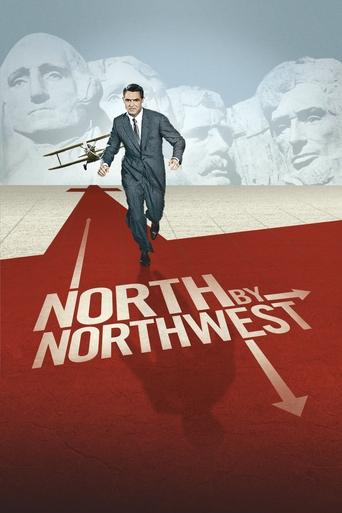 North by Northwest · 1959
North by Northwest
★ 8.01959
MovieThrillerAdventure
Advertising man Roger Thornhill is mistaken for a spy, triggering a deadly cross-country chase.
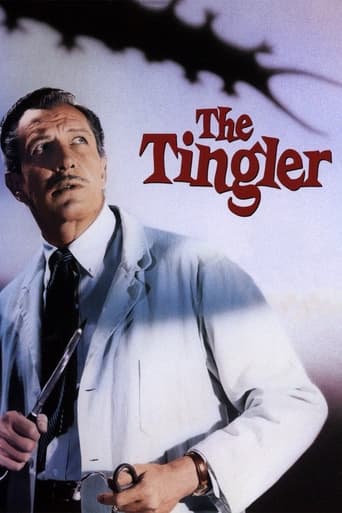 The Tingler · 1959
The Tingler
★ 6.41959
MovieHorrorScience Fiction
A pathologist experiments with a deaf-mute woman who is unable to scream to prove that humans die of fright due to an organism he names The Tingler that lives within each person on the spinal cord and is suppressed only when people scream when scared.
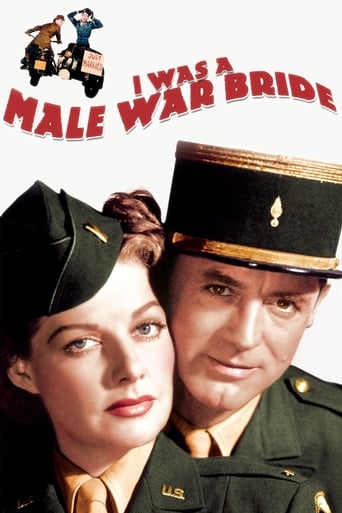 I Was a Male War Bride · 1949
I Was a Male War Bride
★ 6.91949
MovieComedyRomance
After marrying an American lieutenant with whom he was assigned to work in post-war Germany, a French captain attempts to find a way to accompany her back to the States under the terms of the War Bride Act.
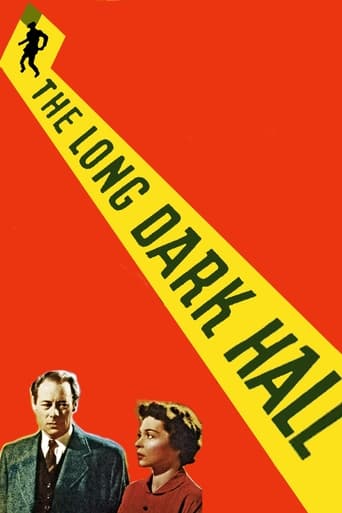 The Long Dark Hall · 1951
The Long Dark Hall
★ 6.71951
MovieCrimeDrama
A devoted family man tries to help a beautiful alcoholic showgirl with her life, and becomes the the only suspect when someone else murders her.
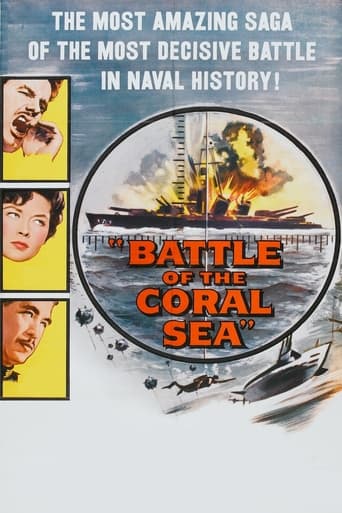 Battle of the Coral Sea · 1959
Battle of the Coral Sea
★ 5.91959
MovieWarDrama
A US submarine and its crew are captured by the Japanese on the eve of a major WWII battle.
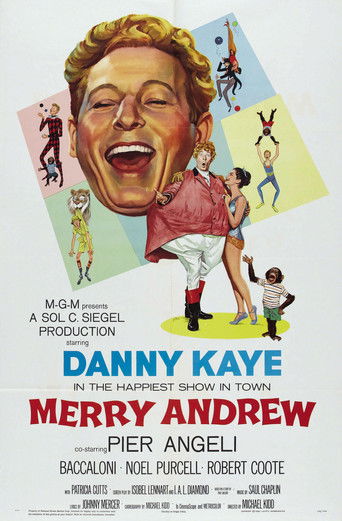 Merry Andrew · 1958
Merry Andrew
★ 6.01958
MovieComedyMusic
When eccentric English teacher Andrew Larabee needs a raise in order for his fiancée to marry him, his interest in archaeology leads him to an ancient statue's burial site. But when he finds a traveling circus directly above the statue's location, he accidentally becomes part of the act. With a newfound passion for performance and an attraction to the beautiful acrobat Selena, Andrew must decide what is truly important to him.
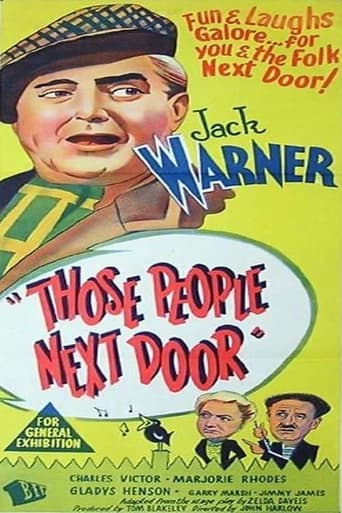 Those People Next Door · 1953
Those People Next Door
★ 5.81953
MovieComedy
The Twiggs are a typical working-class family: Sam (Jack Warner) and Mary (Marjorie Rhodes) are trying to bring their family up in the shadow of the Blitz whilst taking everything in good humour. Their neighbours Joe (Charles Victor) and Emma (Gladys Henson) are constantly in the Twiggs house, borrowing a cup of sugar or using their Anderson shelter and between them the two working class families put the world to rights. But when their daughter falls for an upper class RAF pilot the Twiggs are asked by his mother, Lady Diana Stephens to tell their daughter to call the romance off, as the social gap between the families is too large. Incensed by Lady Diana s offer of money, Sam Twigg throws her out of the house. But events take a sudden turn as the war enters the Twiggs own living room. Will the two families manage to overcome their disdain for each other and let true love find its way?
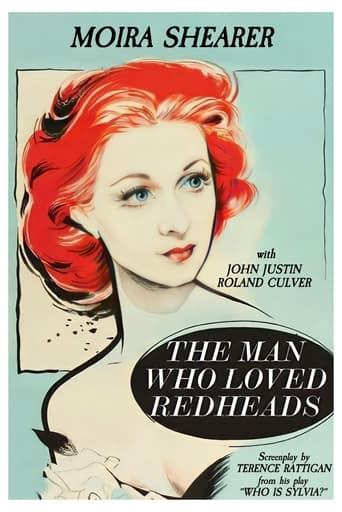 The Man Who Loved Redheads · 1955
The Man Who Loved Redheads
★ 5.11955
MovieComedyMusic
Framed in flashback, The Man Who Loved Redheads is an anecdotal comedy about a man (John Justin) whose life is defined by his first romantic experience. That liaison occurred in Justin's youth, when the young man matures and enters the diplomatic world, he spends the rest of his career searching for his first love.