Acting
Brigitte Helm
Born March 17, 1906 · Berlin, Germany
Died June 11, 1996 · aged 90
Brigitte Helm (17 March 1906 – 11 June 1996) was a German actress, best-remembered for her dual role as Maria and her double, the Maschinenmensch, in Fritz Lang's 1927 silent film Metropolis. Description above from the Wikipedia article Brigitte Helm, licensed under CC-BY-SA, full list of contributors on Wikipedia.
Known For
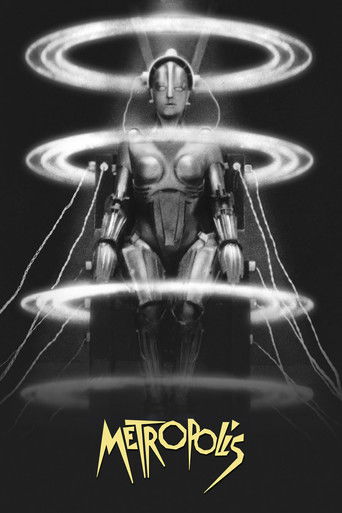 Metropolis · 1927
Metropolis
★ 8.11927
MovieDramaScience Fiction
In a futuristic city sharply divided between the rich and the poor, the son of the city's mastermind meets a prophet who predicts the coming of a savior to mediate their differences.
 The Love of Jeanne Ney · 1927
The Love of Jeanne Ney
★ 7.21927
MovieDrama
In the Crimea, the Reds and the Whites aren't done fighting, and Jeanne discovers that the man she loves is a Bolshevik (when he kills her father). Penniless, she returns to Paris where she works for her uncle. Soon after, her lover Andreas is in France to organize the sailors in Toulon. So also is a thief, traitor, and libertine, Khalibiev, who wants to seduce Jeanne. His schemes, Jeanne and Andreas's naivete, and a lost diamond bring the lovers to the brink of tragedy.
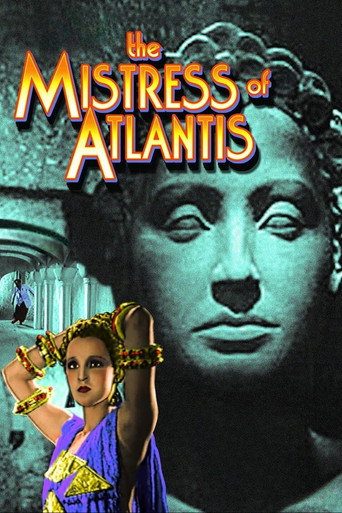 The Mistress of Atlantis · 1932
The Mistress of Atlantis
★ 5.31932
MovieAdventureFantasy
Antinea, the Queen of Atlantis, rules her secret kingdom hidden beneath the Sahara Desert. One day two lost explorers stumble into her kingdom, and soon realize that they haven't really been saved-- Antinea has a habit of taking men as lovers, then when she's done with them, she kills them and keeps them mummified.
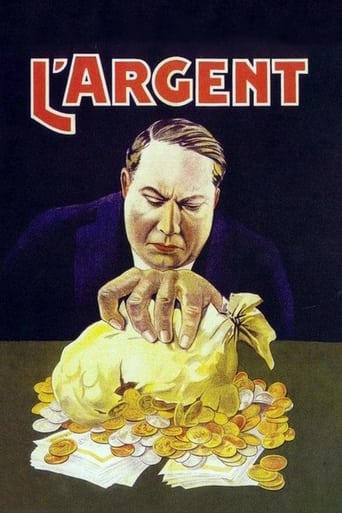 L'Argent · 1928
L'Argent
★ 7.01928
MovieDrama
Adapted from the novel L'Argent by Émile Zola, the film portrays the world of banking and the stock market in Paris in the 1920s.
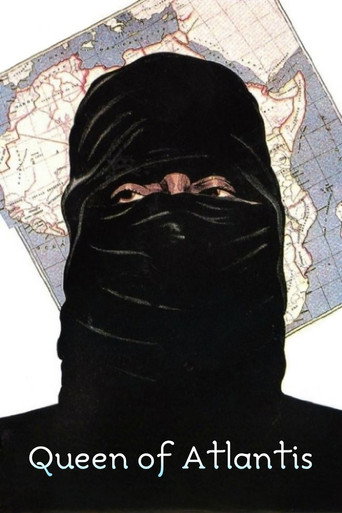 Queen of Atlantis · 1932
Queen of Atlantis
★ 6.41932
MovieFantasyScience Fiction
Two young officers, Saint-Avit and Morhange, get lost in the desert and find themselves prisoners of the beautiful Antinéa, queen of the city of Atlantis. Saint-Avit, blinded by his love for her, obeys her when she orders him to kill his comrade... With L’Atlantide, Pabst offers a psychoanalytic reading of Benoit’s novel, with a dominant female figure who enslaves her lovers before destroying them. The film’s fantasy dimension is disturbing, L’Atlantide bathes in a humid nightmare atmosphere, between the desperate search for a missing friend and the apparitions of an underworld lost in the desert. A long, discursive flashback suggests the Parisian origins of Antinéa, born from the marriage between Clémentine, a pretty, light-thighed French Cancan dancer, and an Arab prince seduced during a theatrical performance. But again, it's impossible to know whether these are the ramblings of an old alcoholic or the strange truth.
 The Wonderful Lies of Nina Petrovna · 1929
The Wonderful Lies of Nina Petrovna
★ 7.11929
MovieHistoryRomance
This silent-screen classic, like many others produced near the end of the silent era, was both a theatrical extravaganza boasting an original orchestral score and an item which languished in obscurity for many years. When Carlo Piccardi took what was left of the score by Maurice Jaubert and re-created it, the existing footage was restored and paired with a new orchestral performance which was shown in Paris in 1988. The film's story concerns the travails of a woman who has been living quite comfortably as the mistress of a colonel in the Tsar's army in Russia. However, she eventually encounters a penniless young lieutenant and falls madly in love with him, as he does with her. Despite her best intentions of remaining with the colonel, and his intention to avoid trouble with his fellow soldiers, they cannot forswear this relationship, and tragedy is the inevitable result. The title refers to a moving incident in the story, and translates as "the wonderful lie of Nina Petrovna."
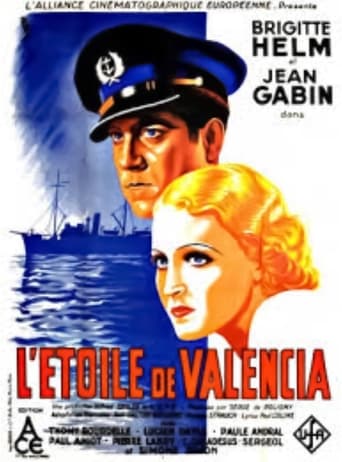 L'Étoile de Valencia · 1933
L'Étoile de Valencia
★ 10.01933
MovieDrama
Because a sailor once told Pedro Savedra his wife, Marion, cheated on him, he left her. Learning later that it was nothing but a practical joke, Pedro decides to find her and win her back. He finally traces her in Palma de Mallorca, where she has become a cabaret singer. To set her free, he needs money and accepts a job. But Palesco, the nightclub owner, does not agree to let Marion go and will not shy about throwing a wrench in the gears.
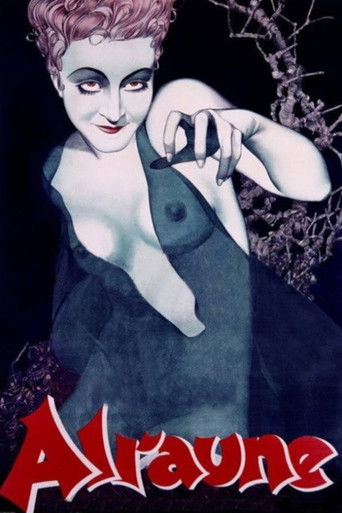 A Daughter Of Destiny · 1928
A Daughter Of Destiny
★ 6.41928
MovieDramaFantasy
Hanns Heinz Ewers' grim science-fiction novel Alraune has already been filmed twice when this version was assembled in 1928. In another of his "mad doctor" roles, Paul Wegener plays Professor Brinken, sociopathic scientist who combines the genes of an executed murderer with those of a prostitute. The result is a beautiful young woman named Alraune (Brigitte Helm), who is incapable of feeling any real emotions -- least of all guilt or regret. Upon attaining adulthood, Alraune sets about to seduce and destroy every male who crosses her path. Ultimately, Professor Brinken is hoist on his own petard when he falls hopelessly in love with Alraune himself. Alraune was remade in 1930, with Brigitte Helm repeating her role, and again in 1951, with Hildegarde Knef as the "heroine" and Erich von Stroheim as her misguided mentor.