S
Acting
Sylvie Thénault
No biography available.
Known For
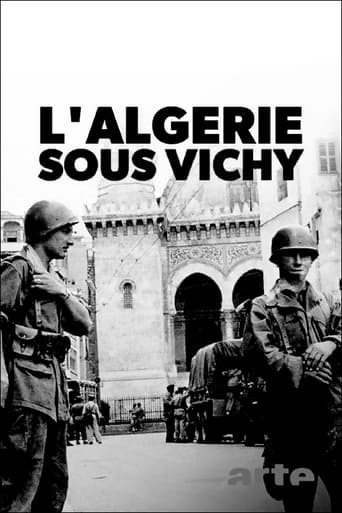 Algeria 1943: A Colony Under Vichy Control · 2022
Algeria 1943: A Colony Under Vichy Control
★ 7.52022
MovieDocumentaryHistory
World War II, June 1940. France has fallen and suffers the relentless boot of Nazi Germany. But Algeria, the prized French colony in North Africa, remains part of the territory controlled by the Vichy regime of Marshal Pétain. A strict colonial order is maintained: the French of European origin rule, while local Jews are stripped of French citizenship and discrimination against the mainly Muslim population increases.
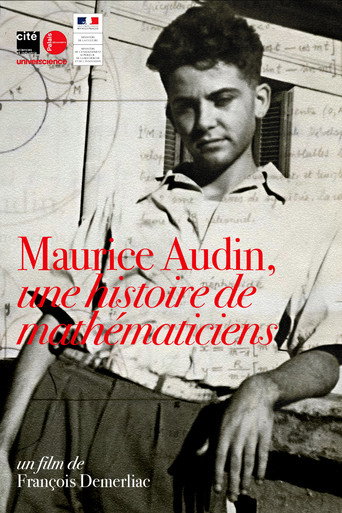 Maurice Audin, a story of mathematicians · 2018
Maurice Audin, a story of mathematicians
★ 10.02018
MovieDocumentary
On September 13, 2018, President Emmanuel Macron visited Josette Audin at her home in Bagnolet to ask for her forgiveness, presenting her with a declaration acknowledging that her husband had died under torture at the hands of a "legally established system" implemented by the former French colonial power in Algeria. This acknowledgment, however belated, is a victory for Josette Audin and her family, but above all, it is a victory for human rights, achieved together by mathematicians and historians. This film retraces this shared commitment against torture and state abuses, first within the Audin Committee and then within the Committee of Mathematicians, which also intervened to support other mathematicians imprisoned and sometimes tortured around the world.
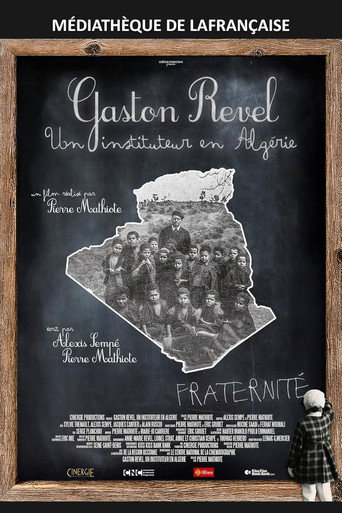 Gaston Revel, a schoolteacher in Algeria · 2021
Gaston Revel, a schoolteacher in Algeria
★ 10.02021
MovieDocumentaryHistory
In 1936, Gaston Revel entered the École Normale in Algiers, where he was supposed to learn how to "educate the native." It was also during this time that he began to take an interest in politics: he was drawn to the Popular Front, then to Spanish anarchism, and finally to communism. From 1940 to 1955, he taught in Algeria, first in rural areas, then in Bejaia. He returned to Europe because of the war and landed in Provence in September 1914, following the Allied advance. It was in Bejaia, in 1945, that he became fully committed to the Algerian Communist Party: in 1953, he ran for municipal office in the second electoral district (reserved for Algerians) and sat alongside the Muslims. In 1955, at the beginning of the war, he was forced to leave Algeria against his will. But, like thousands of other "red feet," he returned there in 1962 and resumed his teaching career. From all those years, he left a complete and deeply committed record, many letters, notebooks, and newspaper articles.
Filmography
Sort