Directing
Vera Stroyeva
Born October 4, 1903 · Kiev, Kiev Governorate, Russian Empire [now Kyiv, Kyiv Oblast, Ukraine]
Died August 26, 1991 · aged 87
Soviet director and screenwriter. Married to director Grigoriy Roshal.
Known For
 Russia's Heart · 1971
Russia's Heart
★ 8.01971
MovieDramaHistory
Reminiscing the 1917 Russian October Revolution, a time when the films' director was 14 years old.
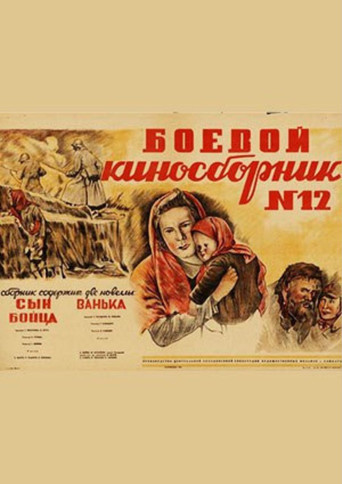 Collection of Films for the Armed Forces #12 · 1942
Collection of Films for the Armed Forces #12
1942
Movie
 Boris Godunov · 1954
Boris Godunov
★ 3.01954
MovieMusicDrama
Russian filmmaker Vera Stroyeva specialized in cinematic adaptations of famous operas. One of the most successful of these was her 1955 film version of Mussorgsky and Pushkin's Boris Godunov. Stroyeva's adaptation deftly streamlines the story of a Russian czar whose life is placed in jeopardy by a pretender to his throne. A. Pirogov sings the title role, while G. Nellep provides vocal and visual menace as the "False Dmitri". The use of a color process known as Magicolor adds just the right touch of theatrical artificiality to the pomp-and-splendor proceedings.
 The Grand Concert · 1951
The Grand Concert
★ 5.51951
MovieMusic
Young Soviet farm workers are treated to a weekend in Moscow visiting the Bolshoi theater, in gratitude for which they invite the artists who've befriended them to visit their farm and be entertained by performances of their own.
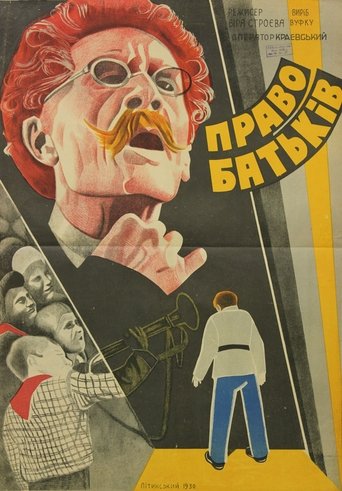 Parental Rights · 1931
Parental Rights
★ 7.01931
MovieDrama
The clockmaker practices what is known as \"parental rights\" – he mercilessly beats his son Boris for every misdemeanor. The boy grows up intimidated, angry, trusting no one, and befriending no one. One day, while the students at the polytechnic school where Boris studies are busy with a physical education class, he deliberately destroys a model that the students have worked so hard to build. The teacher prevents a cruel punishment of the culprit. The school community takes on the responsibility of re-educating Boris. Considered lost.
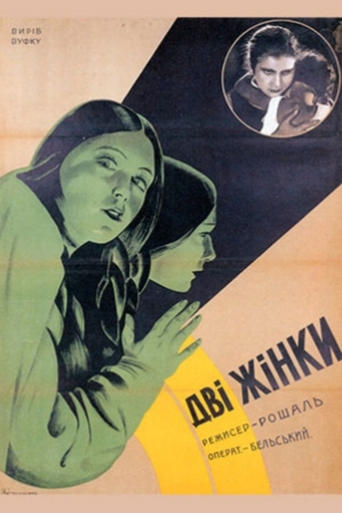 Two Women · 1930
Two Women
★ 9.01930
MovieDrama
During the NEP era, the ex-wife of a White officer, now married to a dedicated Soviet worker and lover to several bourgeois “specialists”, is expelled by her husband’s party for her affairs. Meanwhile, the commissar’s wife, once captured by White Cossacks, helps her husband lead a prisoner revolt and later serves as an exchange inspector on the commodity exchange. When she exposes the director’s fraud and her husband is wrongly implicated, both are reassigned to the provinces and depart together. Considered lost.
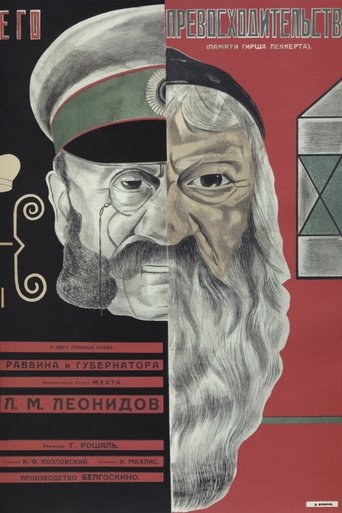 His Excellency · 1928
His Excellency
★ 7.51928
MovieDrama
This 1928 film features stylized cinematography and actors from the Moscow Art Theater in a fiction story based on the life of Jewish Labor Bund member Hirsch Lekert who attempted to assassinate the Vilna governor in 1902 to avenge the flogging of workers who participated in a May Day rally.
 Batyr of the Steppes · 1942
Batyr of the Steppes
1942
MovieDrama
After several days of the offensive, the Red Army detachment settles down to rest. At a halt, the warrior Kuregen tells his comrades-in-arms the story of the feat of the legendary Kazakh batyr Tolagai, who sacrificed his life for the people's good a thousand years ago.
Filmography
Sort