J
Acting
James Mellor
Born February 4, 1933 · Huddersfield, Yorkshire, England, UK
Died January 28, 1976 · aged 42
James Mellor was born on 4 February 1933 in Huddersfield, Yorkshire, England, UK. He was an actor and producer, known for Doctor Who (1963), Night After Night After Night (1969) and The Six Wives of Henry VIII (1970). He died on 28 January 1976 in Lambeth, London, England, UK.
Known For
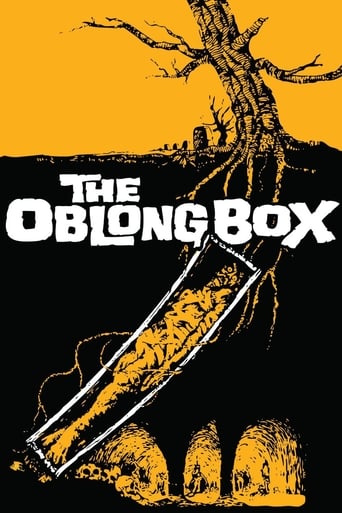 The Oblong Box · 1969
The Oblong Box
★ 5.81969
MovieHorror
Evil lurks in the gloomy house at Markham Manor where a deranged Sir Edward is the chained prisoner of his brother Julian. When Sir Edward escapes, he embarks on a monstrous killing spree, determined to seek revenge on all those whom he feels have double-crossed him.
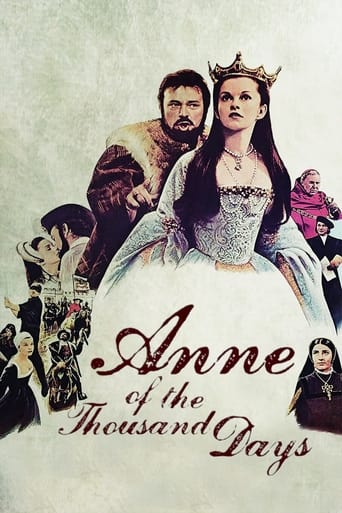 Anne of the Thousand Days · 1969
Anne of the Thousand Days
★ 7.21969
MovieDramaHistory
Henry VIII of England discards his wife, Katharine of Aragon, who has failed to produce a male heir, in favor of the young and beautiful Anne Boleyn.
 The Persecution and Assassination of Jean-Paul Marat as Performed by the Inmates of the Asylum of Charenton Under the Direction of the Marquis de Sade · 1967
The Persecution and Assassination of Jean-Paul Marat as Performed by the Inmates of the Asylum of Charenton Under the Direction of the Marquis de Sade
★ 6.21967
MovieMusicDrama
In Charenton Asylum, the Marquis de Sade directs a play about Jean Paul Marat's death, using the patients as actors. Based on 'The Persecution and Assassination of Jean-Paul Marat as Performed by the Inmates of the Asylum of Charenton Under the Direction of the Marquis de Sade', a 1963 play by Peter Weiss.
 Herostratus · 1967
Herostratus
★ 6.41967
MovieDrama
When a young poet hires a marketing company to turn his suicide into a mass-media spectacle, he finds that his subversive intentions are quickly diluted into a reactionary gesture.
 On the Game · 1974
On the Game
★ 3.71974
MovieComedy
Comic look at the history of prostitution.
 Doctor Who: The Mutants · 1972
Doctor Who: The Mutants
★ 7.21972
MovieScience FictionDrama
The Time Lords send the Doctor and Jo on a mission to deliver a sealed message pod to an unknown party aboard a Skybase orbiting the planet Solos in the 30th century. They are caught quickly in a power struggle between the cruel Marshal of Solos and the young Solonian Ky over the future of Solos - a future that hinges on the contents of the message.
 Great Catherine · 1968
Great Catherine
★ 5.91968
MovieComedy
When British Capt. Charles Edstaston arrives at the court of Catherine the Great in St. Petersburg, Russia, he is stunned by the palace's disorderly condition. The severely intoxicated Prince Potemkin concludes that the handsome Edstaston would be a suitable lover for Catherine, and he coerces the bewildered visitor into her bedchamber. Edstaston manages to escape, but he is repeatedly recaptured and delivered to the mischievous Catherine.
 Doctor Who: The Wheel in Space · 1968
Doctor Who: The Wheel in Space
★ 5.81968
MovieDramaAction
The Second Doctor and Jamie arrive on what appears to be a space station called the "Wheel in Space" it's here that they meet Zoe Herriot a young parapsychology librarian, The Doctor hits his head concussing him leaving Jamie and Zoe to defend off the Cybermen from taking over "The Wheel in Space."
Filmography
Sort
Anne of the Thousand Days · 1969Anne of the Thousand Days
★ 7.21969
MovieDramaHistory
Henry VIII of England discards his wife, Katharine of Aragon, who has failed to produce a male heir, in favor of the young and beautiful Anne Boleyn.
Scribe to Cromwell (uncredited)