V
Acting
Vladimír Řepa
Born November 8, 1900 · Prague, Bohemia, Austria-Hungary [now Czech Republic]
Died August 19, 1957 · aged 56
No biography available.
Known For
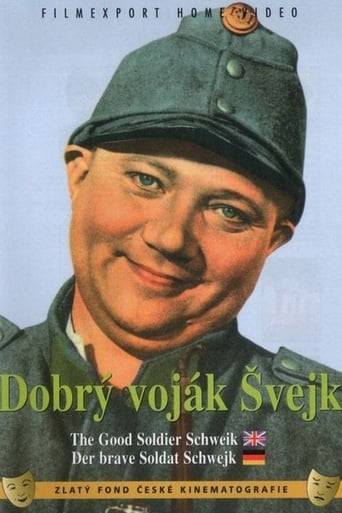 The Good Soldier Švejk · 1957
The Good Soldier Švejk
★ 7.51957
MovieComedyWar
Good-natured and garrulous, Schweik becomes the Austrian army's most loyal Czech soldier when he is called up on the outbreak of World War I -- although his bumbling attempts to get to the front serve only to prevent him from reaching it. Playing cards and getting drunk, he uses all his cunning and genial subterfuge to deal with the police, clergy, and officers who chivy him toward battle.
 The Emperor and the Golem · 1951
The Emperor and the Golem
★ 7.01951
MovieComedyFantasy
The Emperor's mismanagement of his country is provoking some in his court to plot to overthrow him. He feels successful, at least, when he discovers the legendary Golem, which he believes can protect him and even cure his imaginary illnesses but, when he disappears while on a bender, his kindly baker, who looks just like him, is mistaken for him, and begins to put things in order. However, the conspirators, not to be outdone, determine to bring the Golem back to life to do their bidding.
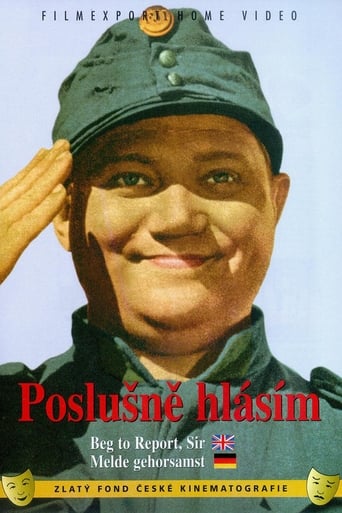 I Dutifully Report · 1958
I Dutifully Report
★ 6.91958
MovieComedyWar
A comedy based on the novel of Jaroslav Hašek's The Good Soldier Svejk happens during the World War I. I Dutifully Report: In the introduction to the second part of the film adaptation of Hašek's novel The Good Soldier Švějk presents his main character Josef Švejk. With the distinctive traditional Czech cartoon character of a soldier Svejk, this time you meet on the way to the front and eventually right in the firing line. You can look at his famous train events, and also probably the most famous episode of the novel, Švejk's Budějovice anabasis. Don't miss the scene with the secretly bought cognac, the episode with Svejk as a fake Russian prisoner of war, including the court scene, and the scene in which lieutenant Dub is caught in a brothel. Despite the criticism, Steklý's adaptation is undoubtedly the most famous and memorable at present.
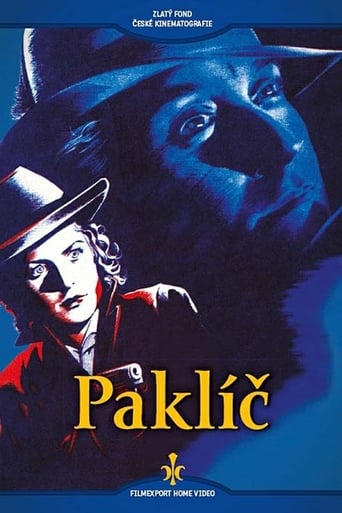 Paklíc · 1944
Paklíc
★ 6.01944
MovieComedyCrime
Successful writer Gabriel Anděl still loves his wife Lola very much, but he can't stand the way she is always getting involved in his work, so he decides to divorce her. Just as he is about to move into his country villa, a police inspector appears on the scene with a warning that some crooks are planning to sell the house in question to a rich Czech-American. Anděl and the inspector immediately drive there and indeed find a gang of criminals disguised as servants. However, these are far from the only crooks involved in this complicated case. Before the crazy night is over, Gabriel and Lola will have many more surprises and complicated situations...
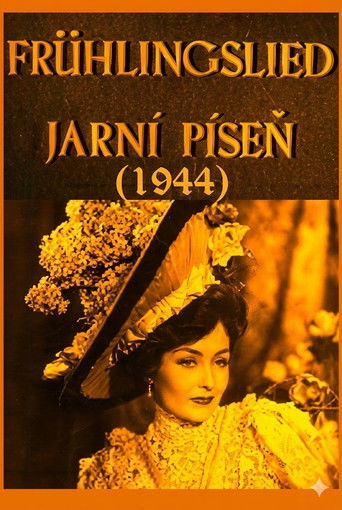 Jarní píseň · 1944
Jarní píseň
★ 8.01944
MovieRomanceDrama
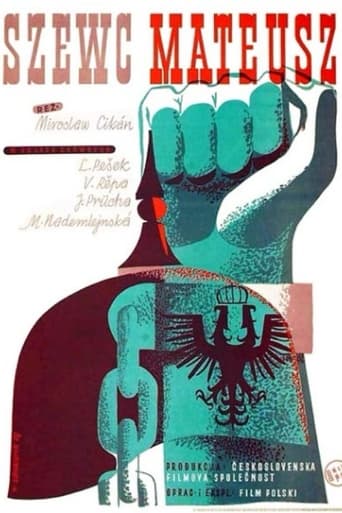 O ševci Matoušovi · 1948
O ševci Matoušovi
★ 5.01948
MovieDramaHistory
The revolutionary year of 1848 brought great hopes among the hitherto silent classes, awakening social and national hopes. The response also penetrated the remote countryside, even as far as the Podkrkonoše Mountains. The young shoemaker there began to take an interest in social and political events, and he also experienced disappointment in later developments.
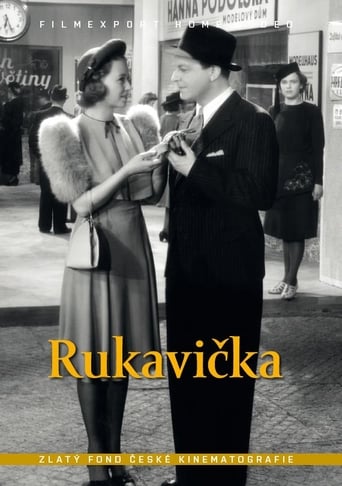
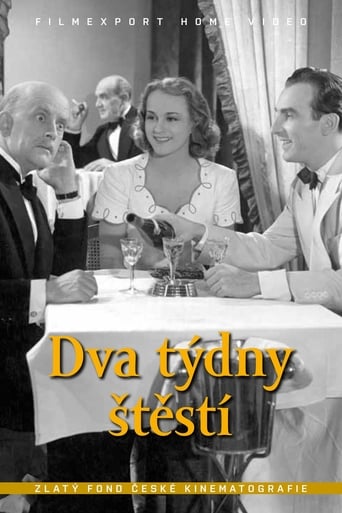 Dva týdny štěstí · 1940
Dva týdny štěstí
★ 7.01940
MovieComedy
Young civil servant Marta Urbanová wins a two-week stay at a luxury hotel. While looking for a typing room, she accidentally finds herself in the suite of the Minister of Finance, who mistakes her for a typist. Marta complies with the request of the Minister's secretary Diviš and stays to take dictation...
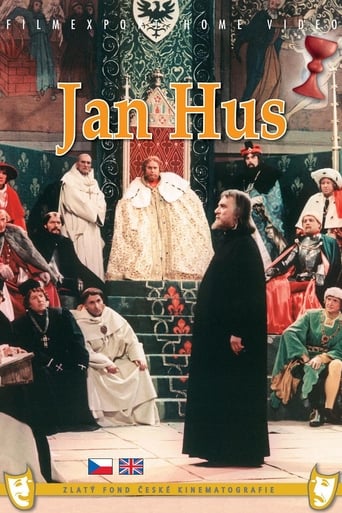 Jan Hus · 1955
Jan Hus
★ 6.31955
MovieDramaHistory
The first part of the "Hussite Revolutionary Trilogy", completed with Jan Žižka (1955) and Proti všem (Against All Odds, 1957). The film captures the period from May 1412 to the summer of 1415, a turbulent time in the Czech Kingdom, during which there were protests in Prague against the sale of "omnipotent indulgences" whose sale throughout the kingdom was announced by Pope John XXIII. The ideological leader of this movement is the preacher Master Jan Hus, whose words, calling for the elimination of church abuses, are listened to in the Bethlehem Chapel by thousands of ordinary Praguers, Czech lords and Queen Sophie, wife of the Czech King Wenceslas IV.