Directing
Pedro Rivera
Born May 1, 1939 · Panama City, Panama (age 87)
Pedro Rivera, born on January 5, 1939 in Panama, is a narrative writer, poet and filmmaker. Among his poetry books are worth to mention Las voces del dolor que trajo el alba (1958), Panamá, incendio de sollozos (1959), Los pájaros regresan de la niebla (1969), Para hacer el amor con la ventana abierta (1989). His narrative and essays include a great number of tittles among which the most outstandi…
Known For
 Los 505 · 1973
Los 505
1973
MovieDocumentary
As part of the process of political and social transformations undertaken by the military government, a new political model based on the election of corregimiento representatives (505 in total) popularly chosen and that will replace the former Assembly of Deputies controlled by political parties by political parties traditional The majority of the members of this new political experiment are peasants, indigenous, workers and community leaders.
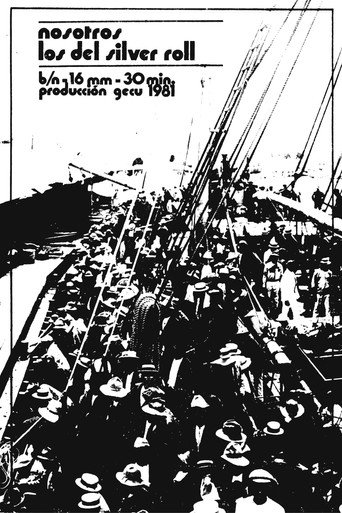 Nosotros los del Silver Roll · 1981
Nosotros los del Silver Roll
1981
MovieDocumentary
Afro-Antillean workers hired for the construction of the Panama Canal are brought from their homes to work in conditions that were not those promised. They, the descendants of African slaves and domesticated from England, manage to raise their voices against American injustices.
 Hombres de cara al viento · 1976
Hombres de cara al viento
1976
MovieDocumentary
Documentary dedicated to Manuel Tito Benitez, a volunteer member of the Student Federation of Panama who died in an accident while performing volunteer work in the remote region of Coclesito. The film depicts this experience and testifies to the efforts of the students in the struggle for national liberation.
 Canto a la patria que ahora nace · 1972
Canto a la patria que ahora nace
1972
MovieDocumentary
Based on a poem and archive images, the military aggression of the US army stationed in the Canal Zone against the Panamanian people who demand to raise their flag in the territory occupied since the beginning of the 20th century is reconstructed and denounced. The aggression that occurred between January 9 and 11, 1964 left a balance of 21 patriots.
 Aquí, Bayano: Cambio… La Quema · 1974
Aquí, Bayano: Cambio… La Quema
1974
MovieDocumentary
Synthesis of the first stage of the comprehensive development project for the Bayano region, aimed at converting a marginalized rural region into a pole of national development. 34 thousand hectares of jungle are cut down and burned to be converted into a lake that will serve as a reservoir for a state hydroelectric plant.
 Cubagua · 1987
Cubagua
★ 8.51987
MovieFantasyHistory
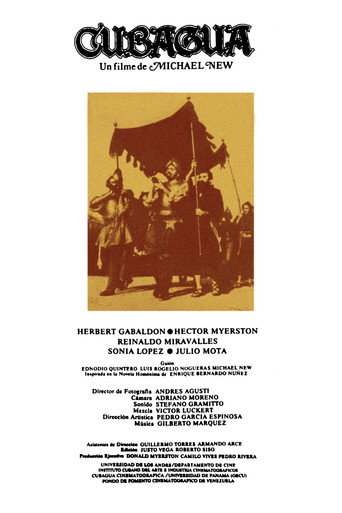
Based on the novel by Venezuelan writer Enrique Bernardo Núñez, the film tells the story of engineer Leiziaga discovering his historical doubles in the context of the colonization of the island of Cubagua in Venezuela. In this way, two stories are intertwined: one that takes place in the 16th century and another in the 20th century. The first story focuses on the life of the Spanish settlers who arrived in Cubagua and the exploitation of the indigenous peoples for pearl extraction; the second story, set in the 1920s, tells of Leiziaga's archaeological expedition, financed by a multinational oil company, in which he visits the island to study the ruins of the Spanish settlement, which leads him to reflect on the passage of time and the destruction caused by human exploitation, and through a game of mirrors, to realize the relationships between the past, present and future.
Filmography
Sort