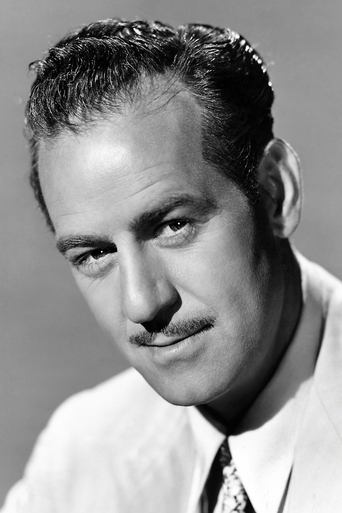
Roy Barcroft

Acting

Roy Barcroft

Born September 7, 1902 · Crab Orchard, Nebraska, USA

Died November 28, 1969 · aged 67

Roy Barcroft (born Howard Harold Ravenscroft; September 7, 1902 – November 28, 1969) was an American character actor famous for playing villains in B-Westerns and other genres. From 1937 to 1957, he appeared in more than 300 films for Republic Pictures. Some of his prominent roles were the marshal in Oklahoma! (1955) and Colonel Jim Logan in The Adventures of Spin & Marty (1955 - 1957).

Known For
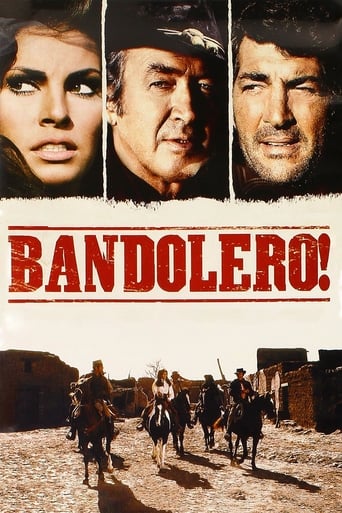
Bandolero!Bandolero! · 1968
Bandolero!
6.61968
MovieWestern
Posing as a hangman, Mace Bishop arrives in town with the intention of freeing a gang of outlaws, including his brother, from the gallows. Mace urges his younger brother to give up crime. The sheriff chases the brothers to Mexico. They join forces, however, against a group of Mexican bandits.
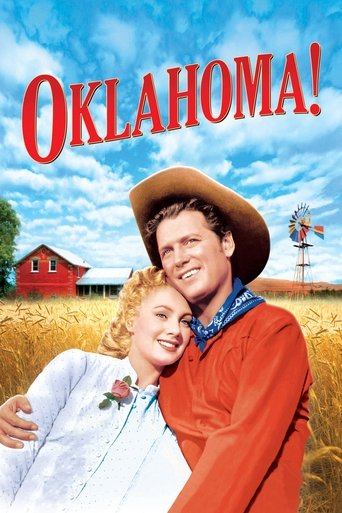
Oklahoma!Oklahoma! · 1955
Oklahoma!
6.61955
MovieWesternMusic
There's a box social coming up, and Curly asks Laurey if she'll be his date. Trouble is, Laurey thinks he's waited too long, and in a fit of pique accepts an offer from the boorish ranch hand Jud instead. Meanwhile, Laurey's friend Ado Annie is also torn between two men: cowboy Will and foreign peddler Ali Hakim. Both women struggle to know their own hearts before it's too late.
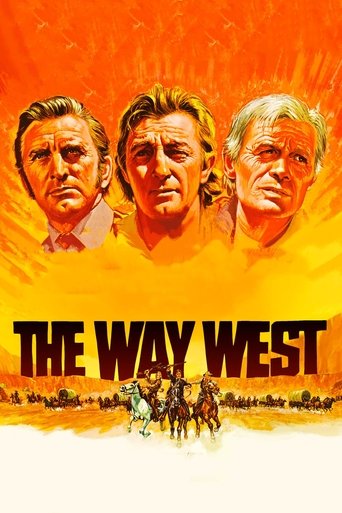
The Way WestThe Way West · 1967
The Way West
6.11967
MovieActionAdventure
In the mid-19th century, Senator William J. Tadlock leads a group of settlers overland in a quest to start a new settlement in the Western US. Tadlock is a highly principled and demanding taskmaster who is as hard on himself as he is on those who have joined his wagon train. He clashes with one of the new settlers, Lije Evans, who doesn't quite appreciate Tadlock's ways. Along the way, the families must face death and heartbreak and a sampling of frontier justice when one of them accidentally kills a young Indian boy.
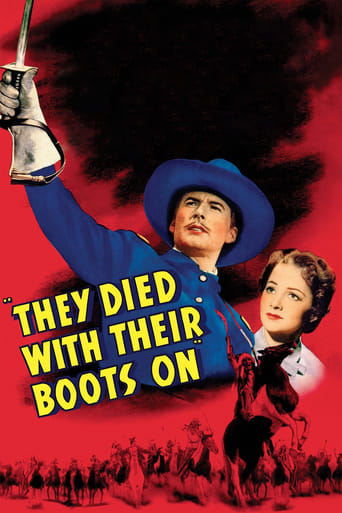
They Died with Their Boots OnThey Died with Their Boots On · 1941
They Died with Their Boots On
6.71941
MovieWesternWar
The story follows General George Armstrong Custer's adventures from his West Point days to his death. He defies orders during the Civil War, trains the 7th Cavalry, appeases Chief Crazy Horse and later engages in bloody battle with the Sioux nation.
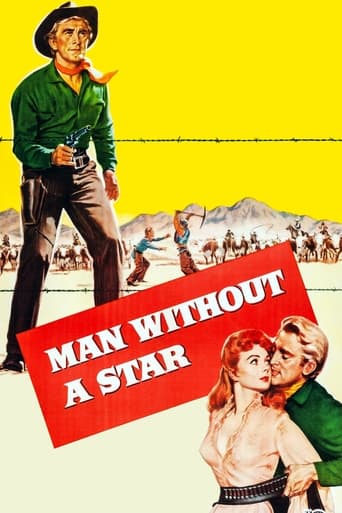
Man Without a StarMan Without a Star · 1955
Man Without a Star
6.41955
MovieWestern
A wandering cowboy gets caught up in a range war.
Flash GordonFlash Gordon · 1936
Flash Gordon
6.41936
MovieScience FictionAction
Disaster seems imminent when scientists discover that the planet Mongo is about to crash into Earth. Luckily, heroic young Flash Gordon is on hand to lead an investigative mission into outer space and onto the speedily approaching planet. There, he and his best girl, Dale, who is along for the ride, learn that Ming, the devious ruler of Mongo, has purposely put the planet on a collision course with Earth, and only Flash can stop him.
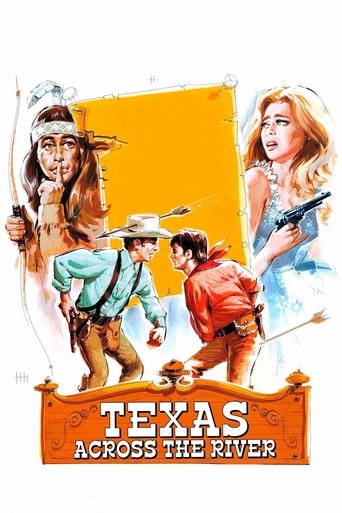
Texas Across the RiverTexas Across the River · 1966
Texas Across the River
5.61966
MovieComedyWestern
The Louisiana wedding of debutante Phoebe Ann Naylor to Don Andrea de Baldasar, El Duce de la Casala is stopped by the Cavalry over a matter of honor. Don Andrea flees across the river to Texas, where he meets up with Sam Hollis and his Indian sidekick, Kronk, who are carrying rifles to the town of Moccasin Flats. Don Andrea rescues an Indian maiden, Lonetta, tames some longhorns, competes with Sam for Phoebe's affections, eludes a Comanche war party and the cavalry and ultimately saves the town and gets his girl.
The Fighting SeabeesThe Fighting Seabees · 1944
The Fighting Seabees
6.21944
MovieDramaAction
Construction workers in World War II in the Pacific are needed to build military sites, but the work is dangerous and they doubt the ability of the Navy to protect them. After a series of attacks by the Japanese, something new is tried, Construction Battalions (CBs=Seabees). The new CBs have to both build and be ready to fight.

Filmography

Sort
DakotaDakota · 1945
Dakota
5.21945
MovieWestern
In 1871, professional gambler John Devlin elopes with Sandra "Sandy" Poli, daughter of Marko Poli, an immigrant who has risen to railroad tycoon. Sandy, knowing that the railroad is to be extended into Dakota, plans to use their $20,000 nest egg to buy land options to sell to the railroad at a profit. On the stage trip to Ft. Abercrombie, their fellow passengers are Jim Bender and Bigtree Collins, who practically own the town of Fargo and Devlin is aware that they are prepared to protect the little empire... trying to drive out the farmers by burning their property, destroying their wheat, and blaming the devastation on the Indians. Continuing their journey north on the river aboard the "River Bird', Sandy and John meet Captain Bounce, an irascible old seafarer. Two of Bendender's henchmen, Slagin and Carp, board the boat and relieve John of his $20,000 at gunpoint. Captain Bounce, chasing the robber's dinghy..

Poli's Driver

The Andy Griffith ShowThe Andy Griffith Show · 1960
The Andy Griffith Show
7.61960
SeriesComedyFamily
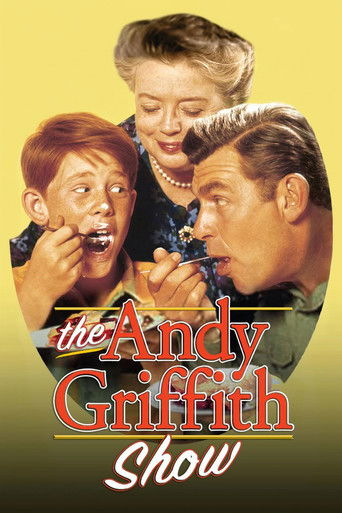
The Andy Griffith Show is an American sitcom first televised on CBS between October 3, 1960 and April 1, 1968. Andy Griffith portrays the widowed sheriff of the fictional small community of Mayberry, North Carolina. His life is complicated by an inept, but well-meaning deputy, Barney Fife, a spinster aunt and housekeeper, Aunt Bee, and a precocious young son, Opie. Local ne'er-do-wells, bumbling pals, and temperamental girlfriends further complicate his life. Andy Griffith stated in a Today Show interview, with respect to the time period of the show: "Well, though we never said it, and though it was shot in the '60s, it had a feeling of the '30s. It was when we were doing it, of a time gone by." The series never placed lower than seventh in the Nielsen ratings and ended its final season at number one. It has been ranked by TV Guide as the 9th-best show in American television history. Though neither Griffith nor the show won awards during its eight-season run, series co-stars Knotts and Bavier accumulated a combined total of six Emmy Awards. The show, a semi-spin-off from an episode of The Danny Thomas Show titled "Danny Meets Andy Griffith", spawned its own spin-off series, Gomer Pyle, U.S.M.C., a sequel series, Mayberry R.F.D., and a reunion telemovie, Return to Mayberry. The show's enduring popularity has generated a good deal of show-related merchandise. Reruns currently air on TV Land, and the complete series is available on DVD. All eight seasons are also now available by streaming video services such as Netflix.

Clint Biggers

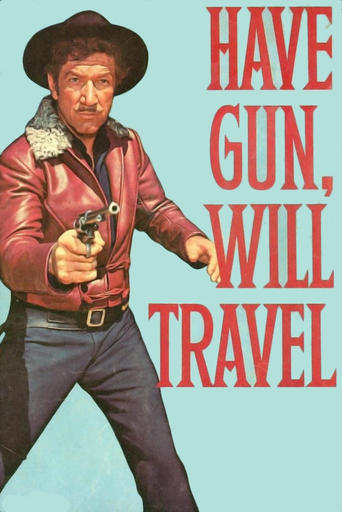
Have Gun, Will TravelHave Gun, Will Travel · 1957
Have Gun, Will Travel
7.31957
SeriesWesternAction & Adventure
Have Gun – Will Travel is an American Western television series that aired on CBS from 1957 through 1963. It was rated number three or number four in the Nielsen ratings every year of its first four seasons. It was one of the few television shows to spawn a successful radio version. The radio series debuted November 23, 1958. The television show is presently shown on the Encore-Western channel. Have Gun – Will Travel was created by Sam Rolfe and Herb Meadow and produced by Frank Pierson, Don Ingalls, Robert Sparks, and Julian Claman. There were 225 episodes of the TV series, 24 written by Gene Roddenberry. Other contributors included Bruce Geller, Harry Julian Fink, Don Brinkley and Irving Wallace. Andrew McLaglen directed 101 episodes and 19 were directed by series star Richard Boone.

Jim Sherwood

The Lucy ShowThe Lucy Show · 1962
The Lucy Show
7.01962
SeriesComedy
The Lucy Show is an American sitcom that aired on CBS from 1962–68. It was Lucille Ball's follow-up to I Love Lucy. A significant change in cast and premise for the 1965–66 season divides the program into two distinct eras; aside from Ball, only Gale Gordon, who joined the program for its second season, remained. For the first three seasons, Vivian Vance was the co-star. The earliest scripts were entitled The Lucille Ball Show, but when this title was declined, producers thought of calling the show This Is Lucy or The New Adventures of Lucy, before deciding on the title The Lucy Show. Ball won consecutive Emmy Awards as Outstanding Lead Actress in a Comedy Series for the series' final two seasons, 1966–67 and 1967–68.

Chief of Police

LawmanLawman · 1958
Lawman
6.01958
SeriesWestern
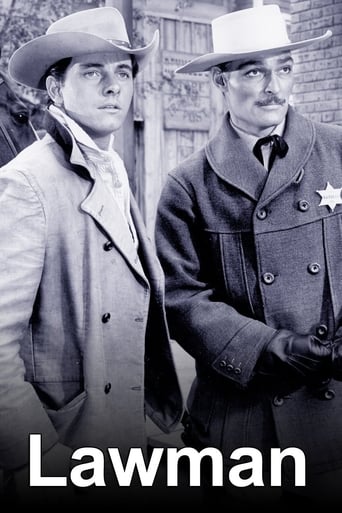
Lawman is an American western television series originally telecast on ABC from 1958 to 1962 starring John Russell as Marshal Dan Troop and featuring Peter Brown as Deputy Marshal Johnny McKay. The series was set in Laramie, Wyoming during 1879 and the 1880s. Warner Bros. already had several western series on the air at the time, having launched Cheyenne with Clint Walker as early as 1955. The studio continued the trend in 1957 with the additions of Maverick with James Garner and Jack Kelly, Colt .45 with Wayde Preston, and Sugarfoot with Will Hutchins. One year later, Warner Bros. added Lawman and Bronco with Ty Hardin. Prior to the beginning of production, Russell and Brown and producer Jules Schermer made a pact to maintain the quality of the series so that it would not be seen as "just another western." At the start of season two, Russell and Brown were joined by Peggie Castle as Lily Merrill, the owner of the Birdcage Saloon, and a love interest for Dan.
Cavalcade of AmericaCavalcade of America · 1952
Cavalcade of America
4.61952
SeriesDrama
Cavalcade of America is an anthology drama series that was sponsored by the DuPont Company, although it occasionally presented a musical, such as an adaptation of Show Boat, and condensed biographies of popular composers. It was initially broadcast on radio from 1935 to 1953, and later on television from 1952 to 1957. Originally on CBS, the series pioneered the use of anthology drama for company audio advertising. Cavalcade of America documented historical events using stories of individual courage, initiative and achievement, often with feel-good dramatizations of the human spirit's triumph against all odds. This was consistent with DuPont's overall conservative philosophy and legacy as an American company dating back to 1802. The company's motto, "Maker of better things for better living through chemistry," was read at the beginning of each program, and the dramas emphasized humanitarian progress, particularly improvements in the lives of women, often through technological innovation.

Herbert Wheelock