Acting
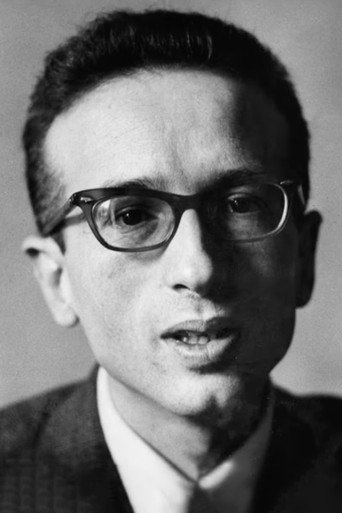
Pierre Vidal-Naquet
Born July 23, 1930 · Paris, Ile-de-France, France
Died July 29, 2006 · aged 76
Pierre Vidal-Naquet, born July 23, 1930 in Paris's 7th arrondissement and died July 29, 2006 in Nice, is a French historian. A specialist in the history of ancient Greece, he also played a role in various areas of French intellectual and political life. In addition to ancient Greece, his preferred field, he is interested in contemporary topics such as the Algerian War and the Holocaust. He came f…
Known For
 Maurice Audin, The Disappearance · 2010
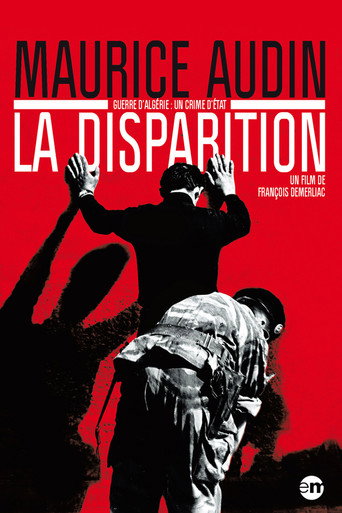
Maurice Audin, The Disappearance
★ 10.02010
MovieDocumentaryHistory
In Algiers, in June 1957, Maurice Audin, a 25-year-old mathematician, was arrested by French paratroopers. His wife, Josette, and their three children never saw him again. This documentary interweaves testimonies from French and Algerian protagonists: activists for Algerian independence, lawyers, historians, and military personnel. Drawing on the research of historian Pierre Vidal-Naquet, it blends archival footage, newspaper articles, books, drawings, and reenactments to reconstruct the context of this disappearance and denounce the torture and murder practiced in Algeria. Josette Audin is the central figure and the moral compass of this film.
 October 17, 1961, Cover-up Of a Massacre · 2001
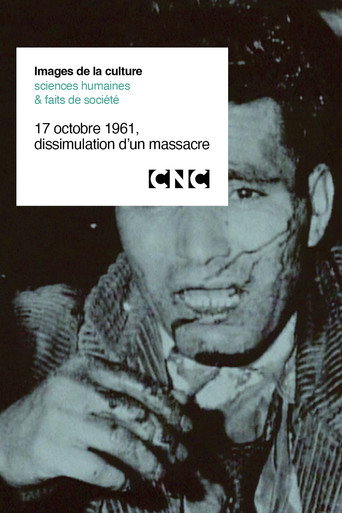
October 17, 1961, Cover-up Of a Massacre
★ 10.02001
MovieDocumentary
On October 17 and 18, 1961, during a non-violent demonstration against the imposed curfew, dozens of Algerians were murdered in Paris by police officers acting on orders from their superiors. For forty years, this crime has been concealed; yet these events, the deadliest on French soil since the Second World War, resemble, in some respects, the darkest hours of the collaboration. Why has this history been hidden? Under what conditions, and in the name of what reasons, did officials of a democratic state conceal the scale and gravity of such events?
 Maurice Audin, a story of mathematicians · 2018
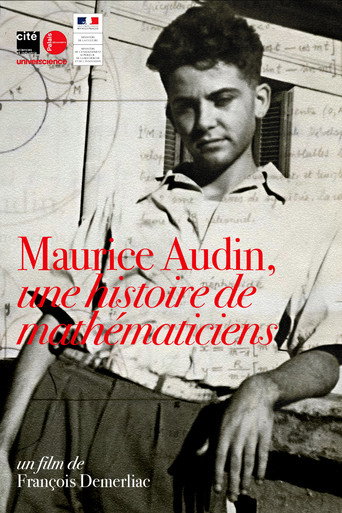
Maurice Audin, a story of mathematicians
★ 10.02018
MovieDocumentary
On September 13, 2018, President Emmanuel Macron visited Josette Audin at her home in Bagnolet to ask for her forgiveness, presenting her with a declaration acknowledging that her husband had died under torture at the hands of a "legally established system" implemented by the former French colonial power in Algeria. This acknowledgment, however belated, is a victory for Josette Audin and her family, but above all, it is a victory for human rights, achieved together by mathematicians and historians. This film retraces this shared commitment against torture and state abuses, first within the Audin Committee and then within the Committee of Mathematicians, which also intervened to support other mathematicians imprisoned and sometimes tortured around the world.
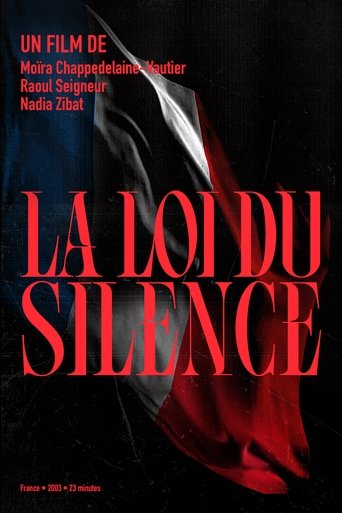 The Law of Silence · 2003
The Law of Silence
★ 9.02003
MovieDocumentary
The Law of Silence, a final-year documentary by Moïra Chappedelaine-Vautier at Femis, examines the 1963 Amnesty Law and the consequences it had on studies of the Algerian War. It brings together interviews conducted in 2002 with Henri Alleg, editor of the daily newspaper Alger Républicain from 1951 to 1955, and Pierre Vidal-Naquet, historian and essayist. It also features incredible statements from General Massu and lawyers unraveling the various legal defenses of people like Jean-Marie Le Pen. Not only does Moïra have her father, René Vautier, speak, but she also includes footage he himself filmed forty years earlier. A very interesting report, which notably reminds us that the Amnesty is not a pardon but the erasure of the sentence and also of the crime itself.
 À Propos De... L'autre Détail · 1985
À Propos De... L'autre Détail
★ 9.01985
MovieDocumentary
Documentary edited from testimonies on the torture of people who experienced the war. Some witnesses were tortured by Jean-Marie Le Pen. These testimonies will help defend the newspaper Le Canard Enchaîné in court against Jean-Marie Le Pen for defamation. The film was shown in 1985 during the trial and some witnesses also came to support the newspaper. But the 1963 amnesty law protects the politician, prohibiting the use of images that could harm people who served during the Algerian war.
Filmography
Sort