David Swift

Writing

David Swift

Born July 27, 1919 · Minneapolis, Minnesota, USA

Died December 31, 2001 · aged 82

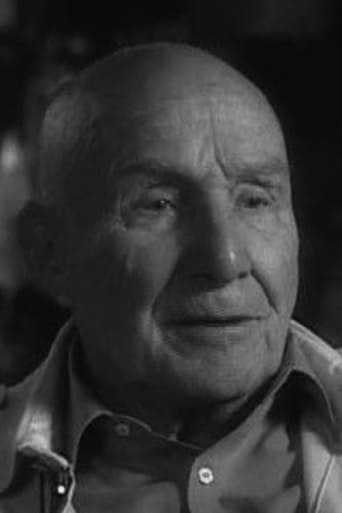
From Wikipedia, the free encyclopedia David "Dave" Swift (July 27, 1919 – December 31, 2001) was an American screenwriter, animator, director, and producer. He is best known for writing the screenplay for the 1967 film How to Succeed in Business Without Really Trying. Swift also worked as an animator and filmmaker at The Walt Disney Studios where he adapted the story of Pollyanna for the screen a…

Known For
Snow White and the Seven DwarfsSnow White and the Seven Dwarfs · 1938
Snow White and the Seven Dwarfs
7.11938
MovieFantasyAnimation
A beautiful girl, Snow White, takes refuge in the forest in the house of seven dwarfs to hide from her stepmother, the wicked Queen. The Queen is jealous because she wants to be known as "the fairest in the land," and Snow White's beauty surpasses her own.
The Parent TrapThe Parent Trap · 1998
The Parent Trap
7.21998
MovieComedyFamily
Hallie Parker and Annie James are identical twins who were separated at a young age due to their parents' divorce. Unbeknownst to their parents, the girls are sent to the same summer camp, where they meet, discover the truth about their relationship, and come up with a plan to switch places in an effort to reunite their mother and father.
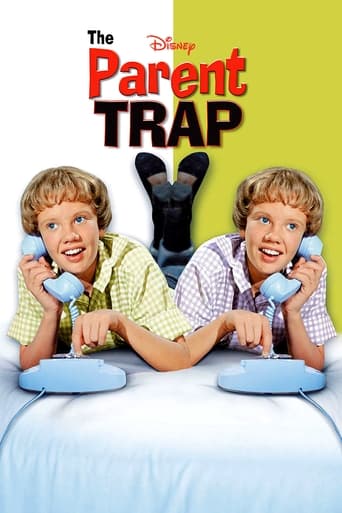
The Parent TrapThe Parent Trap · 1961
The Parent Trap
7.01961
MovieComedyFamily
Two identical twin sisters, separated at birth by their parents' divorce, are reunited years later at a summer camp, where they scheme to bring their parents back together. The girls, one of whom has been living with their mother and the other with their father, switch places after camp and go to work on their plan, the first objective being to scare off a gold-digger pursuing their father.
PollyannaPollyanna · 1960
Pollyanna
7.01960
MovieComedyDrama
A young girl comes to an embittered town and confronts its attitude with her determination to see the best in life.
CandleshoeCandleshoe · 1977
Candleshoe
6.91977
MovieFamily
When ex-con artist Harry claims that a secret treasure is hidden inside Candleshoe, an English estate, he creates an elaborate plan to find and steal the prize. By convincing a girl named Casey to impersonate the estate owner's long-lost granddaughter, Harry hopes to uncover the treasure's location. But when Casey has a change of heart, she must follow the clues and find the treasure, in order to save Candleshoe and stop Harry before it is too late.
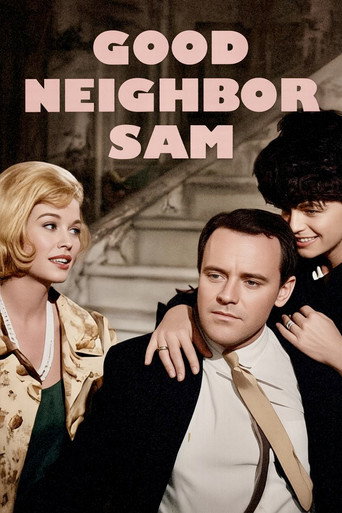
Good Neighbor SamGood Neighbor Sam · 1964
Good Neighbor Sam
6.61964
MovieComedy
To help his divorced neighbor claim a substantial inheritance, a family man poses as her husband. The ruse spills over into his career in advertising, and his recent promotion relies on his wholesome and moral appearance.
How to Succeed in Business Without Really TryingHow to Succeed in Business Without Really Trying · 1967
How to Succeed in Business Without Really Trying
6.71967
MovieComedyRomance
A young but bright former window cleaner rises to the top of his company by following the advice of a book about ruthless advancement in business.
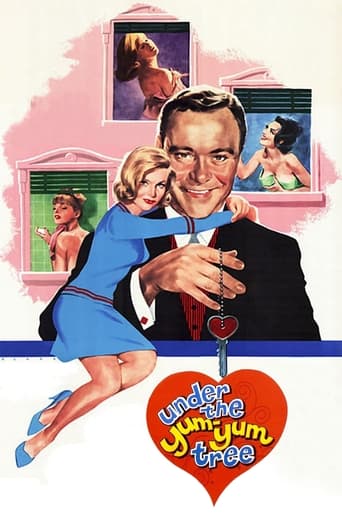
Under the Yum Yum TreeUnder the Yum Yum Tree · 1963
Under the Yum Yum Tree
6.11963
MovieComedyRomance
A love-struck landlord tries to convince a pretty tenant to dump her fiancé and give him a chance.

Filmography

Sort
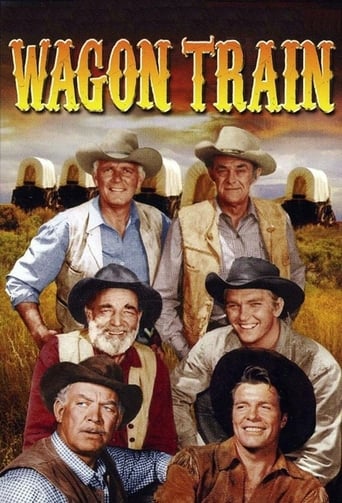
Wagon TrainWagon Train · 1957
Wagon Train
6.61957
SeriesWesternDrama
The series initially starred veteran movie supporting actor Ward Bond as the wagon master, later replaced upon his death by John McIntire, and Robert Horton as the scout, subsequently replaced by lookalike Robert Fuller a year after Horton had decided to leave the series. The series was inspired by the 1950 film Wagon Master directed by John Ford and starring Ben Johnson, Harry Carey Jr. and Ward Bond, and harkens back to the early widescreen wagon train epic The Big Trail starring John Wayne and featuring Bond in his first major screen appearance playing a supporting role. Horton's buckskin outfit as the scout in the first season of the television series resembles Wayne's, who also played the wagon train's scout in the earlier film.

Writer

Playhouse 90Playhouse 90 · 1956
Playhouse 90
7.51956
SeriesDrama
Playhouse 90 is an American television anthology series that was telecast on CBS from 1956 to 1960 for a total of 133 episodes. It originated from CBS Television City in Los Angeles, California. Since live anthology drama series of the mid-1950s were usually hour-long shows, the title highlighted the network's intention to present something unusual, a weekly series of hour-and-a-half dramas rather than 60-minute plays. Playhouse 90 began as a pitch by Frank Stanton—the formidable, forward-thinking right-hand man to CBS chairman William S. Paley—during a brainstorming session for program ideas. The project was ultimately developed by Hubbell Robinson, a CBS vice president who received no screen credit on Playhouse 90 but is often described as its creator.

Director

Goodyear Television PlayhouseGoodyear Television Playhouse · 1951
Goodyear Television Playhouse
6.01951
SeriesDrama
The Goodyear Television Playhouse is an American anthology series that was telecast live on NBC from 1951 to 1957 during the "Golden Age of Television". Sponsored by Goodyear, Goodyear alternated sponsorship with Philco, and the Philco Television Playhouse was seen on alternate weeks. In 1955, the title was shortened to The Goodyear Playhouse and it aired on alternate weeks with The Alcoa Hour. The three series were essentially the same, with the only real difference being the name of the sponsor. Producer Fred Coe nurtured and encouraged a group of young, mostly unknown writers that included Robert Alan Aurthur, George Baxt, Paddy Chayefsky, Horton Foote, Howard Richardson, Tad Mosel and Gore Vidal. Notable productions included Chayefsky's Marty starring Rod Steiger, Chayefsky's The Bachelor Party, Vidal's Visit to a Small Planet, Richardson's Ark of Safety and Foote's The Trip to Bountiful. From 1957 to 1960, it became a taped, half-hour series titled Goodyear Theater, seen on Mondays at 9:30pm.

Writer

Alcoa TheatreAlcoa Theatre · 1957
Alcoa Theatre
7.01957
SeriesDrama
Alcoa Theatre is a half-hour American anthology series telecast on NBC at 9:30 pm on alternate Monday nights from October 7, 1957 to September 16, 1960. The program also aired under the title Turn of Fate, with the stories depicting the difficulties faced by individuals who are suddenly thrust into unexpected and perilous dangers. Alcoa Theatre was syndicated together with Goodyear Theatre as Award Theatre. In 1955, The Alcoa Hour premiered in a one-hour format aired on Sunday nights, but it was reduced to 30 minutes, retitled Alcoa Theatre, and moved to Monday evening in 1957. The show employed an alternating rotating company of actors: David Niven, Robert Ryan, Jane Powell, Jack Lemmon and Charles Boyer. Each appeared in dramatic and light comedic roles through the first season.

Writer

The Wonderful World of DisneyThe Wonderful World of Disney · 1954
The Wonderful World of Disney
7.91954
SeriesAction & AdventureAnimation
Walt Disney Productions has produced an anthology television series under several different titles since 1954. The original version of the series premiered on ABC, Wednesday night, October 27, 1954. The show, which was hosted by Walt Disney until his death and then from 1996 to 2002 by then-CEO Michael Eisner (with one-off hosts or no hosts during other periods) has since aired continually as either a weekly program or an irregular series of specials on several networks and streaming services, most recently on ABC and Disney+. The show is the second longest showing prime-time program on American television, behind its rival, Hallmark Hall of Fame. However, Hallmark Hall of Fame was a weekly program only during its first five seasons, while Disney remained a weekly program for more than forty years.

Director

ArnieArnie · 1970
Arnie
5.31970
SeriesComedy
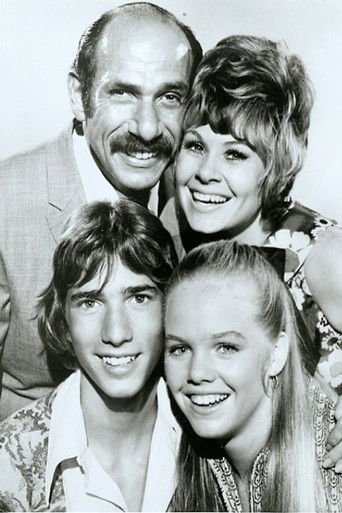
Arnie is a television sitcom that ran for two seasons on the CBS network. It stars Herschel Bernardi, Sue Ane Langdon, and Roger Bowen. Bernardi played the title character, Arnie Nuvo, a longtime blue collar employee at the fictitious Continental Flange Company, who overnight was promoted to an executive position. The storylines mainly focused on this fish out of water situation, and on Arnie's sometimes-problematic relationship with his well-meaning but wealthy and eccentric boss, Hamilton Majors Jr.. Because he still held his union card, Arnie could negotiate tricky management/labor situations that no one else could. Arnie's surname was presumably a pun on nouveau riche, and possibly also on Art Nouveau. In addition to Bernardi, Bowen, and Langdon, cast members included Del Russel and Stephanie Steele as Arnie's son and daughter, Richard and Andrea; Elaine Shore as Arnie's secretary, Felicia; and Herb Voland as sour-tempered executive Neil Ogilvie. In its first season, despite being the lead-in to The Mary Tyler Moore Show on Saturday nights and winning an Emmy nomination as best comedy series, Arnie received only fair Nielsen ratings. For its second season, in order to increase its viewership, CBS made a major cast change in the show's format. Charles Nelson Reilly joined the cast as Randy Robinson, a TV chef who called himself "The Giddyap Gourmet," apparently a reference to The Galloping Gourmet.

Director