Richard Davalos

Acting

Richard Davalos

Born November 5, 1930 · New York City, New York, USA

Died March 8, 2016 · aged 85

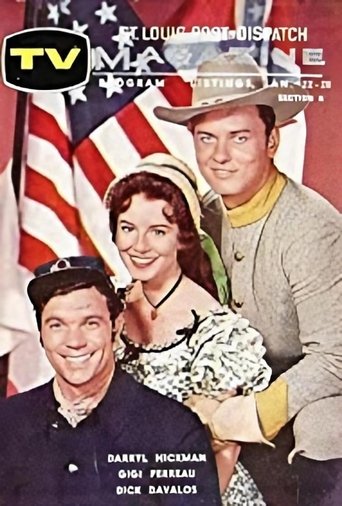
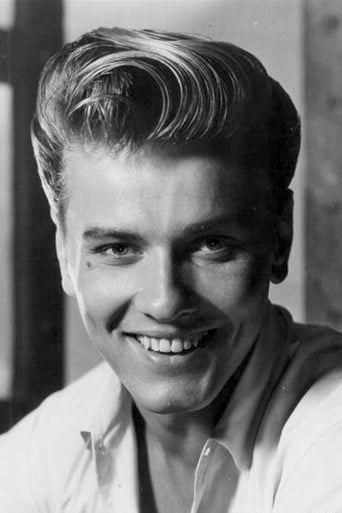
From Wikipedia, the free encyclopedia Richard Davalos (born November 5, 1935) was an American actor. Davalos starred in East of Eden (1955) as James Dean's brother and portrayed the convict Blind Dick in Cool Hand Luke (1967). He won the Theatre World Award for his performance in the Arthur Miller play A Memory of Two Mondays in 1955. In the Civil War television series The Americans, broadcast …

Known For

Cool Hand LukeCool Hand Luke · 1967
Cool Hand Luke
7.71967
MovieDramaCrime
When petty criminal Luke Jackson is sentenced to two years in a Florida prison farm, he doesn't play by the rules of either the sadistic warden or the yard's resident heavy, Dragline, who ends up admiring the new guy's unbreakable will. Luke's bravado, even in the face of repeated stints in the prison's dreaded solitary confinement cell, "the box," make him a rebel hero to his fellow convicts and a thorn in the side of the prison officers.
East of EdenEast of Eden · 1955
East of Eden
7.51955
MovieDrama
In the Salinas Valley in and around World War I, Cal Trask feels he must compete against overwhelming odds with his brother for the love of their father. Cal is frustrated at every turn, from his reaction to the war, how to get ahead in business and in life, and how to relate to his estranged mother.
Kelly's HeroesKelly's Heroes · 1970
Kelly's Heroes
7.41970
MovieAdventureComedy
A misfit group of World War II American soldiers goes AWOL to rob a bank behind German lines.
Death HuntDeath Hunt · 1981
Death Hunt
6.71981
MovieAdventureWestern
Yukon Territory, Canada, November 1931. Albert Johnson, a trapper who lives alone in the mountains, buys a dog almost dead after a brutal dogfight, a good deed that will put him in trouble.
Something Wicked This Way ComesSomething Wicked This Way Comes · 1983
Something Wicked This Way Comes
6.51983
MovieFantasyMystery
In a small American town, a diabolical circus arrives, granting wishes for the townsfolk, but twisted as only the esteemed Mr. Dark can make them. Can two young boys overcome the worst the devil himself can deal out?
The Sea ChaseThe Sea Chase · 1955
The Sea Chase
6.31955
MovieWarAction
As the Second World War breaks out, German freighter captain Karl Ehrlich is about to leave Sydney, Australia with his vessel, the Ergenstrasse. Ehrlich, an anti-Nazi but proud German, hopes to outrun or out-maneuver the British warship pursuing him. Aboard his vessel is Elsa Keller, a woman Ehrlich has been ordered to return to Germany safely along with whatever secrets she carries. When Ehrlich's fiercely Nazi chief officer Kirchner commits an atrocity, the British pursuit becomes deadly.
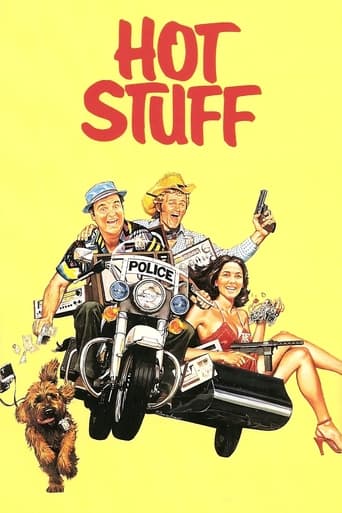
Hot StuffHot Stuff · 1979
Hot Stuff
7.01979
MovieComedy
When a police department's burglary task force is facing the possibility of being shut down because of their low conviction rate decides to try a new approach to apprehending their targets. They take over a pawn shop where thieves go to unload their merchandise. They record them as they bring stuff in and get them to tell them where they got it. Eventually they're threatened by the mob.
Blood LegacyBlood Legacy · 1971
Blood Legacy
3.51971
MovieHorrorMystery
In order to qualify to inherit the family fortune, the four heirs must spend the night in the family estate. However, during the night someone starts killing them off.

Filmography

Sort
Matinee TheaterMatinee Theater · 1955
Matinee Theater
5.31955
SeriesDrama
Matinee Theater is an American anthology series that aired on NBC during the Golden Age of Television, from 1955 to 1958. The series, which ran daily in the afternoon, was frequently live. It was produced by Albert McCleery, Darrell Ross, George Cahan and Frank Price with executive producer George Lowther. McCleery had previously produced the live series Cameo Theatre which introduced to television the concept of theater-in-the-round, TV plays staged with minimal sets. Jim Buckley of the Pewter Plough Playhouse recalled: When Al McCleery got back to the States, he originated a most ambitious theatrical TV series for NBC called Matinee Theater: to televise five different stage plays per week live, airing around noon in order to promote color TV to the American housewife as she labored over her ironing. Al was the producer. He hired five directors and five art directors. Richard Bennett, one of our first early presidents of the Pewter Plough Corporation, was one of the directors and I was one of the art directors and, as soon as we were through televising one play, we had lunch and then met to plan next week’s show. That was over 50 years ago, and I’m trying to think; I believe the TV art director is his own set decorator —yes, of course! It had to be, since one of McCleery’s chief claims to favor with the producers was his elimination of the setting per se and simply decorating the scene with a minimum of props. It took a bit of ingenuity.
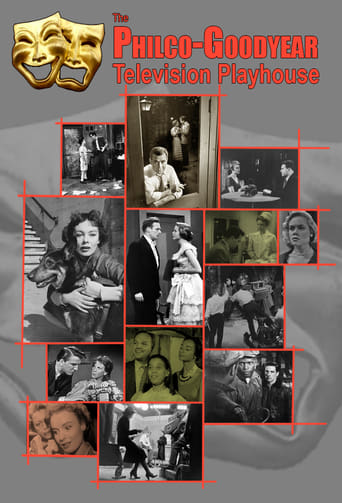
Goodyear Television PlayhouseGoodyear Television Playhouse · 1951
Goodyear Television Playhouse
6.01951
SeriesDrama
The Goodyear Television Playhouse is an American anthology series that was telecast live on NBC from 1951 to 1957 during the "Golden Age of Television". Sponsored by Goodyear, Goodyear alternated sponsorship with Philco, and the Philco Television Playhouse was seen on alternate weeks. In 1955, the title was shortened to The Goodyear Playhouse and it aired on alternate weeks with The Alcoa Hour. The three series were essentially the same, with the only real difference being the name of the sponsor. Producer Fred Coe nurtured and encouraged a group of young, mostly unknown writers that included Robert Alan Aurthur, George Baxt, Paddy Chayefsky, Horton Foote, Howard Richardson, Tad Mosel and Gore Vidal. Notable productions included Chayefsky's Marty starring Rod Steiger, Chayefsky's The Bachelor Party, Vidal's Visit to a Small Planet, Richardson's Ark of Safety and Foote's The Trip to Bountiful. From 1957 to 1960, it became a taped, half-hour series titled Goodyear Theater, seen on Mondays at 9:30pm.
West PointWest Point · 1956
West Point
7.51956
SeriesDrama
The West Point Story is a dramatic anthology television series shown in the United States by Columbia Broadcasting System during the 1956-57 season and by ABC during the 1957-58 season. The West Point Story, produced with the full cooperation of the United States Department of Defense and the United States Military Academy, was said to be based on actual files documenting many of the real-life dramatic occurrences at West Point over the years. Names and dates were altered in order to protect the privacy of the real people portrayed, however. The program was at first hosted by a fictional cadet, Charles C. Thompson, but this device was discontinued prior to the end of 1956. During its second season on ABC, The West Point Story was in competition with NBC's The Californians, set in San Francisco during the gold rush of the 1850s, and with The $64,000 Question quiz series on CBS. The West Point Story was replaced on the summer schedule in 1958 by Jack Wyatt's Confession, which continued to air during the first half of the 1958-1959 season in the 10 p.m. Tuesday evening time slot. At the time that The West Point Story was broadcast, four other military dramas aired either through syndication or on the major networks: Harbor Command, Navy Log, The Silent Service, and Men of Annapolis.