W
Acting
Willy Cornette
No biography available.
Known For
 Het gerucht - Bartók/Aantekeningen · 1986
Het gerucht - Bartók/Aantekeningen
1986
MovieDocumentary
Episode of the Belgian Flemish Television (BRT) program Het Gerucht on the development of Anne Teresa De Keersmaeker's choreography "Bartók/Aantekeningen" (in English: "Bartók/Annotated"), created in 1986 for four dancers from the company Roses . "Bartók/Aantekeningen" is the fifth work by Anne Teresa De Keersmaeker, after "Ash" (1980), "Fase, Four Movements to the Music of Steve Reich" (1982), "Rosas danst Rosas" (1983) and "Elena's Aria". "(1984).
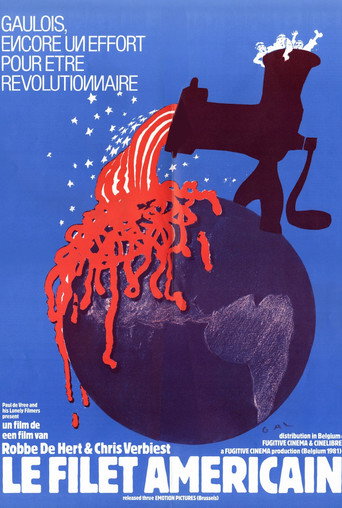 Le Filet Américain · 1981
Le Filet Américain
★ 9.01981
MovieDocumentary
The documentary's legacy lies in its unapologetic fusion of agitprop and satire, a signature style of De Hert’s Fugitive Cinema collective. By juxtaposing Mandel’s economic theories with absurd military parades, the film exposes the contradictions of a society preparing for war while its social fabric decays. De Hert employs rapid montage, pop music, and street-level interviews to strip away the facade of state authority.Decades later, Le Filet Américain remains a vital historical document. It captures a specific era of Belgian polarization, marked by economic crises and the rise of the gendarmerie. The metaphor of the meat grinder endures as a powerful critique of how institutional systems compromise individual dignity for corporate profit.
 La journée de Monsieur Chose · 1963
La journée de Monsieur Chose
1963
Movie
Short film that shows a day in the life of Monsieur Chose.
 Brussels by Night · 1983
Brussels by Night
★ 5.91983
MovieDrama
Max, an aimless middle-aged man, travels to Brussels. As he wanders the city streets, he meets three unlikely companions, with tensions rising among the group each passing hour.
Filmography
Sort