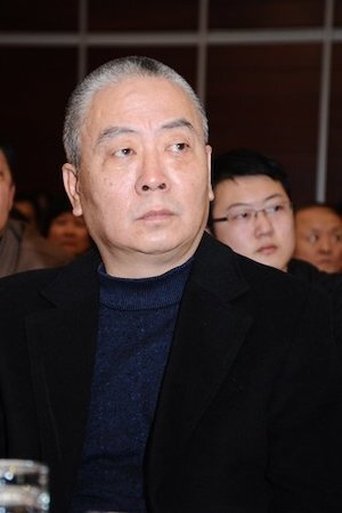
Directing
Kang Jianning
Chinese film and television director born in 1954, in Hebei province. In the mid-1970s, Kang graduated from the Beijing Institute of Physical Education and worked as a teacher in the university's physical education department for nearly ten years. In the mid-1980s, he joined the TV station at the institute and started shooting TV feature films and documentaries. Kang is the current deputy director…
Known For
 Sand and Sea · 1991
Sand and Sea
1991
MovieDocumentary
Liu Zeyuan is a farmer on the edge of the desert at the junction of Inner Mongolia and Ningxia. He grows food and raises camels, and his family's annual income is 5,000 yuan. Liu Picheng is a fisherman on Jingwa Island, part of the isolated Liaodong Peninsula; he is unwilling to attract attention and becomes hostile to the camera. The living environment and conditions of these two families are different, but the directors try to find some common ground while expressing the two respective unique lifestyles. In fact, these lives are firmly swayed by nature: sand storms can destroy everything, just as the ocean tide can destroy everything, and for the two protagonists, the difficult grasp of the future and their children also brings them the same loneliness. Filmed in 1989, Sand and Sea received the Grand Prix award from the 1991 Asian Broadcasting and Television Union.
 A Soldier · 2001
A Soldier
2001
Movie
Directed by Kang Jianning (under the pseudonym Wu Gong), and part of the 'Interesting Times' series with Duan Jinchuan's The Secret of My Success and Jiang Yue's This Happy Life. The film chronicles the progress of a lazy Chinese teenager who has a rude awakening when he joins the People's Liberation Army. The original film was finished in 2001, was titled 当兵 (Soldier), and is 88 minutes. It has never been broadcasted. There are two other, widely available versions: An English dub cut for BBC, which is 40 min, and a three-episode CCTV version that adds footage shot in 2003.
 Into the World · 1987
Into the World
1987
Movie
The landmark work of early Chinese documentary. Examines the survival status of the Ningxia Loess Plateau in the 1980s from a more comprehensive perspective, applying the key words of the popular rock song "Nothing": The first part, "Nothing"; the second part, "This is you / The tears are flowing"; the third part, "The ground under your feet is shaking"; the fourth part," You follow me." In the film, the author also clearly discusses the life in the Plateau from several aspects: water, food, poverty alleviation, education, and labor exportation. A large number of interviews were conducted with local farmers, government officials, poverty alleviation working groups, etc. — trying to find the main factors leading to infertility and the methods that can be adopted to get rid of it, discussing the feasibility and effect of "going out" in the second half. The whole film objectively reflects the living conditions of the countryside at that time.
 Life · 1995
Life
1995
Movie
A 1995 film co-directed by Kang Jianning and Gao Guodong that, most likely, grew out of their earlier film Sand and Sea, and saw at least Kang returning to the family in the desert that he interviewed for that film. Not to be confused with another film of this same title by Kang, from 2003, which includes more up-to-date footage, was itself edited down for broadcast on Chinese TV as part of the 'The Weight of Time' series, and does not include any contributions from Gao Guodong.
 Sweat · 2002
Sweat
2002
MovieDrama
Never broadcasted feature film by Chinese documentary filmmaker Kang Jianning.
 Yin Yang · 1997
Yin Yang
1997
MovieDocumentary
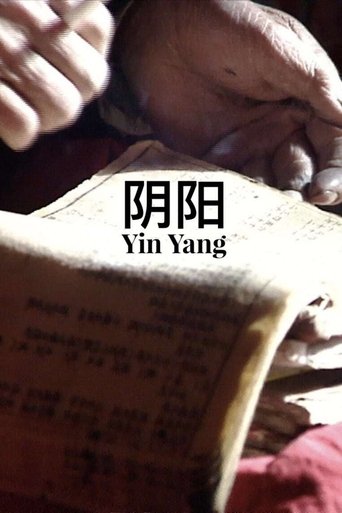
In the village of Doupo, Pianxian Township, Pengyang County, Ningxia Hui Autonomous Region, there is a villager named Xu Wenwen. He is a Feng Shui master and who goes by the name “Yin Yang.” Due to the drought in the mountainous areas, it is difficult for farmers to use water for both domestic and agricultural purposes. In order to solve the problem of farmers' water use, Pengyang County Water Conservancy Bureau plans to help farmers repair the water cellar through government subsidies, so that the rainy season can be stored in the cellar and then used for farming, but due to limited funds, it is not Every family can receive subsidies, so everyone decides the right to play in the cellar by grasping the way. The cellar is laid, the water storage is increased, and the corn is also planted. The life of the mountain people seems to have hope.
 Lugu Lake · 1993
Lugu Lake
1993
Movie
Never broadcasted feature film by Chinese documentary filmmaker Kang Jianning.
 Tshultrim Danba and Tholing Monastery · 1993
Tshultrim Danba and Tholing Monastery
1993
Movie
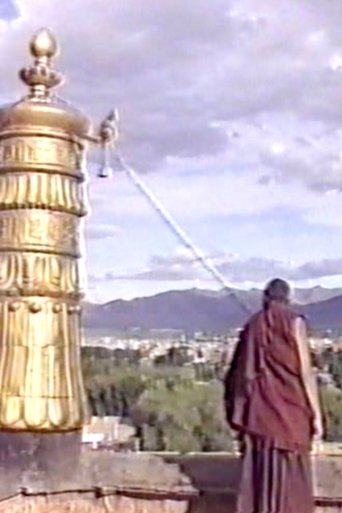
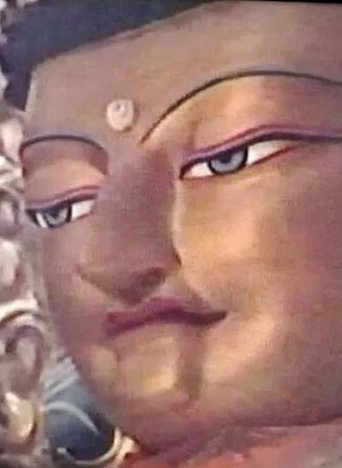
Tholing Monastery (Tuolin si 托林寺) is the oldest monastery in the Ngari Prefecture of western Tibet. It is situated in Tholing (Zanda), Zanda County, near the Indian border of Ladakh — more than 1,800 km from Lhasa. It was built in 997 AD by Yeshe-Ö, the second King of the Guge Kingdom. In the Tibetan language, 'Tholing' means "hovering in the sky forever," and is reflected by the location of the monastery, which sits at an elevation of 12,400 feet. This documentary follows an old monk who spent his childhood at the Tholing Monastery, in the 1950s. In 1960, he fled to India, and in 1967 (during the Cultural Revolution), Tibetan residents from in and around Zanda County gathered at Tholing Monastery and demolished most of its buildings within a month. The monastery was allowed to resume Buddhist prayer activities in 1984; upon hearing this, the old monk left his life in India and returned to Tibet.
Filmography
Sort