Xinyuan Xu

Acting

Xinyuan Xu

No biography available.

Known For
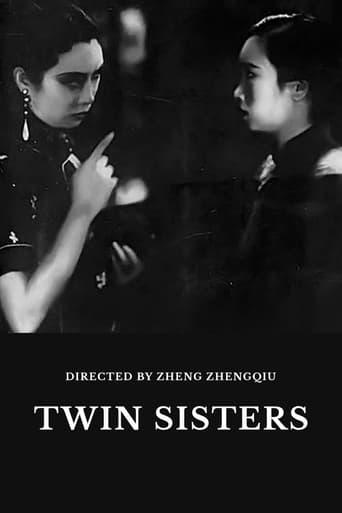
Twin SistersTwin Sisters · 1934
Twin Sisters
★ 7.01934
MovieDrama
Twin girls separated at birth are reunited when the one raised in poverty becomes a servant in the household of her sister, now the pampered wife of a warlord general.
Sorrows of the Forbidden CitySorrows of the Forbidden City · 1948
Sorrows of the Forbidden City
★ 6.71948
MovieDramaHistory
The film focused on a conflict between Empress Dowager Cixi, her son Guangxi (the nominal emperor) and his wife, Zhen Fei.
Wild FlowerWild Flower · 1930
Wild Flower
★ 10.01930
MovieDrama
Ill-fated romance of an orphaned flower girl and a young musician, destroyed by his traditional family and the Shanghai underworld.
The Souls of FreedomThe Souls of Freedom · 1931
The Souls of Freedom
1931
Movie
HeartacheHeartache · 1931
Heartache
1931
Movie
TorrentTorrent · 1933
Torrent
★ 10.01933
MovieDrama
A primary school teacher rallies the citizens of a small town to resist the corruption of the local government and unite to build reinforcements against an oncoming flood.
Orioles Banished from the FlowersOrioles Banished from the Flowers · 1948
Orioles Banished from the Flowers
1948
MovieComedy
"Among the many filmmakers who immigrated to Hong Kong after WWII was theater tycoon Jiang Boying, who established the company Great China in 1946, inviting fellow migrants to work on the first post-war Mandarin films of Hong Kong. Their hearts still anchored in Shanghai, they made films catered to the mainland market, with production modes of the former glory days. Fan Peilin, a virtuoso in musicals, was invited south to make Orioles Banished from the Flowers, dying in the crash of the returning flight. The only two films Fan made in Hong Kong–the other one Song of the Songstress–are thus his last. Both star the singing-acting superstar Zhou Xuan. In this MusCom–musical comedy–Zhou plays not the hapless songstress but a vivacious, willful youngster, rollicking between a young man and his girlfriend, resulting in a series of embarrassing but amusing situations. A remarkable sample of transplanted Shanghai-style entertainment."-- Hong Kong Film Archive
The Cosmetics MarketThe Cosmetics Market · 1933
The Cosmetics Market
★ 10.01933
MovieDrama
A young woman finds employment in a department store, only to attract the unwanted advances of the manager and his son.

Filmography

Sort
Orioles Banished from the FlowersOrioles Banished from the Flowers · 1948
Orioles Banished from the Flowers
1948
MovieComedy
"Among the many filmmakers who immigrated to Hong Kong after WWII was theater tycoon Jiang Boying, who established the company Great China in 1946, inviting fellow migrants to work on the first post-war Mandarin films of Hong Kong. Their hearts still anchored in Shanghai, they made films catered to the mainland market, with production modes of the former glory days. Fan Peilin, a virtuoso in musicals, was invited south to make Orioles Banished from the Flowers, dying in the crash of the returning flight. The only two films Fan made in Hong Kong–the other one Song of the Songstress–are thus his last. Both star the singing-acting superstar Zhou Xuan. In this MusCom–musical comedy–Zhou plays not the hapless songstress but a vivacious, willful youngster, rollicking between a young man and his girlfriend, resulting in a series of embarrassing but amusing situations. A remarkable sample of transplanted Shanghai-style entertainment."-- Hong Kong Film Archive

沈父

The AngelThe Angel · 1939
The Angel
★ 7.01939
MovieMusicDrama
This is one of the rare gems in early Chinese musical films that still exists today. Nancy Chan plays a naïve young woman who can sing and dance. Under the arrangement of her stepfather, she becomes a star and indulges in the glitz and glamour of the entertainment world before getting married to a wealthy heir in Nanyang. Yet her husband is cruel and unfaithful, leading her to divorce and return to her parents in Shanghai. She is set for a comeback to the stage. Her young daughter suffers from a serious illness. A remake of the Bu Wanchang’s silent film The Light of Maternal Instinct (1933), this film takes cues from Hollywood musicals, resulting in an elegant and lively fusion of camera movement and musical numbers. The film also reflects the harsh reality of China in the 1930s and the pathos of popular literature by combining morals, entertainment and social commentary to show that changes in the idea of femininity is a symbol of progress.