Acting
Anouk Ferjac
Born May 25, 1932 · Paris, France (age 94)
Anouk Ferjac, born Anne-Marie Levain, is a French stage and screen actress. She has appeared in more than 100 films and television shows between 1946 and 2000.
Known For
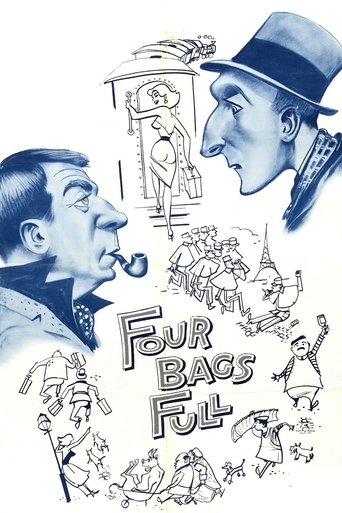 La Traversée de Paris · 1956
La Traversée de Paris
★ 7.31956
MovieComedyDrama
Two unlikely companions must smuggle four suitcases filled with contraband pork across Nazi-occupied Paris.
 This Man Must Die · 1969
This Man Must Die
★ 7.31969
MovieThrillerDrama
When his young son is killed in a hit and run accident, Charles Thenier resolves to hunt down and murder the killer. By chance, Thenier makes the acquaintance of an actress, Helène Lanson, who was in the car at the time of the accident. He then meets Helène’s brother-in-law, Paul Decourt, a truly horrible individual.
 Je T'Aime, Je T'Aime · 1968
Je T'Aime, Je T'Aime
★ 6.61968
MovieDramaScience Fiction
Recovering from an attempted suicide, a man is selected to participate in a time travel experiment that has only been tested on mice. A malfunction causes the man to experience moments from his past in a random order.
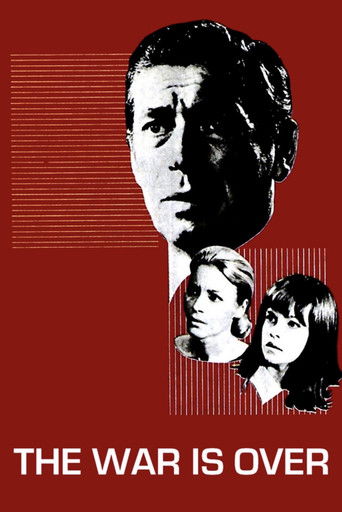 The War Is Over · 1966
The War Is Over
★ 6.51966
MovieDrama
On his way from Madrid to Paris, Diego, a chief of the Spanish Communist Party, is arrested at the border for an ID check but manages to flee. When he arrives in Paris, he searches for one of his comrades to prevent him from going to Madrid where he could be arrested.
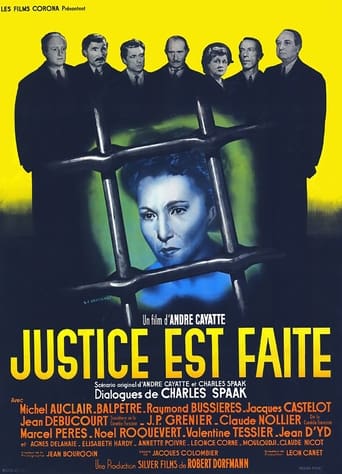
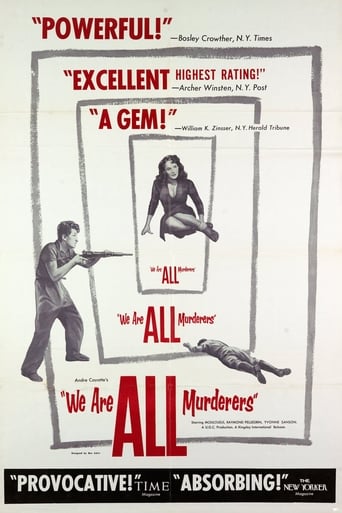 We Are All Murderers · 1952
We Are All Murderers
★ 6.71952
MovieCrimeDrama
Originally titled Nous Sommes Tout des Assassins, We Are All Murderers was directed by Andre Cayette, a former lawyer who detested France's execution system. Charles Spaak's screenplay makes no attempt to launder the four principal characters (Marcel Mouloudji, Raymond Pellegrin, Antoinine Balpetre, Julien Verdeir): never mind the motivations, these are all hardened murderers. Still, the film condemns the sadistic ritual through which these four men are brought to the guillotine. In France, the policy is to never tell the condemned man when the execution will occur--and then to show up without warning and drag the victim kicking and screaming to his doom, without any opportunity to make peace with himself or his Maker. By the end of this harrowing film, the audience feels as dehumanized as the four "protagonists." We Are All Murderers was roundly roasted by the French law enforcement establishment, but it won a special jury prize at the 1952 Cannes Film Festival.
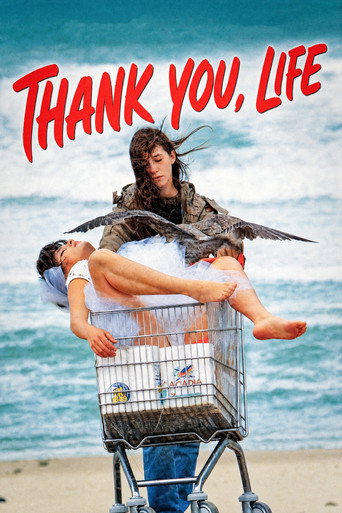 Thank You, Life · 1991
Thank You, Life
★ 6.21991
MovieDrama
Camille, a naïve schoolgirl, meets an intriguing influence in Joelle, a slightly older and much more experienced spirit. Camille follows her new friend through the discovery of sex and the darker side of life. As the film progresses, Camille discovers AIDS and the fear that she may have picked up the disease in her early encounters.
 The Dialogue of the Carmelites · 1960
The Dialogue of the Carmelites
★ 7.41960
MovieDramaHistory
This drama about the Carmelite order of nuns is set during the French Revolution. A young woman seeks refuge with the Carmelites because she is terrified of dying during the upheaval. The longer she associates with the nuns the more she is transformed by their faith and devotion.
 Live for Life · 1967
Live for Life
★ 6.41967
MovieDrama
Famous TV newscaster Robert Colomb is married to Catherine, but is continually unfaithful to her. Then he meets, and becomes fascinated with Candice.
Filmography
Sort