W
Directing
Walter Brun
Born January 1, 1942 (age 84)
No biography available.
Known For
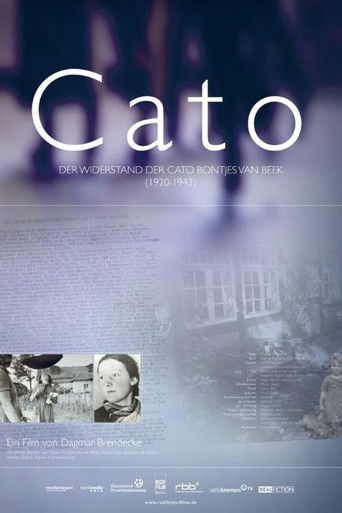 Cato · 2010
Cato
2010
MovieDocumentary
Documentary about Cato Bontjes van Beek, who was active as a resistance fighter against the Nazi regime.
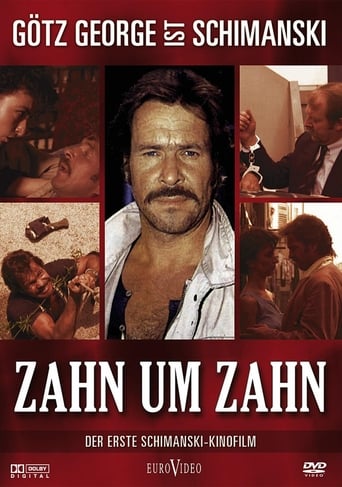 On the Killer's Track · 1985
On the Killer's Track
★ 5.81985
MovieCrime
A man who has just become unemployed kills his closest relatives before he judges himself.
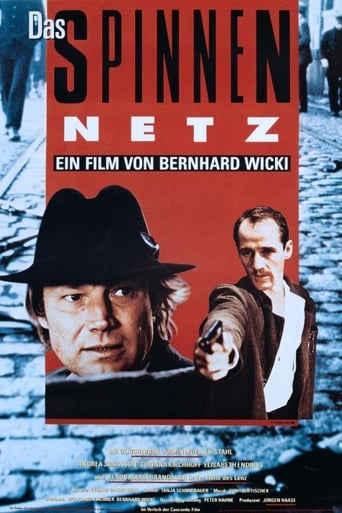 Spider's Web · 1989
Spider's Web
★ 6.21989
MovieDrama
Ulrich Mühe plays a German businessman who was born completely without scruples. This makes him an eminently suitable candidate for success in the chaotic years after World War I. The shameless man's story is contrasted with that of his polar opposite, a Jewish anarchist.
 Schellack - Eine schwarze Scheibe verändert die Welt · 2020
Schellack - Eine schwarze Scheibe verändert die Welt
★ 10.02020
MovieDocumentary
A black paste that made our world louder and happier: when inventor Emil Berliner began using shellac as a sound carrier in 1896, this was the initial spark for a media revolution that has continued right up to the present day. It had already begun ten years earlier with Emil Berliner's invention of the gramophone. Together, the record and the record player changed people's everyday lives. It was a revolution - technically and culturally - because shellac records, unlike wax cylinders, could be reproduced and distributed on a mass scale. 78 revolutions per minute became the standard playback speed and shellac - the resinous paste made from slate flour, cotton, soot and the resin of the lacquer louse - gave the record its name and became synonymous with an era.