H
Writing
Henri Hiro
No biography available.
Known For
 Marae · 1983
Marae
1983
MovieDramaHistory
This historical drama by Henri Hiro brings to life the majestic enthronement of a young king on the sacred marae Arahurahu in Paea, Tahiti. Set entirely in one place and one moment in time, the film immerses the viewer in the intricate rituals of an ancient Polynesian ceremony, portrayed with all its traditional splendor. Over 200 performers—including actors, dancers, musicians, and extras—contribute to this powerful reimagining of the past. The film features choreography by the acclaimed Coco Hotahota and music performed by the group Tereia de Penina.
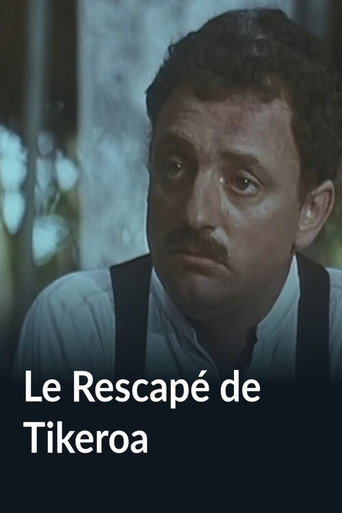 Le Rescapé de Tikeroa · 1981
Le Rescapé de Tikeroa
1981
MovieTV MovieComedy
In 1939 a French policeman (Jacques Martin) is forgotten on a Polynesian island, during an administrative tour. When war broke out, he knew nothing about it and it was only when a German ship called that he learned of the gravity of the events. On the tone of comedy, this drama describes the relationship between this ex-policeman still imbued with administrative stupidity and the naive but joyful population of the island. The comedy prevails over the drama and the gendarme will not take long to acquire the joie de vivre of the natives.
 Ariipaea Vahine · 1978
Ariipaea Vahine
1978
Movie
“Ariipaea-Vahine” is originally a poem by Henri Hiro. This poem will become a play performed several times at the Grand Théâtre and in Moorea by the Pupu Arioi. In 1978, the Matarau cinema unit was created at the Maison des Jeunes et de la Culture. The first film in this department will be an adaptation of the play. In his book "Autonomous Tahiti", Philippe Mazelier defines the piece as follows: "The theme is classic, the parabola transparent: as long as it was faithful to ancestral convictions, Ariipaea passed from the world of men to the world of gods, and Maohi culture was alive. When she converted, the gods stopped speaking to her, and Tahitian culture died. To revive it implies for Henri Hiro to fight Western culture. He calls for a return to basics against the consumer society while the latter, at the same time, is working twice as hard.
 Hono, the Link · 1985
Hono, the Link
1985
MovieRomanceDrama
The film tells the story of a young man (eldest son of a chief) and a young woman (daughter of another chief) who fall in love with each other.
 Tärava · 1983
Tärava
1983
Movie
Filmed between 1980 and 1983, Tärava is considered the founding work of documentary cinema in Tahitian and embodies the link between the Polynesian and his ancestral land. To the rhythm of songs, hïmene tärava, the film takes us to discover our mountains and our valleys, and the story of the birth of the tärava. Filmed by Henri Hiro, Angelo Oliver and Harris Aunoa, Tärava looks back on the period during which missionaries settled in Polynesia. They never ceased to prohibit traditional songs and dances because they expressed in their eyes the perversions and lust of these pagan peoples. Drums and flutes, the basic instruments of Polynesian music, were thus banned. Only choral singing was permitted.
Filmography
Sort