H
Acting
Helmut Färber
No biography available.
Known For
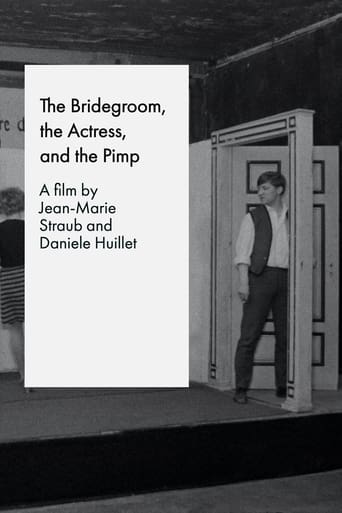 The Bridegroom, the Actress, and the Pimp · 1968
The Bridegroom, the Actress, and the Pimp
★ 4.51968
MovieDramaRomance
Three sequences are linked together in this short film by Straub; the first sequence is a long tracking shot from a car of prostitutes plying their trade on the night-time streets of Germany; the second is a staged play, cut down to 10 minutes by Straub and photographed in a single take; the final sequence covers the marriage of James and Lilith, and Lilith’s subsequent execution of her pimp, played by Rainer Werner Fassbinder. "The film is a look entirely at Western decadence" - Jean-Marie Straub.
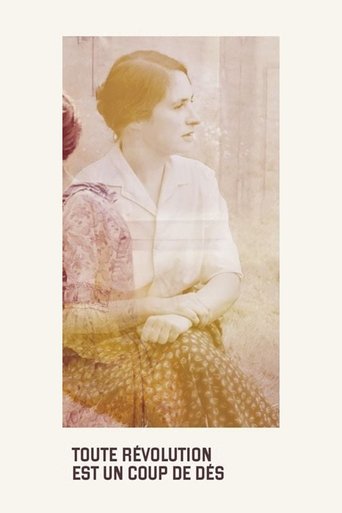 Every Revolution Is a Throw of the Dice · 1977
Every Revolution Is a Throw of the Dice
★ 6.41977
MovieDramaComedy
A tribute to Mallarmé that not only asserts the continuing relevance of his work but also confronts its literary ambiguities with political and cinematic ambiguities of its own. In outline, the film could not be more straightforward: it offers a recitation of one of Mallarmé’s most celebrated and complex poems (it was his last published work in his own lifetime, appearing in 1897, a year before his death) and proposes a cinematic equivalent for the author’s original experiment with typography and layout by assigning the words to nine different speakers, separating each speaker from the other as she or he speaks, and using slight pauses to correspond with white spaces on the original page.
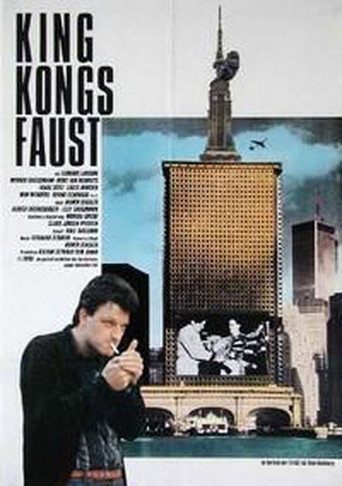 King Kongs Faust · 1985
King Kongs Faust
★ 8.01985
MovieComedy
Berlin Film Fest 1984. The best place for every cinema fan. Everyone wants to be in on the festival, but that may be really difficult, if one has no accreditation. Also Journalist Matthies gets to know the rules of being in or out when he wants to see a screening and is not welcome. Thus he watches an old German silent flick which he is barely interested in. The next day the newspapers are full of reports about a newly discovered German masterpiece from the silent era. It seems that Matthies had luck. He just saw *the* film everybody is talking about now. Also everybody is speculating about its director, who remains unknown. When Matthies talks to Ackrewa, an old befriended projectionist, about the film, the latter seems to recall the name of the director. Matthies decides to research the case. An odyssey into film-history begins and if it is successful Matthies will come up with a top story.
 Kino/Kritik. Über die Wörter, den Sinn und das Geld von Filmen · 1974
Kino/Kritik. Über die Wörter, den Sinn und das Geld von Filmen
1974
MovieDocumentary
Filmography
Sort