Directing
Abbott Meader
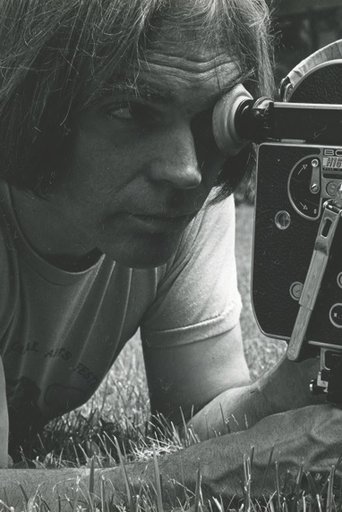
Abbott Meader is an American painter, filmmaker and retired Professor of art. Born In the Brooklyn area of New York City, his roots and many generations of ancestors are to be found in the northern, rural state of Maine, where he and his wife Nancy have lived since the 1960s. He is a Phi Beta Kappa graduate of Dartmouth College, and while in graduate school at the University of Colorado he became …
Known For
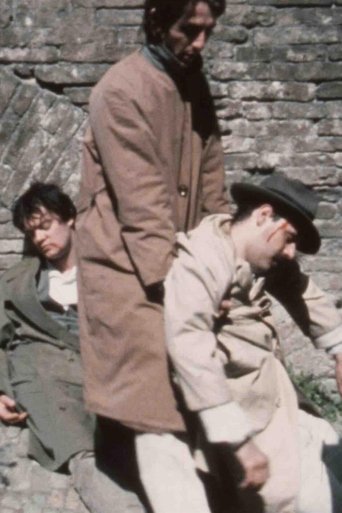 Tutto, tutto nello stesso istante · 1969
Tutto, tutto nello stesso istante
1969
MovieDocumentary
Collective manifesto by the members of C.C.I. It is a collective film, the result of an operation devoid of any aesthetic purpose: to verify the existence of any harmony between a fairly large group (twelve people) of members of the independent Cooperative. Someone, who had the idea, turned 60 meters of Ektachrome according to the moods –or discontent – of the moment and gave them to others to see. The others reacted, each with their own piece. It was then thought to call the film “circular letter”. It was not so simple and so quick: the operation, which started in June of ’68, ended in March of ’69.
 For Life, Against the War · 1967
For Life, Against the War
★ 6.01967
MovieAnimation
First shown on January 30, 1967, FOR LIFE AGAINST THE WAR was an open-call, collective statement from American independent filmmakers disparate in style and sensibility but united by their opposition to the Vietnam War. Part of the protest festival Week of the Angry Arts, the epic compilation film incorporated minute-long segments which were sent from many corners of the country, spliced together and projected. The original presentation of the works was more of an open forum with no curation or selection, and in 2000 Anthology Film Archives preserved a print featuring around 40 films from over 60 submissions.
 South Slope: What Love Tells Me · 1980
South Slope: What Love Tells Me
1980
Movie
South Slope: What Love Tells Me is a 16mm film made in 1978-1980 by the artist Abbott Meader. It is a dramatic portrait of a piece of land in Maine as seen through the seasons filmed over a period of two years. It is both a documentary and a film poem structured to respond to the 6th Movement of Gustav Mahler's 3rd Symphony as performed by the Portland (Maine) Symphony Orchestra, which kindly donated the performance recording for use in this film. Mahler's subtitle for the 6th Movement is "What Love Tells Me."
 Spem in Alium · 1982
Spem in Alium
1982
Movie
"The title of the film is that of the great 40 voice part motet by Thomas Tallis, (1505 -1585) which he composed around 1575, rather recently in geological time. The imagery is a personal response to the music, which soars in its entirety over the duration of the film. The opening line of the motet, translated from Latin, reads as 'I have never put my hope in any other than thee'. Each person will have a unique personal conception of 'Thee', and so it is in life - this mysterious gift that we say we are living - this unrequested gift, this task and calling that we may either accept, avoid, or reject." —Abbott Meader
 American Odyssey · 1979
American Odyssey
1979
Movie
American Odyssey is a look at Orff-Schulwerk in America in 1979. Filmed in 17 schools in 7 states, it documents the creative process in music, movement, dance, theater, and the spoken word, involving students and teachers from kindergarten through community chorus and orchestra. Running throughout are the poem "Sky Dwellers" by Marcia Lunz and the poetic camerawork of Abbott Meader.
 The Elms · 1964
The Elms
1964
Movie
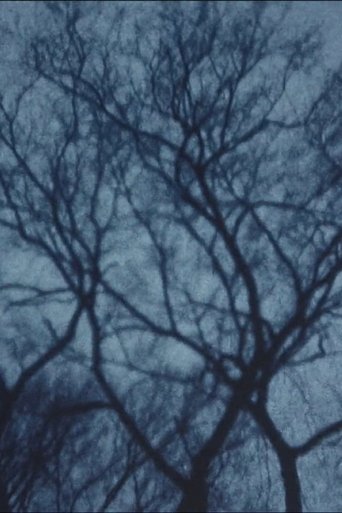
"THE ELMS was my first sound film, in 1964, made after the assassination of JFK. I hoped that the title might bring to mind the American Elm tree, which was seen to be doomed by way of disease. The assassination of Kennedy in 1963 was a tremendously emotional blow and omen of things to come. The whole country watched the funeral ceremonies play out on TV, and I taped everything I could of those events – music, words, prayers, the killing of Lee Harvey Oswald , and more. I needed to make a film that would incorporate some of those sounds, but I also wanted to introduce other components. Some people assumed I was making an homage to JFK. That is not the case. I think it should be clear that what I was concerned about was the evolving state of our nation." –Abbott Meader
 Snake Dance Teacher Dance · 1978
Snake Dance Teacher Dance
1978
Movie
"Snake Dance was shown in United States Embassies in Africa in the late 1970s and early 1980s to show the American culture was not all Jim Crow and race riots. Arthur Hall came to Maine as a movement specialist for the National Endowment for the Arts, and the Maine Arts Commission was so impressed they called in filmmakers. We looked in on a Wednesday and filmed all day the next Friday, using all the film we had - color and both negative and reversal black and white." —Bruce Williams
 Isolation · 1974
Isolation
★ 6.01974
Movie
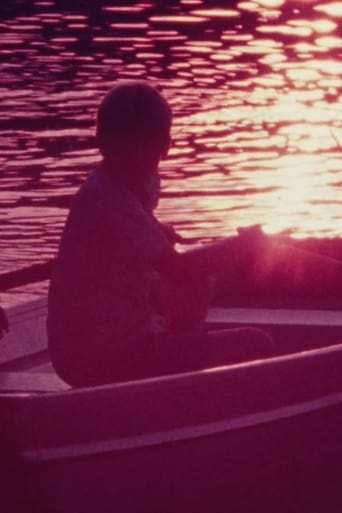
"I feel that some of the silent pieces might be seen as visual music. Perhaps a bit pretentious to say that, but such pieces as ISOLATION are something of the sort. This is a film that every time I see it I want to re-edit it, just for fun. Its like a jazz improv, and could be different during the next set – the rhythms, the pauses, perhaps with longer passages and variations in visual tonality, theme and variation, recapitulations – all sorts of musical terms might be applied. There is no real narrative development here. The film suggests that a boy in a rowboat sees glimpses of the world around him. The boy whose image you see is our son, Darmon, and long ago I was a similar boy as well." –Abbott Meader
Filmography
Sort