M
Writing
Martin Worth
No biography available.
Known For
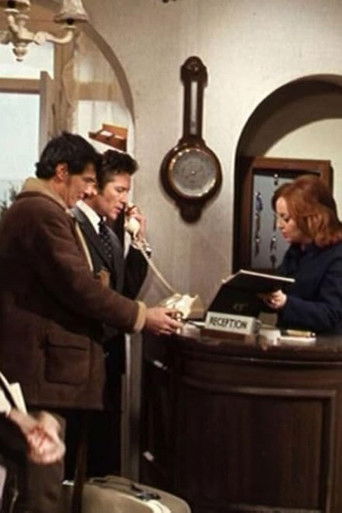 The Last Witness · 1971
The Last Witness
1971
MovieHorrorTV Movie
A man, Harris, wakes up in a hotel on a small island after a shipwreck. He keeps recognising flashes of what he sees, until he realises his visions are of actions yet to come, culminating in murder.
 The Cult of Doomwatch · 2006
The Cult of Doomwatch
2006
MovieDocumentary
With new interviews with the actors and production team, this documentary reveals the inspiration for stories, outlines how the team knew they were upsetting the government and big business, and explains why Robert Powell left at the height of its popularity.
 A Distant Scream · 1984
A Distant Scream
★ 9.51984
MovieDramaThriller
Lying on his deathbed, an elderly man who has spent most of his life in prison for the murder of the woman he loved is granted a supernatural chance to go back to that fateful weekend and attempt to discover what really happened...
 Orson Welles' Great Mysteries · 1973
Orson Welles' Great Mysteries
★ 6.81973
SeriesMysteryDrama
Orson Welles’ Great Mysteries is a British television anthology series produced by Anglia Television for the ITV network and broadcast between 1973 and 1974. The series presents standalone adaptations of classic mystery, crime, and supernatural stories drawn from literary sources including Dickens, Conan Doyle, Wilkie Collins, Balzac, Maugham, O. Henry, and others.
Each episode is framed by original introductory and closing sequences performed by Orson Welles, who serves as the series’ host and sole recurring on-screen presence. These segments, written and directed by Welles (uncredited), function as stylized narrative framing devices rather than dramatic participation in the stories themselves. The dramatic content of each episode is performed by separate casts and directors, with no continuing characters or serialized narrative, establishing the series as a unified television anthology rather than a collection of standalone films.
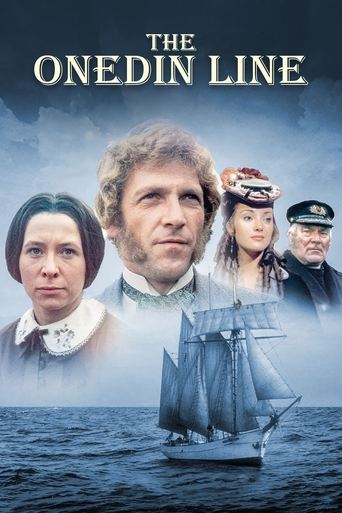 The Onedin Line · 1971
The Onedin Line
★ 7.01971
SeriesDrama
The Onedin Line is a BBC television drama series which ran from 1971 to 1980. The series was created by Cyril Abraham.
The series is set in Liverpool from 1860 to 1886 and deals with the rise of a shipping line, the Onedin Line, named after its owner James Onedin. Around this central theme are the lives of his family, most notably his brother and partner, shop owner Robert, and his sister Elizabeth, giving insight into the lifestyle and customs at the time, not only at sea, but also ashore. The series also illustrates some of the changes in business and shipping, such as from wooden to steel ships and from sailing ships to steam ships. It shows the role that ships played in affairs like international politics, uprisings and the slave trade.
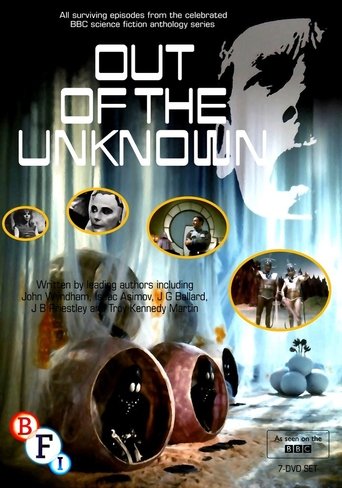 Out of the Unknown · 1965
Out of the Unknown
★ 7.11965
SeriesSci-Fi & FantasyDrama
Out of the Unknown is a British television science fiction anthology drama series, produced by the BBC and broadcast on BBC2 in four series between 1965 and 1971. Each episode was a dramatisation of a science fiction short story; some were created for the series, but most were adaptations of already published stories.
The first three years were exclusively science fiction, but that genre was abandoned in the final year in favour of horror and fantasy. A number of episodes were wiped during the early 1970s, as was standard procedure at the time.
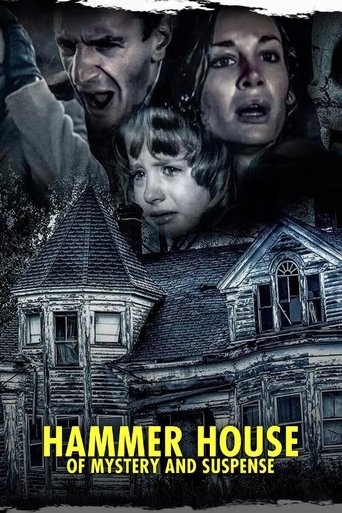 Hammer House of Mystery and Suspense · 1984
Hammer House of Mystery and Suspense
★ 6.51984
SeriesMysteryDrama
A short-lived anthology television series from Hammer Studios. Though similar in format to the 1980 series Hammer House of Horror, the Mystery and Suspense series had feature-length episodes, usually running around 70 minutes without commercials.
Co-produced by Hammer Studios with 20th Century Fox Television, it is known in the United States as Fox Mystery Theater. Unlike 1980's Hammer House of Horror, all episodes feature American actors as either the leads or in key roles. It first broadcast in the UK on ITV in 1984, though was not simulcast and was shown in different timeslots throughout the various regions.
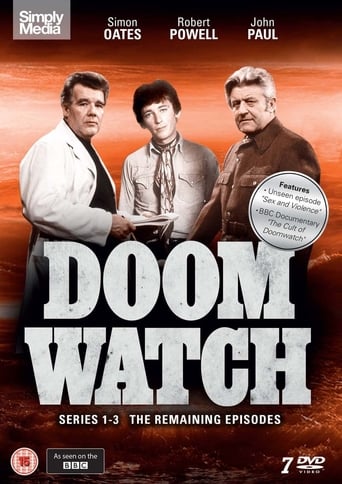 Doomwatch · 1970
Doomwatch
★ 6.41970
SeriesDramaSci-Fi & Fantasy
Doomwatch is a British science fiction television programme produced by the BBC, which ran on BBC 1 between 1970 and 1972. The series was set in the then present-day, and dealt with a scientific government agency led by Doctor Spencer Quist, responsible for investigating and combating various ecological and technological dangers.
The series was followed by a film adaptation produced by Tigon British Film Productions and released in 1972, and a revival TV film was broadcast on Channel 5 in 1999.
Filmography
Sort