Production
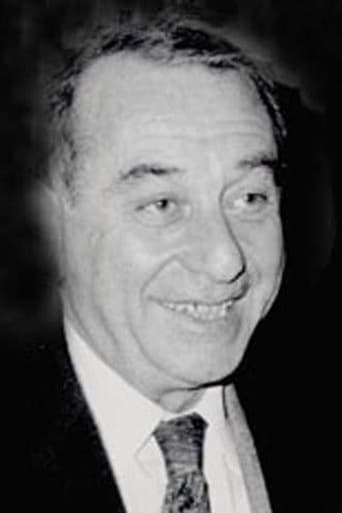
Anatole Dauman
Born February 7, 1925 · Warsaw, Poland
Died April 8, 1998 · aged 73
Anatole Dauman (7 February 1925 in Warsaw – 8 April 1998 in Paris) was a French film producer. He produced films by Jean-Luc Godard, Robert Bresson, Wim Wenders, Nagisa Oshima, Andrei Tarkovsky, Chris Marker, Volker Schlöndorff, Walerian Borowczyk, and Alain Resnais. He was a principal figure in Argos Films, a company that was a very important vehicle in creating opportunities for the "Left Bank"…
Known For
 In the Realm of the Senses · 1976
In the Realm of the Senses
★ 6.61976
MovieDramaRomance
A passionate telling of the story of Sada Abe, a woman whose affair with her master led to an obsessive and ultimately destructive sexual relationship.
 Hiroshima Mon Amour · 1959
Hiroshima Mon Amour
★ 7.71959
MovieDramaHistory
The deep conversation between a Japanese architect and a French actress forms the basis of this celebrated French film, considered one of the vanguard productions of the French New Wave. Set in Hiroshima after the end of World War II, the couple -- lovers turned friends -- recount, over many hours, previous romances and life experiences. The two intertwine their stories about the past with pondering the devastation wrought by the atomic bomb dropped on the city.
 Paris, Texas · 1984
Paris, Texas
★ 8.11984
MovieDrama
A man wanders out of the desert not knowing who he is. His brother finds him, and helps to pull his memory back of the life he led before he walked out on his family and disappeared four years earlier.
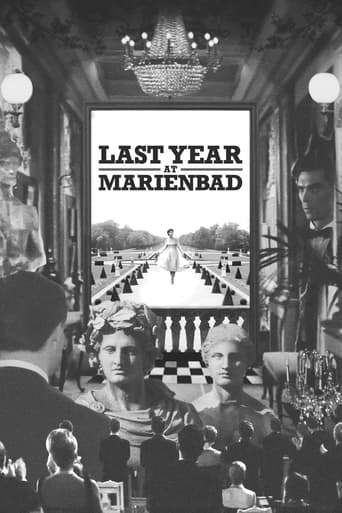 Last Year at Marienbad · 1961
Last Year at Marienbad
★ 7.41961
MovieDramaRomance
At a weekend gathering, a man tells a woman that they had spent time there together a year prior. But, the woman has no recollection whatsoever and is convinced that he is simply fabricating the encounter. The more he speaks about their activities the previous year however, the more compelling he becomes. The question remains however – did they meet previously or not?
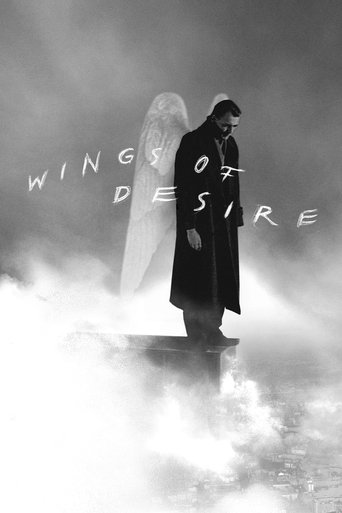 Wings of Desire · 1987
Wings of Desire
★ 7.81987
MovieDramaFantasy
Two angels, Damiel and Cassiel, glide through the streets of Berlin, observing the bustling population, providing invisible rays of hope to the distressed but never interacting with them. When Damiel falls in love with lonely trapeze artist Marion, the angel longs to experience life in the physical world, and finds — with some words of wisdom from actor Peter Falk — that it might be possible for him to take human form.
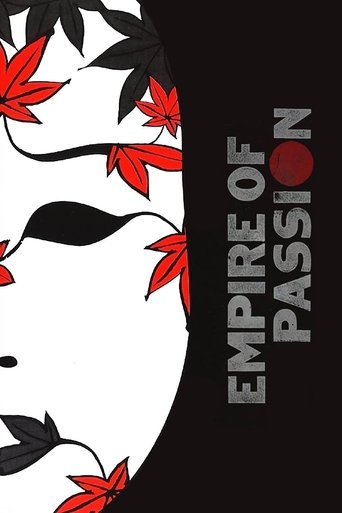 Empire of Passion · 1978
Empire of Passion
★ 6.81978
MovieDramaRomance
A married woman and her lover murder her husband and dump his body into a well, but his ghost returns to haunt them as the local gossip intensifies.
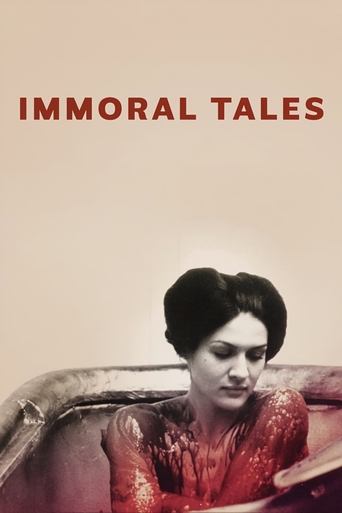 Immoral Tales · 1974
Immoral Tales
★ 5.91974
MovieDramaRomance
Four erotic tales from various historical eras. The first, 'The Tide', is set in the present day, and concerns a student and his young female cousin stranded on the beach by the tide, secluded from prying eyes. 'Therese Philosophe' is set in the nineteenth century, and concerns a girl being locked in her bedroom, where she contemplates the erotic potential of the objects contained within it. 'Erzsebet Bathory' is a portrait of the sixteenth-century countess who allegedly bathed in the blood of virgins, while 'Lucrezia Borgia' concerns an incestuous fifteenth-century orgy involving Lucrezia, her brother, and her father the Pope.
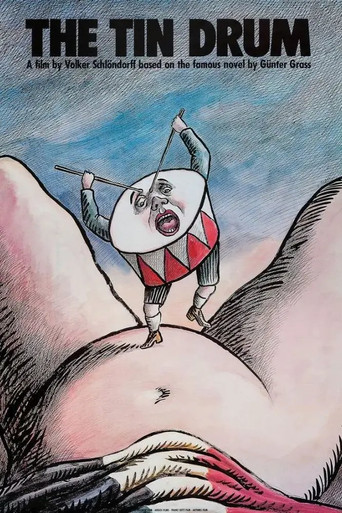 The Tin Drum · 1979
The Tin Drum
★ 7.01979
MovieDramaHistory
In 1924, Oskar Matzerath is born in the Free City of Danzig. At age three, he falls down a flight of stairs and stops growing. In 1939, World War II breaks out.
Filmography
Sort