
Acting
Jacques-Henri Gagnon
Born January 22, 1934
Died September 15, 2015 · aged 81
No biography available.
Known For
 The Long Winter · 1999
The Long Winter
★ 7.41999
MovieDramaHistory
In 1838, François-Xavier Bouchard fights beside his Québec countrymen and the English minority.
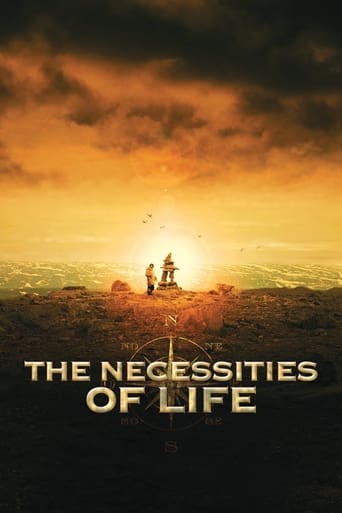 The Necessities of Life · 2008
The Necessities of Life
★ 7.52008
MovieDrama
In 1952, an Inuit hunter named Tivii with tuberculosis leaves his northern home and family to go recuperate at a sanatorium in Quebec City. Uprooted, far from his loved ones, unable to speak French and faced with a completely alien world, he becomes despondent. When he refuses to eat and expresses a wish to die, his nurse, Carole, comes to the realization that Tivii's illness is not the most serious threat to his well-being. She arranges to have a young orphan, Kaki, transferred to the institution. The boy is also sick, but has experience with both worlds and speaks both languages. By sharing his culture with Kaki and opening it up to others, Tivii rediscovers his pride and energy. Ultimately he also rediscovers hope through a plan to adopt Kaki, bring him home and make him part of his family
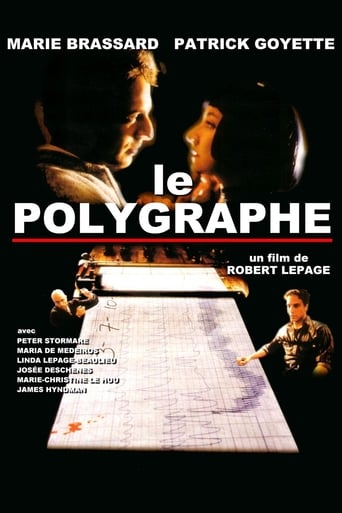 Le Polygraphe · 1996
Le Polygraphe
★ 5.61996
MovieCrime
In this French Canadian thriller, an actress wins the role of a murder victim in a film based on the true story of an unsolved crime. She discovers her neighbor was the lover of the woman who was murdered in real life -- and is still a suspect.
 La pension des étranges · 2004
La pension des étranges
★ 6.52004
MovieDramaComedy
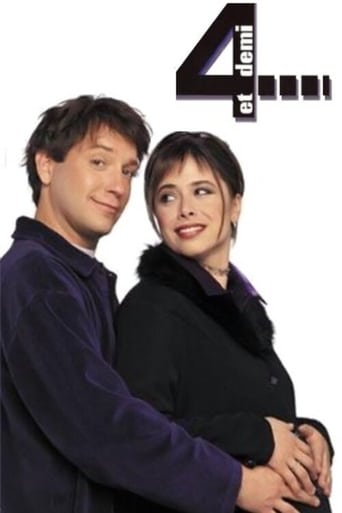 4 et demi... · 1994
4 et demi...
★ 8.01994
SeriesComedyDrama
4 and a half is the apartment occupied on the Plateau Mont-Royal in Montreal by a young couple. It is a chronicle of the daily life of the urban reality of 25-30 year olds: love, friendship, humor and tenderness.
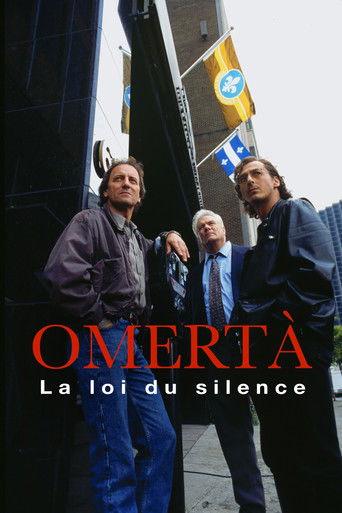 Omertà, la loi du silence · 1996
Omertà, la loi du silence
★ 8.61996
SeriesDramaCrime
Omertà or Omertà, The Code of Silence is a Quebec television series of 11 forty-five minute episodes, created by Luc Dionne and aired from January to April 1996 on Radio-Canada. In France, the series aired on France 3 in 1998.
A second season, titled Omertà II – The Code of Silence, had 14 forty-five minute episodes and was broadcast between September and December 1997 on Radio-Canada.
A third season, titled Omerta, The Last Men of Honor, had 13 episodes and was broadcast from January to April 1999, on Radio-Canada.
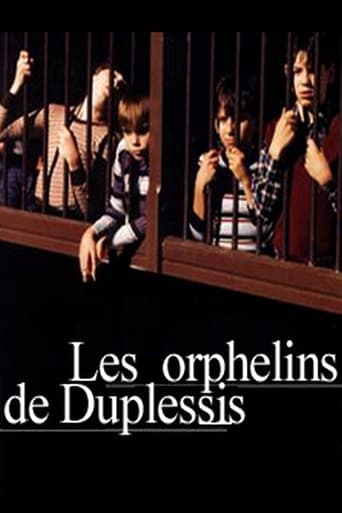 The Duplessis Orphans · 1997
The Duplessis Orphans
★ 8.01997
SeriesDrama
In the 1950s, young boys were placed in orphanages and endure harsh and austere living conditions. As a united group, they supported each other and survived despite bullying, hardship and little hope for better days. While these children were doing their best to survive, they had no way to suspect the secret dealings between the clergy, the medical profession and the government that will inevitably seal their fates. The institution faced with a precarious financial situation, the solution is to transform the orphanage into a psychiatric institute in order to obtain additional subsidies. To demonstrate the need for this change in status, the orphans are labeled as insane by the very people who took them in to help them. While their future as orphans was already precarious, they become prisoners of an asylum system from which they have little hope of being able to free themselves even as they grow older.
Filmography
Sort