Acting
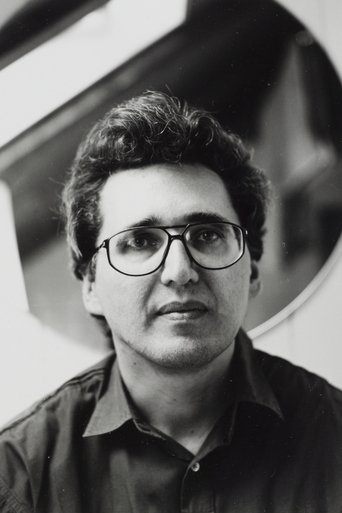
Boris Groys
Boris Efimovich Groys (born 19 March 1947 in Berlin, Germany) is an art critic, media theorist, and philosopher. He is a professor of Russian and Slavic Studies at New York University and senior research fellow at the Academy of Design in Karlsruhe, Germany. He has been a professor ofAesthetics, Art History, and Media Theory at the Academy of Design/Center for Art and Media Technology (HfG/ZKM) in…
Known For
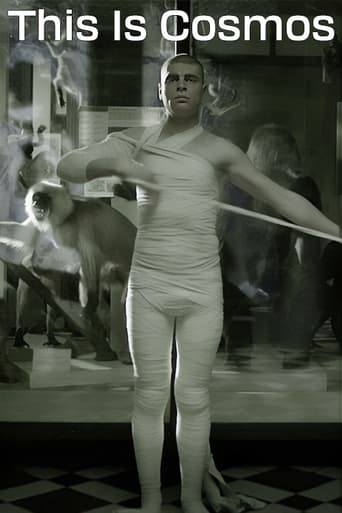 This Is Cosmos · 2014
This Is Cosmos
2014
MovieDocumentary
Based on the ideas of Russian philosopher, Nikolai Fedorov, Anton Vidokle’s film was shot in Siberia, Crimea, and Kazakhstan. Fedorov, like others, believed that death was a mistake, “because the energy of cosmos is indestructible, because true religion is a cult of ancestors, because true social equality is immortality for all.” Fedorov was one of the Cosmo-Immortalists, a surge of thinkers that emerged in Russia in the late 19th and early 20th centuries. They linked Western Enlightenment with Russian Orthodoxy and Eastern philosophical traditions, as well as Marxism, to create an idiosyncratically concrete metaphysics. For the Russian cosmists, cosmos did not mean outer space: rather, they wanted to create “cosmos” on earth. “To construct a new reality, free of hunger, disease, violence, death, need, inequality – like communism.”
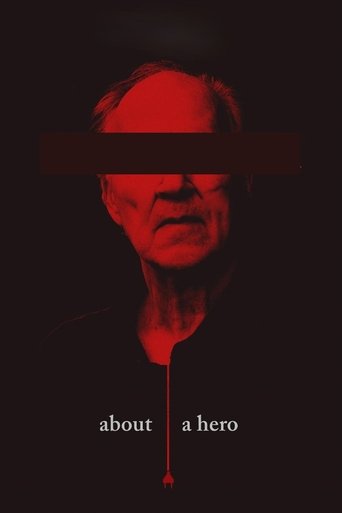 About a Hero · 2024
About a Hero
★ 5.52024
MovieCrimeDocumentary
After a local factory worker named Dorem Clery dies under mysterious circumstances, Werner Herzog travels to Getunkirchenburg to investigate his perplexing death. But Herzog, our narrator, is not who he seems, and the film is not what we expect…
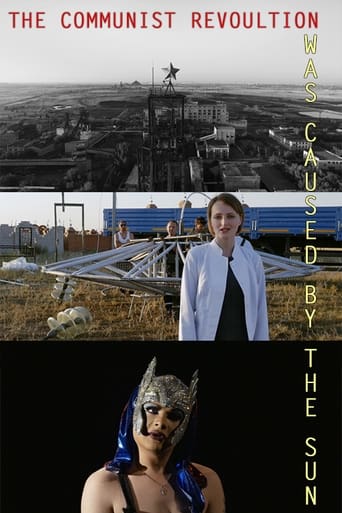 The Communist Revolution Was Caused By The Sun · 2015
The Communist Revolution Was Caused By The Sun
★ 5.02015
MovieDocumentary
The second installment of Anton Vidokle’s trilogy on Russian cosmism, The Communist Revolution Was Caused By The Sun, looks at the poetic dimension of the solar cosmology of Soviet biophysicist Alexander Chizhevsky. Shot in Kazakhstan, where Chizhevsky was imprisoned and later exiled, the film introduces Сhizhevsky’s research into the impact of solar emissions on human sociology, psychology, politics, and economics in the form of wars, revolutions, epidemics, and other upheavals. It aligns the life of post-Soviet rural residents and the futurological projects of Russian cosmism to emphasize that the goal of the early Soviet breakthroughs aimed at the conquest of outer space was not so much technical acceleration, but the common cause of humankind in their struggle against the limitations of earthly life.
Filmography
Sort