
Directing
Ieva Balode
Ieva Balode (born in 1987, Riga, Latvia) is an artist and film curator working with analog image. With her works she takes part in international exhibitions and festivals presenting her work both in installation, as well as cinema and performance situation. As a curator she is a founding member of Baltic Analog Lab - artists collective providing a space and platform for analog film production, res…
Known For
 Sisyphus Condition · 2018
Sisyphus Condition
2018
Movie
A man living on a remote rocky island where only stone and ocean surrounds him, seems to do some meaningful task. He is carrying stones, sometimes burying them and sleeping on them. He continues doing the same tasks, never revealing to the viewer the reason of his work. “Sisyphus Condition” refers to Ancient Greek mythological hero Sisyphus who was punished for his self-aggrandizing craftiness and deceitfulness by being forced to roll an immense boulder up a hill, only to watch it come back to hit him, repeating this action for eternity.
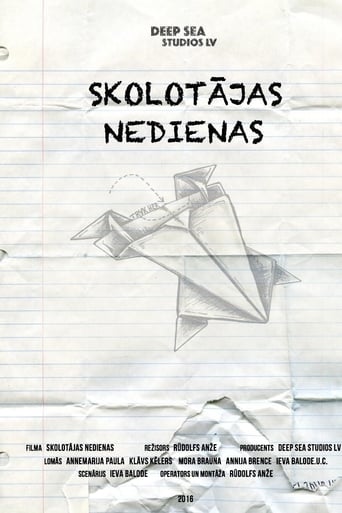 Teacher's Hard Day · 2016
Teacher's Hard Day
2016
MovieComedy
A comedy about a teacher's destiny, shot in the aesthetic of the beginning of the 20th century.
 Equal Tense · 2018
Equal Tense
2018
Movie
In Paris it was Latvian dancer and publicist Aia Bertran who together with her husband – American artist, philosopher and dancer Raymond Duncan formed alternative education centre Akademia Paris on beginning of 20th century. The centre was know for its special reference to Ancient Greek philosophy, which promotes healthy living and hight ethics. Centre’s most known figure was Isidora Duncan - sister of Raymond which is known for her big influence on contemporary dance movements. Akademia was also known as a shelter for political and social refugees, as well as all sorts of imigrants like Aia herself.
 Victory Song · 2016
Victory Song
2016
Movie
Consisting of found footage of an old Russian Soviet propaganda film “Советский тыл кует победу”, being remade in author's handmade technique, work reflects on memory as a phenomenon which emphasizes the 'unwanted memory 'role in shaping social consciousness of today's society.
 Thanatophobia · 2023
Thanatophobia
2023
Movie
The creators of this experimental essay introduced the film by saying, “Fear of the unknown, fear of the dark, fear of the enemy, fear of death since the beginnings of mankind have been both a driving force of humanity as well as a stumbling block. It is an instinctive force that has made humanity join up in communities in search of safety and shelter from a danger lurking in the darkness, however the finality of things is always inevitable. How does one overcome fear of their own fatality?”
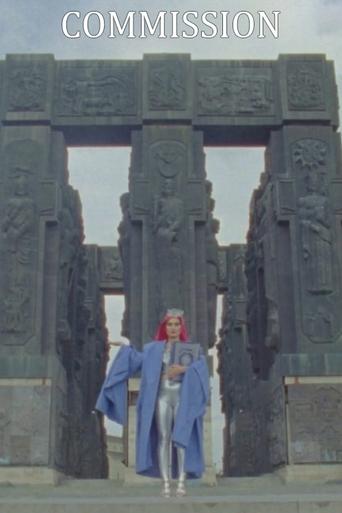 Commission · 2019
Commission
2019
MovieDocumentaryScience Fiction
The story of a film "Commission" starts in Georgia at some unknown point of time where a heroic, mythical female character has written a book which is being delivered by a courier (the artist herself) to three powerful women. The content of a book is hidden within an existing book – "The Knight in the Panther's Skin" written by Medieval Georgian poet Shota Rustaveli who dedicated the book to 12th century Queen Tamar who at the time brought prosperity and many social changes in the country. Being used as a secret shell or a reference to female power from the past, the freshly embedded content of a book serves as manifesto to the women who haven’t been equally appreciated due to history books still being written from male perspective. The book offers alternative gaze to a world history which can exist only in utopian science-fiction film commissioned and executed by females only.
 Flesh To Flesh · 2018
Flesh To Flesh
2018
Movie
The film reviews the pages of the history of medicine in which healing was integrally linked to ritual acts and incantation, paying particular attention to the image of the woman as the practitioner of magical functions. At the start of the wave of witch trials in Europe that lasted from the 16th to the 18th century, women with knowledge of medicine and midwifery were persecuted, while the right to proclaim the truth was given over to the Church, and subse- quently – modern medicine and science, which was mainly controlled by men. Also denigrated as witches were women who didn’t fit into the accepted social order, because, for example they were unmarried or did not have children. Witches were perceived as the embodiments of evil. They were feared and hated, because people believed that years of blight and pestilence, illnesses and still-born children were their handiwork.
 Moccasin Flowers · 2017
Moccasin Flowers
2017
Movie
Moccasin Flowers is a film made in collaboration and dedication to a musician and hermit Orla Wren (UK) Film talks about letting go the loved one and reaching out for re-connection with inner-self which has been lost during the deprivation.
Filmography
Sort