E
Directing
Edward Luyken
No biography available.
Known For
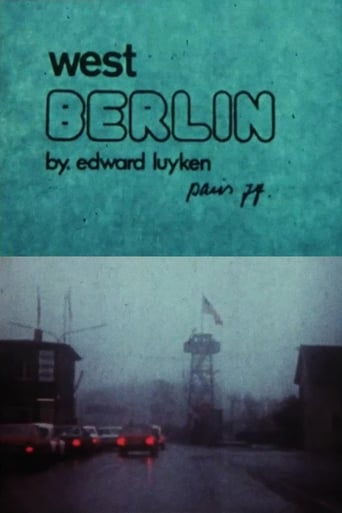 Berlin · 1977
Berlin
1977
Movie
The filmmaker travels by train from France to Berlin. In six short chapters, we see the journey and the city. These are short still lives that remove the sense of anonymity from the everyday.
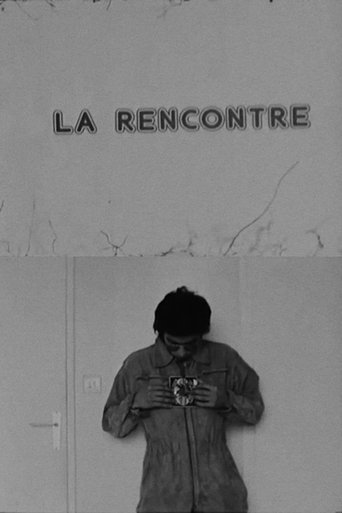 La rencontre · 1978
La rencontre
1978
Movie
Performance by Edward Luyken in his Paris home. Luyken wears overalls like those worn by German tank soldiers. First he plays with a kind of amulet, then he makes small objects by stacking and sliding together clumps of various sizes. This activity is intermittently interrupted when Luyken has to rewind the spring of his camera every twenty seconds.
 Painted Monitor · 1979
Painted Monitor
★ 7.01979
Movie
An evening of television is apparently reduced to a few minutes. The image is blue, with an occasional hint of red for contrast.
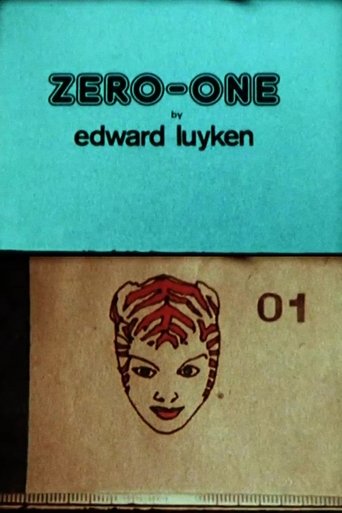 Zero One · 1977
Zero One
1977
Movie
Zero-One is a figurative animation film consisting of thirty short animations. Luyken consistently begins with a triangle. From this triangle, new forms arise that eventually revert back into a triangle. This is a primitive version of morphing, a technique derived from the computer world: it is the gradual fading of one image into another image. In the animation, this technique was already known; an example of an animated film in which the images flow into one another is Pas a deux by Gerrit van Dijk and Monique Renault. The drawings were made on a roll of numbered entrance tickets that were used at the Cinémathèque cinema in Paris. The numbers run from 99 to 0, but not all of the numbers are used in the animation.
 De macht der twee · 1987
De macht der twee
1987
Movie
Duality is the starting point for this collection of Luyken-like associations: his two sons at different locations perform small actions; signed a cross returns as three-dimensional shape; indoor and outdoor spaces. The soundtrack features the sounds of drumming on metal. The title lapels to Luyken's two sons.
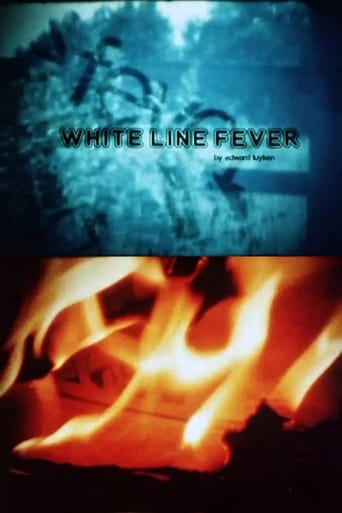 White Line Fever · 1978
White Line Fever
1978
MovieDocumentary
A filmed diary that documents the period that Luyken stayed in the United States. The film consists of three parts: a half-hour filmed in New York, a half-hour report of hitchhiking from the east to the west coast, and again another half hour in New York. The images are edited in a quick sequence; in some cases, the shots are only one frame in length. The name White Line Fever refers to the monotonous succession of white markings on the motorway.
Filmography
Sort