E
Directing
Ernst Schmidt Jr.
Born February 28, 1938 · Hadersdorf, Austria
Died February 9, 1988 · aged 49
No biography available.
Known For
 Kunst & Revolution · 1968
Kunst & Revolution
1968
MovieDocumentary
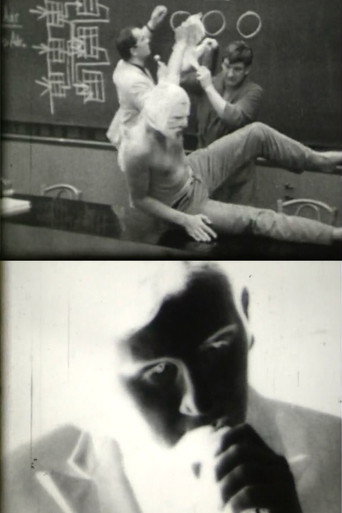
‘Kunst & Revolution is a documentation on the famous action known as the “filthy uni mess”, which led to a jury court trial. I only had a few metres of film with me and they were quickly spent, but still the film gives one a rough impression of the events. As a whole mythology quickly arose around the event, I altered the material to counteract this effect (through repetition, and adding other material, for instance from a film about keeping dogs, and my own leftover footage from the Muehl action number 54 ‘Im Freudenauer Wasser’).’ In film 16 of his anthology Ernst Schmidt Jr. documented the actions of Günter Brus, Otto Muehl, Peter Weibel and Oswald Wiener.
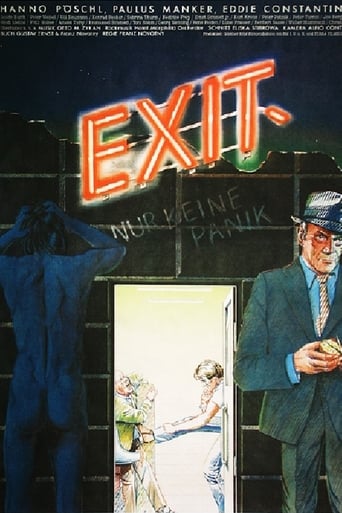 Exit... But No Panic · 1980
Exit... But No Panic
★ 4.41980
MovieActionCrime
A guy having sex with a woman on a rooftop – just to get her coffee-machine.
 Yes/No · 1968
Yes/No
1968
Movie
Expanded cinema with a real and a projected curtain. (This film is part of the 20 Action and Destruction Films.)
 N · 1978
N
★ 4.51978
Movie
Recorded during a presentation of the "Performance Art Festival" in the Modern Art Galerie, Vienna. The presentation was officially put to an end by the police because of the infernal sound made by the accompanying noise orchestra. In this film short shots have been "mounted" in the camera. The film material is shown twice, whereas the sound is composed over the entire length of the film (out of elements of the real sound from the performance). (E.S.jr.)
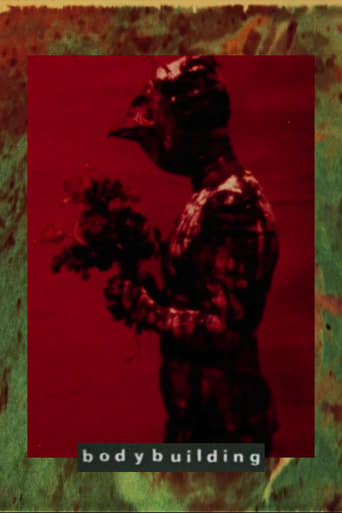 Bodybuilding · 1967
Bodybuilding
1967
Movie
In May 1965, Ernst Schmidt Jr. films the Otto Muehl performances Rumpsti Pumsti and Body Building. In this period Muehl conceives his actionist works almost exclusively for photographic and film documentation. The necessity of a spontaneous confrontation with the public, which plays a major role in Muehl's later actions, does not apply to these works.
 Cheers · 1968
Cheers
1968
Movie
This is a film with minimal content. Using a film pen, a line was drawn across a strip of clear leader, until it hit the edge of the frame ("cheers"), and then the line was drawn back to the other side ("cheers"), etc. This strip functioned as the film negative. The projection is the drawn out line as a white line that wanders back and forth, bringing light and darkness into the theater. Because of this one should not only watch the movie screen, but also the light that comes out of the projector and the reflections in the theater. A "light play." (E.S.jr.)
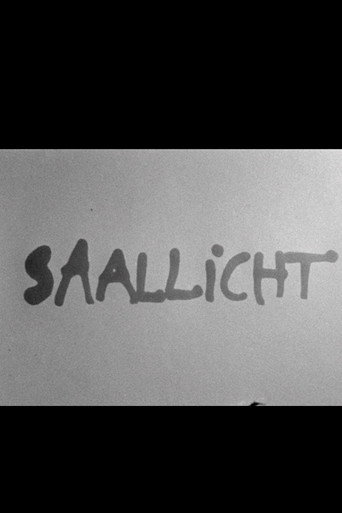 Saallicht · 1974
Saallicht
1974
Movie
Ernst Schmidt Jr. SAALLICHT (1974, 30 sec, 16mm)
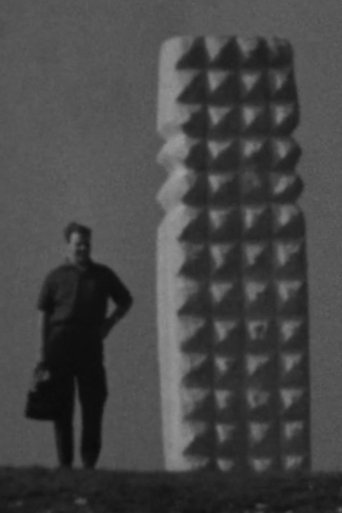 Stones · 1965
Stones
1965
Movie
Steine (Stones) is a documentary film on a sculptorsŽ symposium in St. Margarethen, Burgenland. Behind this short description of content lies one of the most intelligently filmed and concepted documentary films in the history of Austrian film. The date of the last showing of this film could not be reconstructed.
Filmography
Sort