A
Editing
Alejandra Almirón
No biography available.
Known For
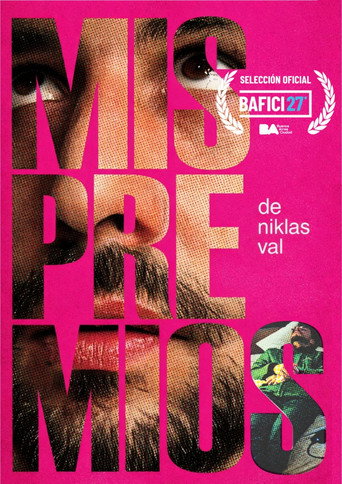 My Awards · 2026
My Awards
2026
Movie
At a film festival, a filmmaker tries to figure out what the jury is looking for in order to win the award. But the fear of failure threatens to ruin more than just his career, while the search for recognition throws his own desires into crisis.
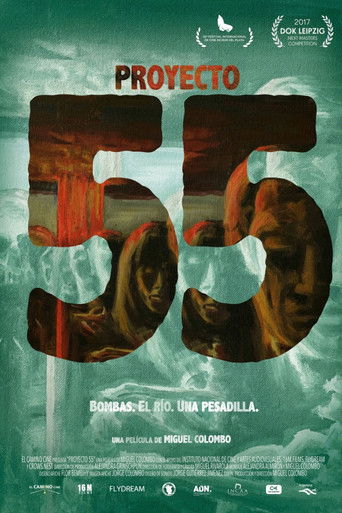 Proyecto 55 · 2017
Proyecto 55
2017
MovieDocumentary
A recurring nightmare immerses the filmmaker into a visual research in the first person. Beginning with the 1955 bombing of Buenos Aires, the film elaborates a disturbing essay about violence. Combining a variety of different materials the director follows a line of thought that starts with his grandparents at World Wars I and II, and passes through Vietnam and the atomic weapons, reflecting about the kind of world we make for ourselves and for coming generations.
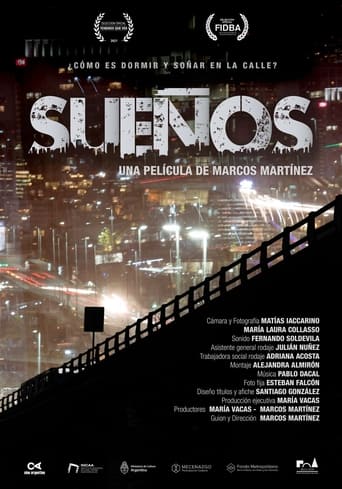 Sueños · 2021
Sueños
2021
MovieDocumentary
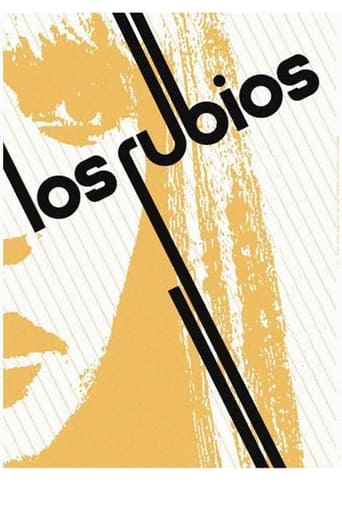 The Blonds · 2003
The Blonds
★ 6.02003
MovieDocumentary
In 1977, when she was four years old, Albertina Carri's parents vanished without a trace, victims of Argentina's brutal military junta. In this fresh and politically daring film, the young Argentinian filmmaker attempts to unravel the mystery, piecing together her memories and fantasies in a quest to understand her parents' untimely fate.
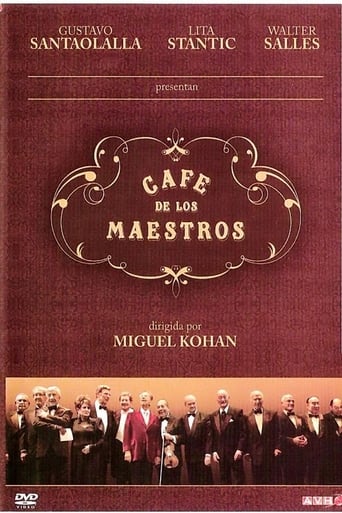 Café de los maestros · 2008
Café de los maestros
★ 7.32008
MovieDocumentaryMusic
Coffee Masters is a documentary by Miguel Kohan, produced by Lita Stantic, Gustavo Santaolalla and Walter Salles. It tells the story of great tango of the old guard who, summoned by a rock musician, proposing a record to demonstrate its validity. This adventure, full of memories, humor and poignant moments, culminating with a presentation of the Masters at the Teatro Colon.
 El exterior · 2007
El exterior
2007
MovieDocumentary
Sergio is returning to Buenos Aires after living in Spain for six years. Before returning, he captures various moments in the daily lives of seven Argentinians he met during his stay in Barcelona.
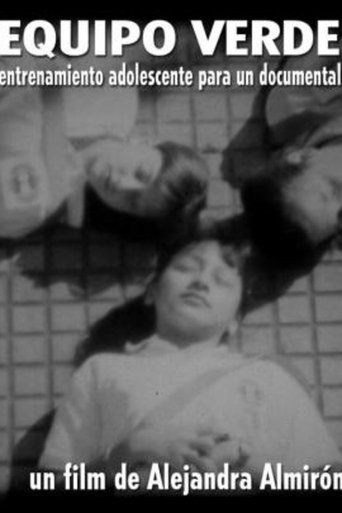 Green Team · 2014
Green Team
2014
MovieDocumentary
During the last military dictatorship, the secondary school sank into a fog of silences and complicities; and in that fog, the collective dream of many students was also lost. 1978, the perfect reminder of high school is the gymnastics playground and the Physical Education teacher. The Green Team was formed with those of us who didn't make the normal teams: Cristina, Elvira and myself. We were the first litter of young people without collective projects that followed the genocide, the design teens that the military longed for. Do we belong to a generation? Or did we just come later?
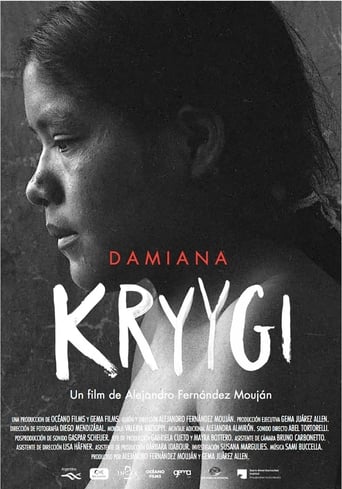 Damiana Kryygi · 2015
Damiana Kryygi
★ 5.22015
MovieDocumentary
The year is 1896. In the dense jungle of Paraguay a three years old Ache girl survives a slaughter perpetrated by white settlers. The girl is named Damiana by her captors. Anthropologists from the La Plata Museum of Natural Sciences in Argentina take her as an object of scientific interest in the context of their racial studies. Later she is handed over to a family where she grows up as a maid. In 1907, at the age of 14, she is committed to a mental institution. There she is photographed naked just two months before her death from tuberculosis. Once dead her body is studied in La Plata and in Berlin. One hundred years later, an anthropology student identifies part of her remains in the La Plata museum. Her head is found soon after at Charite Hospital in Berlin.
Filmography
Sort