Y
Directing
Yann Beauvais
Born January 1, 1953 · France (age 73)
Born in France in 1953. As a teacher in the United States, he became conscious of the need to lead a "cultural battle". Filmmaker and film critic, he organizes experimental cinema events in France and other countries. After his film and philosophy studies, he became very influenced by contemporary art (Russian formalism and minimal structuralism) and learned music, as well as by his friendship wit…
Known For
 Cinématon · 1978
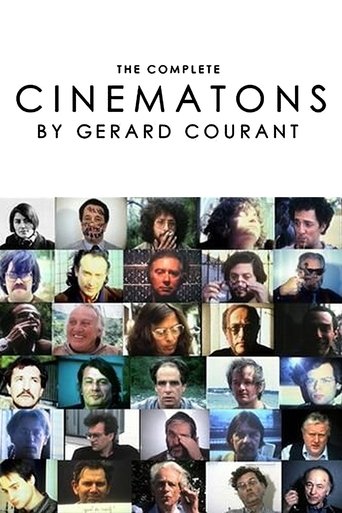
Cinématon
★ 4.91978
MovieDocumentary
Cinématon is a 156-hour long experimental film by French director Gérard Courant. It was the longest film ever released until 2011. Composed over 36 years from 1978 until 2006, it consists of a series of over 2,821 silent vignettes (cinématons), each 3 minutes and 25 seconds long, of various celebrities, artists, journalists and friends of the director, each doing whatever they want for the allotted time. Subjects of the film include directors Barbet Schroeder, Nagisa Oshima, Volker Schlöndorff, Ken Loach, Benjamin Cuq, Youssef Chahine, Wim Wenders, Joseph Losey, Jean-Luc Godard, Samuel Fuller and Terry Gilliam, chess grandmaster Joël Lautier, and actors Roberto Benigni, Stéphane Audran, Julie Delpy and Lesley Chatterley. Gilliam is featured eating a 100-franc note, while Fuller smokes a cigar. Courant's favourite subject was a 7-month-old baby. The film was screened in its then-entirety in Avignon in November 2009 and was screened in Redondo Beach, CA on April 9, 2010.
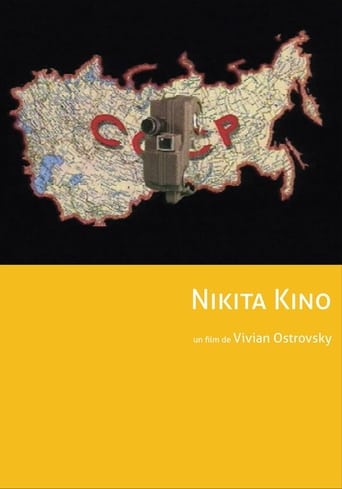 Nikita Kino · 2003
Nikita Kino
★ 7.02003
Movie
"The film is a travelogue of sorts. In 1960 my family lived in Brazil when my father discovered his sister and brother in Moscow, who he hadn't seen for 40 years, were still alive. Since they couldn't leave the USSR we went to visit them regularly for about 15 years. At the time I had my 8mm then a super 8 camera with which I filmed the family, our outings, picnics, markets and their homes… I decided to use this material, which was not very interesting per se, by mixing it with Soviet found-footage of the same period (1960's, 1970's, 1980's). I used feature films, propaganda footage, newsreels, etc. The result is a kind of Khruschev-era mix with a collage of Soviet music and a voice-over of my memories of the Cold War period."
 Des rives · 1998
Des rives
1998
Movie
Experimental short film
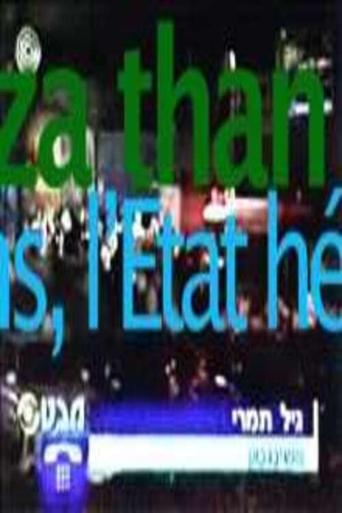 WARONGAZA · 2009
WARONGAZA
2009
Movie
In December 2008, before the new elected President of United States become the President, Israel lauches an attack over Gaza, under the pretext of rockets fallen on its territory. This cease-fire rupture answered an attack of Israel which had killed six combatants on November 4th 2008. One cannot thus speak about self defence as Israel prevailed itself about it, but well rather of a war against Gaza. Like Richard Falk says it: “This approach aiming at punishing Gaza was intrinsically criminal: it violates laws of the war and led to crimes against humanity." The film works several types of images and sounds to recover on Internet by confronting them with some tapes of texts.
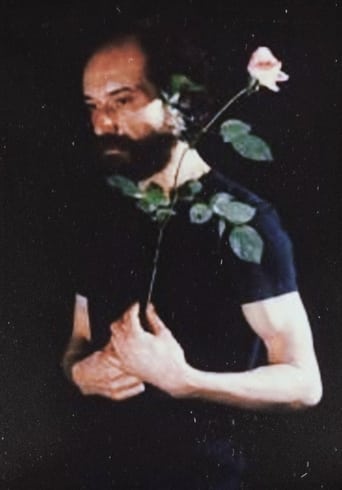 Portraits / Mirrors · 1984
Portraits / Mirrors
1984
Movie
A single-screen version of the Portraits / Mirrors multi-projection. Featuring portraits of: Aloual, Gaël Badaud, Raphaël Bassan, Yann Beauvais, Jean-Michel Bouhours, Gérard Courant, Berndt Deprez, Bertrand Gadenne, Mythia Kolésar, Christian Lebrat, Stéphane Marti, Pascal Martin, Michel Nedjar, Dominique Noguez, Vivian Ostrovsky, Bernard Roué, Martine Rousset, Alain Sayag, Unglee, and Catherine Zbinden.
 , d’ailleurs · 2006
, d’ailleurs
2006
Movie
Study of the Mont Sainte Victoire.
 DKR 4395 · 2023
DKR 4395
2023
Movie
Result of a slow decomposition of 16mm prints of QUATR'UN in Recife. One set was scanned frame by frame and cropped to include the perforations. Dissolution of the frame and mimetic representation in time.
 VO/ID · 1986
VO/ID
1986
Movie
VO/ID juxtaposes two separate texts, one in French and the other in English. The texts question art and experimental cinema, the role of the market in shaping aesthetic criteria, and current politics... In each of the texts, words common to the other language appear, creating an indeterminacy of the word to this or that speech. This indeterminacy is increased by the many word games created between the two languages. This results in a double reading: vertical and horizontal, favoured by the word for word. The exposure time of each word depends on the rhythmic of each language, but their appearance in white or black is not subject to it. Faced with these texts, two sounds intervene and otherwise disturb the concentration required by the projected texts. The horizontal reading of both speeches is often in clear contradiction with their meaning. This third visual discourse is playful, brittle, mocking the seriousness of the discourse(s).
Filmography
Sort
 Spetsai · 1989
Spetsai
1989
Movie
Director