Directing

HHK Schoenherr

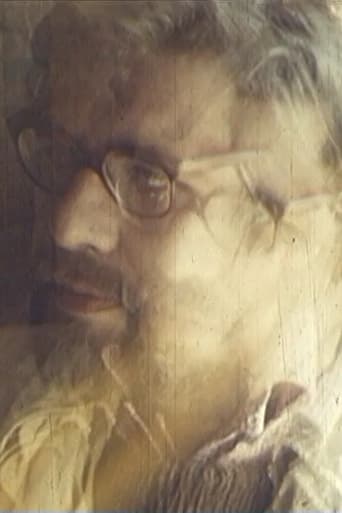
HHK Schoenherr (Hans Helmut Klaus Schoenherr, 1936 - 2014), Swiss artist. He was born in 1936 in Nordhausen (Harz, Germany), which would later be part of the GDR. He spent his childhood in Hamburg and the Schleswig-Holstein region. Between 1956 and 1961, he studied fine arts in Hamburg. In 1967, he participated in the experimental film festival of Knokke (Belgium). Initiator and co-founder of the …

Known For
Filmography

Sort
The Portrait of CorduaThe Portrait of Cordua · 1969
The Portrait of Cordua
1969
Movie
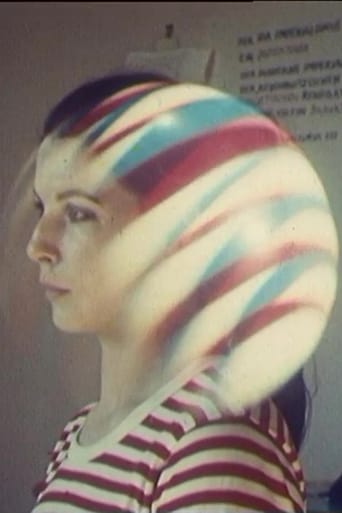
"Location: a ballet company, Mrs. Cordua training alone, training together with another person, head exercises, body exercises, leg and arm exercises, supporting herself, working in the ballet room, taking off her makeup in the dressing room, undressing, washing herself carefully, treating all of the sweaty places of her body (armpits, anus, genitalia), getting dressed, opera house corridors, canteen, driving through the city, typical buildings, shops, factory complexes on the way; apartment—opera house and back, her husband reading the newspaper, sitting, lying down, working, smoking, cooking potatoes, eating potatoes, opening the mail, drinking coffee, filming, caring for feat, mouth, while saying something amusing, hand movement (beheading gesture meaning it is finished), a TV film, dancer relaxing in private, smoking, discussing, disparaging, a TV film, drinking tea, the end: that certain shine in Mrs. Cordua's eyes!" (HHK)

Director

The Wrecked CinemaThe Wrecked Cinema · 1971
The Wrecked Cinema
1971
Movie
"In Germany, I bought an old 35mm Debrie camera. I spent several weeks working with this camera and found that its mechanics were marvelously thought out and that the way the camera was made was proof of the skilled craftsmanship back then. I developed a procedure which also allowed me to use the camera as a printing machine. The printing process is not so different from the filming process, as far as the transport of the film goes . . . It was a lot of fun to try to exhaust the possibilities of the Debrie. It was not only the mechanics that were exciting, like the works of a wonderful old clock, but the numerous possibilities for the realization of the second part of the film, too. This consists mainly of what has already been shot, but offers at least 50% more experimental manipulations in the printed part." (HHK)

Director

Play 4 & 5Play 4 & 5 · 1969
Play 4 & 5
1969
Movie
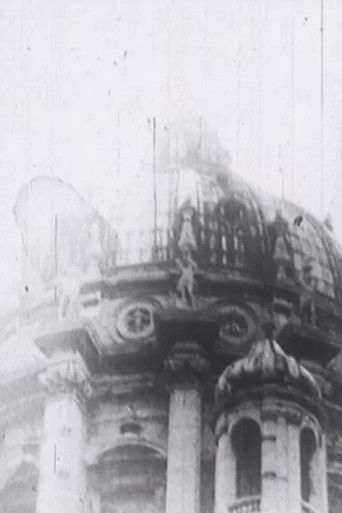
The first film made in black-and-white. Made using my own printing technique. Beforehand: This film, which is basically romantic or, even more, a fairy tale film, with carriages, horses, handmade glass lanterns, as solemn as a merry wedding, with an old Rolls Royce standing at a slant completely drunk and whose magnificent big headlights sit crooked on its fenders. An atmosphere of dancing around and returning and light, lamps and life. A film that even takes its audience to Paris, past the Louvre and into the nights of the boulevards; again and again, light, lamps and life. The film is light-hearted: the sonorous tone indicates a change, difficult to under-stand, a threat or do I hear right? Again and again, the streets, the domes of the churches, the palace wings of the Louvre, the National Library and the small opening in the wall at the Palace Mazarin which leads to the small park with its Picasso statue. What happens in Paris?

Director

The Old Woman's Face, The Soup Tureen, Vreni Keller Speaks and Madame's FannyThe Old Woman's Face, The Soup Tureen, Vreni Keller Speaks and Madame's Fanny · 1967
The Old Woman's Face, The Soup Tureen, Vreni Keller Speaks and Madame's Fanny
1967
Movie
"I did the takes for this film in the fall of 1966 and in the summer of 1967. I came to know and love the 'old woman' who gave her 'face' in one of the city-run dining halls in Zurich to the first part of the film. I was looking for poets for the film 'Robert Walser' and was hoping to find one in one of the places Robert Walser used to go to decades before, but it proved to be a complete failure. The woman who gave her 'face' attracted my attention because she bad something radiant about her and, despite her advanced age, still had a roguish way of looking at the world. She must have seen me several times before during test takes, because she told me later that she had seen me getting thrown out ('Filming not permitted') and that this had happened at another city-run dining hall. Because the woman appealed to me so much, I asked her on the spur of the moment if she would be willing to let herself be filmed, even though I did not actually know what I wanted to film." (HHK)

Director