Directing
Zhang Mengqi
Born January 1, 1987 · Hubei, China (age 39)
Zhang Mengqi was born in 1987. Lives in Beijing and Diaoyutai Village(Hubei) She graduated from the Dance Academy of Minzu University of China in 2008. Since 2009, she has been a resident filmmaker and choreographer at Caochangdi Workstation in Beijing. In 2010 she participated in The Folk Memory Project. Since 2010, Mengqi has made nine feature-length documentaries filmed in her father’s village…
Known For
 Action 2024 · 2025
Action 2024
2025
Movie
“Action 2024” is a snapshot of independent filmmaker Wu Wenguang's experiences during the year 2024, which he spent in a village called Shijiawan growing rice, corn, and vegetables, and raising chickens, ducks, and geese. What sets this work apart from Wu's previous films is that it was not conceived as a project first, leading to a film; instead, it emerged organically from the filmmaker's life working in the village—farming and raising poultry—during which time he had attached to his body a miniature camera. This process prioritized living and farming first, followed by documentation, and ultimately resulted in an 18-hour film which follows the chronological order of occurrences and documentation, and is structured into five chapters: “June,” “July,” “August,” “September,” and “October.” Screened online over 5 consecutive Fridays from January 31 to February 28, 2025.
 Autobiography: Pass Through · 2017
Autobiography: Pass Through
2017
MovieDocumentary
The first part of Wu Wenguang's Autobiography film series.
 Because of Hunger: Diary 1 by Wu · 2013
Because of Hunger: Diary 1 by Wu
2013
MovieDocumentary
The film is about the first two years in the Memory Project. All images was from my angle with my camera.
 Self-Portrait: Dying at 47 KM · 2015
Self-Portrait: Dying at 47 KM
★ 10.02015
Movie
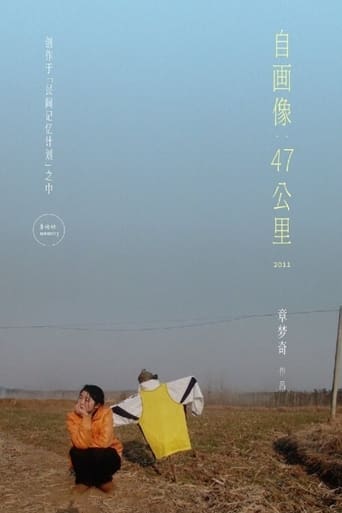
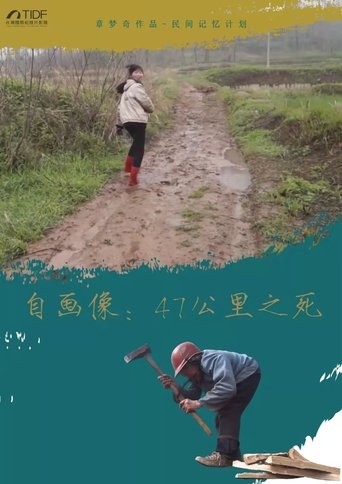
This village is located 47 KM from Suizhou, Hubei Province. Her grandfather passed away, and what does the village mean to her without him? She started to search for stories about death in the village: some are of unnatural causes, some are bizarre, and some are results of hatred. In the daily life accompanied by so many deaths, how should she understand death?
 Self-Portrait: 47 KM 2020 · 2023
Self-Portrait: 47 KM 2020
★ 8.02023
MovieDocumentary
As coronavirus begins to sweep the globe, Zhang returns to her father’s village with her camera, seeking to understand where the extraordinary phenomenon might sit in the grand palimpsest of China’s history. As with all of Zhang’s work, this is a committed, reflective, formally assured non-fiction film, grounded in collaboration and blessed with an uncanny sense of unhurried time.
 Self-Portrait with Three Women · 2010
Self-Portrait with Three Women
★ 7.02010
MovieDocumentary
The 23-year-old director, fresh out of university, lives at home with her mother and grandmother. She rebels against them but also tries to understand the generation gap between them. While she gets angry and questions their expectations of her as a woman (i.e., to marry and have children), she also gropes for the meaning of real love. Along with her mother and grandmother, the three women wring out their loves and hates with explosive strength. The director in her performance piece uses her own body to project the images of her mother, turning her lost loves into springboards, practically jumping out of the screen so she can shout with all her might.
 Self-Portrait: Sphinx in 47 Km · 2018
Self-Portrait: Sphinx in 47 Km
★ 7.02018
MovieDocumentary
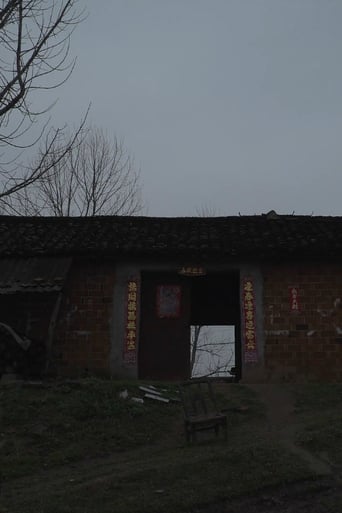
In the Chinese countryside, an old woman tells the story of her deceased son, while a little girl paints her dreams on the walls of the house. A personal and attentive perspective on the territory, which articulates the memory of a disappearing generation and the hopes of the one to come.
 Self Portrait: Birth in 47 KM · 2016
Self Portrait: Birth in 47 KM
2016
MovieDocumentary
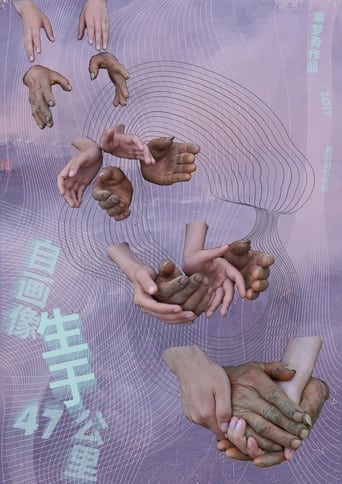
Between 1959 and 1961, more than 35 million people starved to death because of Mao’s Great Leap Forward policies. To avoid censorship in China, this painful period is now euphemistically referred to as the “Three Years of Natural Disasters.” This courageous oral history, directed by Zhang Mengqi, tells the story from the point of view of her grandfather’s village, to which she returns every winter to interview survivors. Central is moving voice-overs from a grandmother who details harrowing pregnancies and lonely births during the Great Famine and her granddaughter, a migrant worker. In this agricultural village, the landscape is stark yet beautiful with plenty of room for contemplation. When a hand appears in front of the camera, Zhang transitions into a delightfully playful territory, incorporating a uniquely participatory experience that extends beyond the screen.
Filmography
Sort