Acting
Valeri Tsvetkov
Born November 3, 1941 · Shatura, RSFSR, USSR (age 84)
No biography available.
Known For
 Stalingrad: Film 1 · 1990
Stalingrad: Film 1
★ 5.91990
MovieWarHistory
In January 1942, Adolf Hitler appoints Fedor von Bock to command Army Group South and supervise Operation Blau. The German forces advance in the south of Russia, scattering the Soviets and approaching Stalingrad, that seems on the verge of falling to the enemy's hands. The movie ends with Vasily Chuikov assuming command of the 62nd Army at September.
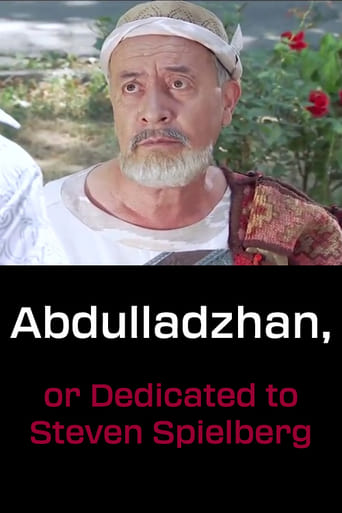 Abdulladzhan, or Dedicated to Steven Spielberg · 1992
Abdulladzhan, or Dedicated to Steven Spielberg
★ 6.11992
MovieComedyScience Fiction
Considering that Musakov’s Abdulladzhan (1991) was dedicated to Steven Spielberg, we might suggest that these four boys embody nothing more complicated than a conflict of youthful innocence with some ominous threat—the basic workings of E.T. (1982) or War of the Worlds (2005), say. That threat, however, is best understood not through vague nationalism or warmed-over socialism, but through the other reference-point of Abdulladzhan—Tarkovskii’s Stalker (1980). Musakov leaves his boys in a simplified radiance so bright and so overexposed that it no longer looks like the skies of sunny Tashkent, but a disturbing, borderless luminosity to match the flat tonal range of Stalker’s “Zone.” Our Uzbek boys are nowhere in particular; this is a broader domain than anything international.
 Attack · 1986
Attack
★ 7.01986
MovieRomance
Young lieutenant arrives to tank regiment stationed in the Central Asia. He uses unusual for Soviet Army methods to train his soldiers. It predictably leads to tensions with superiors and subordinates. However later it pays back during live exercises.
 Commander's Day · 1983
Commander's Day
★ 6.51983
MovieWarDrama
One day in a life of a general during the fights of 1941...
 Love and Fury · 1978
Love and Fury
★ 9.21978
MovieWarAdventure
At the beginning of the First World War, Alexander Dragovich went to the front as a teenager. The October Revolution caught the hero in captivity in Russia. Like many of his countrymen, Alexander defected to the revolution. After becoming a chekist, Dragovich was sent to Turkestan. The film tells about the heroic struggle of a special purpose unit with gangs of Basmachi, spies of various stripes and saboteurs, about the adventures of the anarchist Kolya and the tragic love of Mushtari and Dragovich.
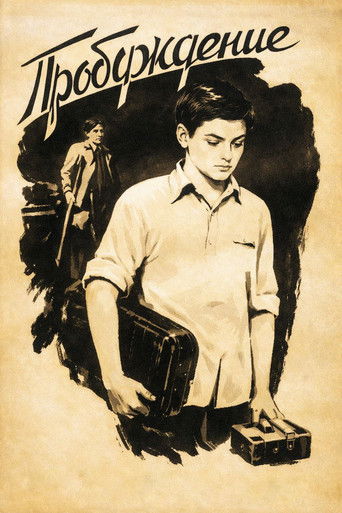 Awakening · 1983
Awakening
★ 10.01983
MovieHistory
Reconstructed from archival documents and historical studies, a chronicle of the 1916 popular uprising in the Hungry Steppe and the Jizzakh Steppe.
 The Unexpected is Near · 1971
The Unexpected is Near
1971
MovieMysteryCrime
Crowded alleys of the evening park, music, laughter, festive fireworks. And the two are talking about murder or suicide, about the syringe found in the dead woman's hands, about the time when death occurred. These two are employees of the criminal investigation department. They will have to find criminals in a large, busy business city who stole, cheated, and, if necessary, did not stop at murder, removing unintended witnesses or unreliable accomplices from their path.
 Zero Option · 1992
Zero Option
1992
MovieAction
Police Major Golidze alone confronts a gang of gangsters, led by the notorious criminal Bagirov.
Filmography
Sort
Attack · 1986Attack
★ 7.01986
MovieRomance
Young lieutenant arrives to tank regiment stationed in the Central Asia. He uses unusual for Soviet Army methods to train his soldiers. It predictably leads to tensions with superiors and subordinates. However later it pays back during live exercises.
general-polkovnik, komanduyushchiy okrugom
Zero Option · 1992Zero Option
1992
MovieAction
Police Major Golidze alone confronts a gang of gangsters, led by the notorious criminal Bagirov.
начальник отдела, полковник милиции