Directing
Stefano Miraglia
Born January 9, 1988 · Málaga, Spain (age 38)
Stefano Miraglia (Málaga, 1988) is a visual artist, filmmaker, independent curator, and film programmer based in Paris. Informed by collage and noise music, his films and installations explore the connections between artistic creation, personal memory, and the perception of space, combining documentary materials with abstract approaches. His work has been shown in exhibition spaces and film instit…
Known For
 Screen Glare · 2021
Screen Glare
★ 10.02021
Movie
A text, some images, and an unstable arrangement of durations to which one can devote a fluctuating form of attention.
 Double Around the Interlude · 2022
Double Around the Interlude
★ 10.02022
MovieDocumentary
A flock of memories activated by various musical exercises, to strike the past to the heart, to build something utopian: the future, a sonic architecture. Music as a tool, transcriptions of YouTube tutorials as poetry, percussion exercises as descriptions of reality.
 Thick Air · 2020
Thick Air
★ 6.82020
MovieDocumentaryMusic
An experimental music ensemble is recording an album. They want a very specific sound: the sound of thick air. The sound engineer struggles to understand and to find that sound. A tale of sleepless nights and loud music, a noise-injected collage composed of diaristic footage, a found narrative (memories of a popular 60s band), original music and field recordings.
 Brutalism · 2014
Brutalism
2014
MovieAnimationFantasy
Black giants break classical architecture and rebuild them into Brutalistic structure.
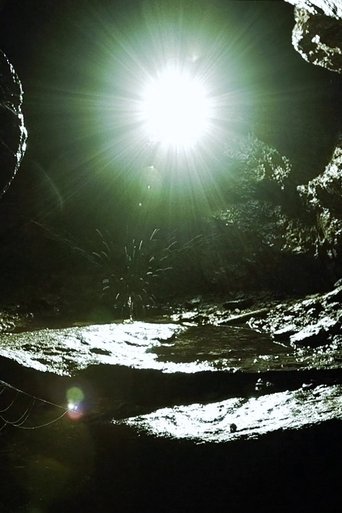 Grotta · 2023
Grotta
★ 10.02023
MovieDocumentary
In 1907 Herman Hesse spent a few days mediating and fasting in a cave near Monte Verità. During these days he collected the visions and insights that went on to be very influential in his thinking and shaped some of the most important works of his literary career. The images and sounds of this film were shot there and are a homage to this cave and its possible invocations. Grotta is part of Fieldworks, an ongoing experiment with ambient video and radio frequencies.
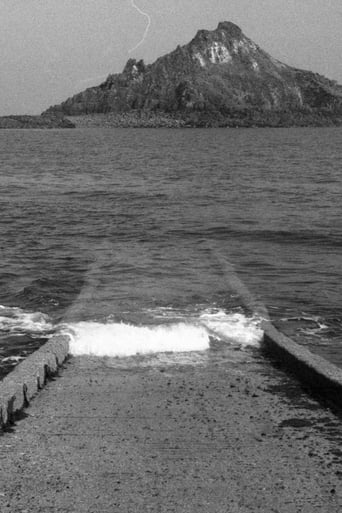 Collage · 2021
Collage
★ 10.02021
MovieDocumentary
Considerations on collage as a cognitive act in artists’ cinema. A pedagogical film adrift: 35mm photographs and other materials collected over the last fifteen years by artist Stefano Miraglia meet a text written by Baptiste Jopeck and the voice of Margaux Guillemard.
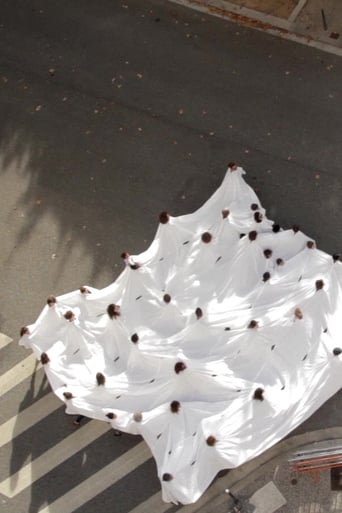 DIVISOR / VILLEURBANNE · 2014
DIVISOR / VILLEURBANNE
★ 10.02014
MovieDocumentary
Documentation of Lygia Pape’s 1968 performance Divisor - reactivated in the city of Villeurbanne (France) in October 2014. Commissioned by Institut d'Art Contemporain de Villeurbanne / Rhône-Alpes.
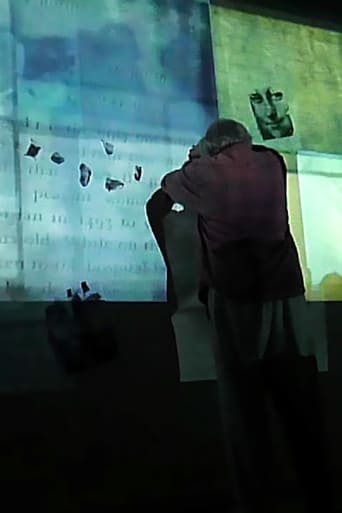 Eighteen fragments from Malcolm Le Grice’s After Leonardo · 2016
Eighteen fragments from Malcolm Le Grice’s After Leonardo
★ 10.02016
MovieDocumentary
"This installation or performance work puts my own earlier film of the Mona Lisa (1973) through another stage of transformation – my own irretrievable self of some 34 years ago is now also part of the subject I first saw the ‘actual’ ‘Mona Lisa’ when I was about thirteen. Of course I had seen dozens of reproductions in books and postcards by then and the popular mythology of the enigmatic smile was already well engrained in my mind. My strongest impression, as I recall, was how small and unsurprising it was – a heavily protected cultural icon – no longer really a picture – and I was much more excited by the painting of the distant landscape than by the face. My own ‘version’ of ‘la Giaconda’ was never an homage, nor like Marcel Duchamp’s ‘L.H.O.O.Q’, an attack on its cultural power. Instead it came from a fascination with change and transformation – maybe also with arbitrary appropriation." Malcolm Le Grice
Filmography
Sort