
Camera
Mark Troyanovsky
Born December 19, 1907 · Saint Petersburg, Russian Empire (Russia)
Died October 22, 1967 · aged 59
No biography available.
Known For
 Sakhalin Island · 1955
Sakhalin Island
1955
MovieDocumentary
 Two Oceans · 1933
Two Oceans
1933
MovieDocumentary
A documentary film about how soviet polar explorers made world's first successful crossing of the Northern Sea Route in one navigation without wintering. The film was shot at the Mezhrabpomfilm studio in 1933.
 Cheliuskin. Arctic Heroes · 1934
Cheliuskin. Arctic Heroes
★ 10.01934
MovieDocumentary
 Caucasus · 1944
Caucasus
1944
MovieDocumentaryHistory
The Battle for the Caucasus in 1942-1943 was one of the turning points in the entire Great Patriotic War.
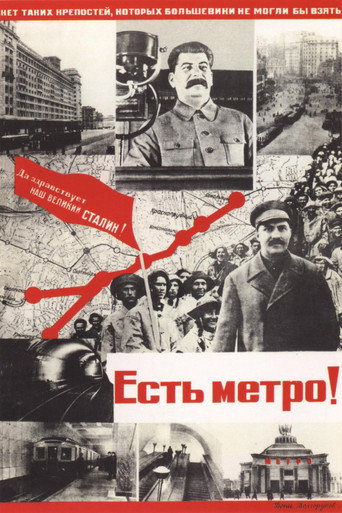 There is the Metro! · 1935
There is the Metro!
1935
MovieDocumentary
Early documentary about the Moscow metro: the early project, the development and the people working on it.
 Our Cinema · 1940
Our Cinema
★ 9.01940
MovieDocumentary
 Film Documents of the Atrocities of the German Fascist Invaders · 1946
Film Documents of the Atrocities of the German Fascist Invaders
1946
MovieDocumentary
This Soviet-made film was screened on February 19, 1946 on the 62nd day of the Nuremberg Trial and submitted as evidence relevant to the indictment for "crimes against humanity." The one-hour film with voiceover commentary shows visual evidence of the extermination camps of Auschwitz and Majdanek and appeals to spectators' emotions by emphasizing individual victims. The central argument of the film is that the Germans were the executioners of peaceful Soviet citizens. At the time, it made a very strong impression on both the accused and press. The film is a re-edited compilation of footage collected by the Soviet film team over four years (primarily used for propagandistic ends in wartime Soviet newsreels and documentaries). It was prepared in emergency by the Soviet prosecution team and minister of cinema following the projection of Nazi Concentration Camps presented by the Americans on November 29, 1945.
 Verdict of the People · 1943
Verdict of the People
1943
MovieDocumentary
Filmography
Sort
Cheliuskin. Arctic Heroes · 1934Cheliuskin. Arctic Heroes
★ 10.01934
MovieDocumentary
Director of Photography
Our Cinema · 1940Our Cinema
★ 9.01940
MovieDocumentary
Director of Photography
 The Incident At The Stadium · 1928
The Incident At The Stadium
★ 10.01928
MovieDocumentaryComedy
The Adventures of Bratishkin at the Moscow Sports Festival.
Director of Photography
 Papanin Squad · 1938
Papanin Squad
★ 8.01938
MovieDocumentary
About how the operation to rescue the members of the expedition 'North Pole-1' under the leadership of Ivan Papanin took place.
Director of Photography

