Acting

Francis Francine

Frank di Giovanni, elevator operator, was the first of the Andy Warhol transvestite superstars. Francine had been intended as the star of Flaming Creatures, 1962, but disappeared partway through filming, leaving Mario Montez the throne. He was given star treatment in the Andy Warhol/Paul Morrissey film Lonesome Cowboys, 1968, as a the transvestite sheriff. The camera lingers as he puts on drag a…

Known For
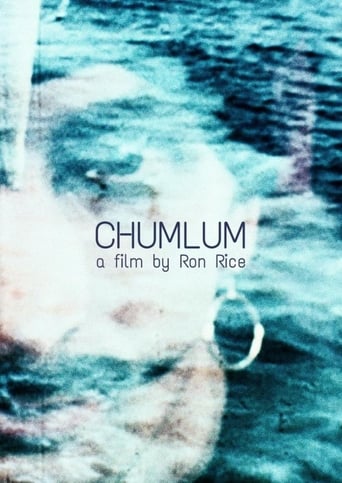
ChumlumChumlum · 1963
Chumlum
6.11963
Movie
Ron Rice's Chumlum is one of those films in which the conditions of its construction are integral to the experience of watching it. It is a record of a cadre of creative people having fun on camera, playing dress-up, dancing, flirting, lazing around.
Lonesome CowboysLonesome Cowboys · 1968
Lonesome Cowboys
5.01968
MovieWesternComedy
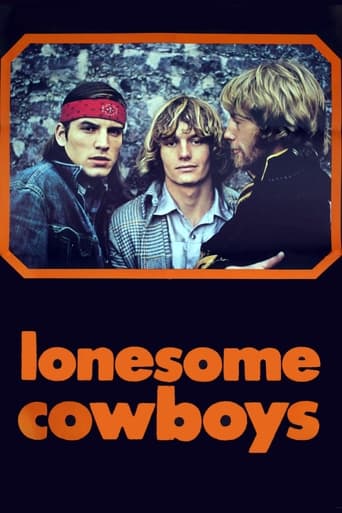
Five lonesome cowboys get all hot and bothered at home on the range after confronting Ramona Alvarez and her nurse.
Flaming CreaturesFlaming Creatures · 1963
Flaming Creatures
4.71963
MovieComedyHorror
Filmmaker and artist Jack Smith described his own film as a “comedy set in a haunted movie studio.” Flaming Creatures begins humorously enough with several men and women, mostly of indeterminate gender, vamping it up in front of the camera and participating in a mock advertisement for an indelible, heart-shaped brand of lipstick. However, things take a dark, nightmarish turn when a transvestite chases, catches and begins molesting a woman. Soon, all of the titular “creatures” participate in a (mostly clothed) orgy that causes a massive earthquake. After the creatures are killed in the resulting chaos, a vampire dressed like an old Hollywood starlet rises from her coffin to resurrect the dead. All ends happily enough when the now undead creatures dance with each other, even though another orgy and earthquake loom over the end title card.
No PresidentNo President · 1969
No President
5.01969
MovieDocumentaryDrama
Smith's third feature film was originally titled "The Kidnapping of Wendell Willkie by the Love Bandit," in reaction to the 1968 Presidential Campaign. It mixes B&W footage of Smith's creatures with old campaign footage of Willkie, a liberal Republican who ran against FDR in the 1940's. The climax of the work appears to be the "auctioning" of the presidential candidate at a convention.
Normal LoveNormal Love · 1965
Normal Love
7.21965
Movie
A follow-up to now legendary film Flaming Creatures. This vivid, full-color homage to B-movies is a dizzying display of camp that clearly affirms Smith’s role as the driving force behind underground cinema and performance art of the post-war era. The director was known to constantly re-edit the film, often during screenings as it was still unspooling from the projector.
Escape From Rented Island: The Lost Paradise of Jack SmithEscape From Rented Island: The Lost Paradise of Jack Smith · 2017
Escape From Rented Island: The Lost Paradise of Jack Smith
2017
MovieDocumentary
In his essay film, Jerry Tartaglia, longtime archivist and restorer of the film estate of queer New York underground, experimental film, and performance legend Jack Smith, deals less with Smith’s life than with his work, analyzing Smith’s aesthetic idiosyncrasies in 21 thematic chapters. It's a film essay about the artist’s work, rather than a documentary about his life. An unmediated vision of Jack Smith, an invitation to join him in his lost paradise.

Movies

ChumlumChumlum · 1963
Chumlum
6.11963
Movie
Ron Rice's Chumlum is one of those films in which the conditions of its construction are integral to the experience of watching it. It is a record of a cadre of creative people having fun on camera, playing dress-up, dancing, flirting, lazing around.
Lonesome CowboysLonesome Cowboys · 1968
Lonesome Cowboys
5.01968
MovieWesternComedy
Five lonesome cowboys get all hot and bothered at home on the range after confronting Ramona Alvarez and her nurse.
Flaming CreaturesFlaming Creatures · 1963
Flaming Creatures
4.71963
MovieComedyHorror
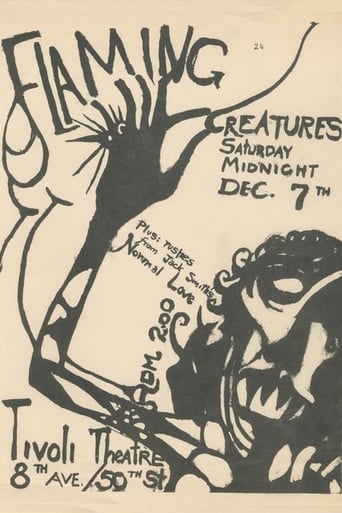
Filmmaker and artist Jack Smith described his own film as a “comedy set in a haunted movie studio.” Flaming Creatures begins humorously enough with several men and women, mostly of indeterminate gender, vamping it up in front of the camera and participating in a mock advertisement for an indelible, heart-shaped brand of lipstick. However, things take a dark, nightmarish turn when a transvestite chases, catches and begins molesting a woman. Soon, all of the titular “creatures” participate in a (mostly clothed) orgy that causes a massive earthquake. After the creatures are killed in the resulting chaos, a vampire dressed like an old Hollywood starlet rises from her coffin to resurrect the dead. All ends happily enough when the now undead creatures dance with each other, even though another orgy and earthquake loom over the end title card.
No PresidentNo President · 1969
No President
5.01969
MovieDocumentaryDrama
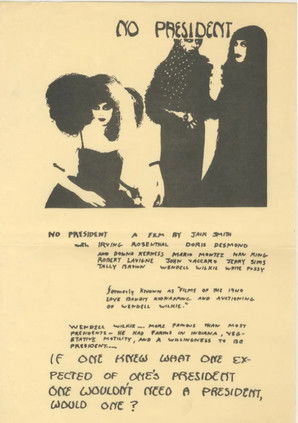
Smith's third feature film was originally titled "The Kidnapping of Wendell Willkie by the Love Bandit," in reaction to the 1968 Presidential Campaign. It mixes B&W footage of Smith's creatures with old campaign footage of Willkie, a liberal Republican who ran against FDR in the 1940's. The climax of the work appears to be the "auctioning" of the presidential candidate at a convention.
Normal LoveNormal Love · 1965
Normal Love
7.21965
Movie
A follow-up to now legendary film Flaming Creatures. This vivid, full-color homage to B-movies is a dizzying display of camp that clearly affirms Smith’s role as the driving force behind underground cinema and performance art of the post-war era. The director was known to constantly re-edit the film, often during screenings as it was still unspooling from the projector.
Escape From Rented Island: The Lost Paradise of Jack SmithEscape From Rented Island: The Lost Paradise of Jack Smith · 2017
Escape From Rented Island: The Lost Paradise of Jack Smith
2017
MovieDocumentary
In his essay film, Jerry Tartaglia, longtime archivist and restorer of the film estate of queer New York underground, experimental film, and performance legend Jack Smith, deals less with Smith’s life than with his work, analyzing Smith’s aesthetic idiosyncrasies in 21 thematic chapters. It's a film essay about the artist’s work, rather than a documentary about his life. An unmediated vision of Jack Smith, an invitation to join him in his lost paradise.