R
Acting
Robert Rauschenberg
Born October 22, 1925 · Port Arthur, Texas, USA
Died May 12, 2008 · aged 82
Robert Milton Ernest Rauschenberg was an American artist.
Known For
 Art of the Sixties · 1967
Art of the Sixties
1967
MovieDocumentary
This film documents the major directions in modern American art during the first seven years of the 1960s. The keynote is that the artist has expanded his realm from the two-dimentional picture frame, climaxed by the artists of the 40s and early 50s, merged color with sculpture, and sought out modern media to express himself. This has produced the characteristic wide spectrum of interest, ideas, and products in contemporary art.
 Painters Painting · 1973
Painters Painting
★ 7.01973
MovieDocumentaryHistory
Painters Painting: The New York Art Scene 1940-1970 is a 1972 documentary directed by Emile de Antonio. It covers American art movements from abstract expressionism to pop art through conversations with artists in their studios. Artists appearing in the film include Willem de Kooning, Jasper Johns, Andy Warhol, Robert Rauschenberg, Helen Frankenthaler, Frank Stella, Barnett Newman, Hans Hofmann, Jules Olitski, Philip Pavia, Larry Poons, Robert Motherwell, and Kenneth Noland.
 The Fall · 1969
The Fall
★ 7.21969
MovieDocumentary
"The Fall" depicts certain scenes in New York City between October 1967 and March 1968, shot by the independent filmmaker, Peter Whitehead. It is a very personal documentary, and Whitehead appears in a large number of scenes, and we hear his lengthy ruminations on the state of the United States and the war in Vietnam.
 Steve Paxton: Physical Things · 2013
Steve Paxton: Physical Things
2013
Movie
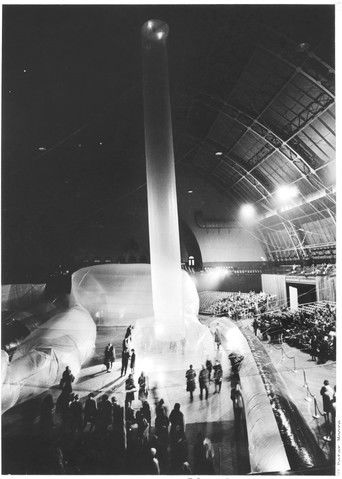
In Steve Paxton’s PHYSICAL THINGS, a polyethylene air-inflated structure occupied most of the Armory floor, with a tower rising to the peak of the Armory roof. The audience walked through the structure, encountering slide projections, sounds, and performers. Emerging from the structure, they used small receivers to hear different sounds broadcast from wire loops suspended in a net overhead, thus composing their own sound experience.
 Deborah Hay: Solo · 2012
Deborah Hay: Solo
2012
Movie
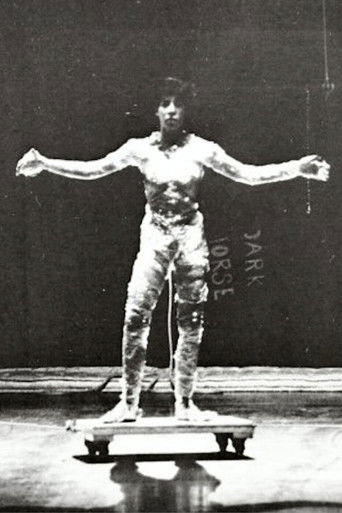
For Deborah Hay’s SOLO, Larry Heilos designed the control systems for eight radio-controlled carts that moved around the Armory floor, which were then covered with wooden boxes to make platforms for dancers to stand or lie on. At the rear of the space, eight formally dressed performers operated the radio-control system to move the platforms into and around the space. Composer Jim Tenney acted as the “conductor” of the “orchestra”. Sixteen dancers entered the brightly lit space either walking or riding on a cart. They then walked in solo, duet, or trio formations or rode on the moving platforms, following Hay’s specific rules and choreography. The sound for the performance was David Tudor’s realization of Toshi Ichiyanagi’s work FUNAKAKUSHI. [Overview courtesy of Anthology Film Archives]
 Lucinda Childs: Vehicle · 2012
Lucinda Childs: Vehicle
2012
Movie
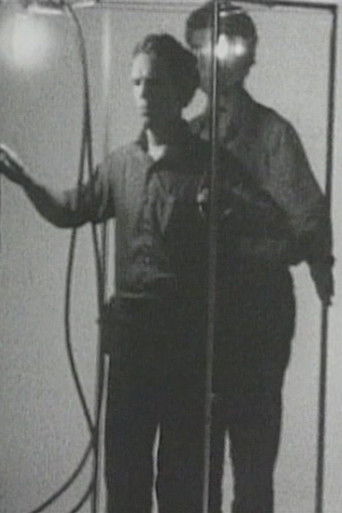
For Lucinda Child’s VEHICLE, Peter Hirsch designed a 70 kHz Doppler sonar system. Childs swung three red fireman’s buckets around inside the ultrasonic sound beams created by transmitters hung on scaffolding. As Childs swung the buckets, the reflected signals mixed with the original 70 kHz signal, and the resulting beat frequency fell in the audible range. These sounds were transmitted to the twelve speakers around the Armory. [Overview courtesy of Anthology Film Archives]
 Open Score · 1966
Open Score
1966
MovieDocumentary
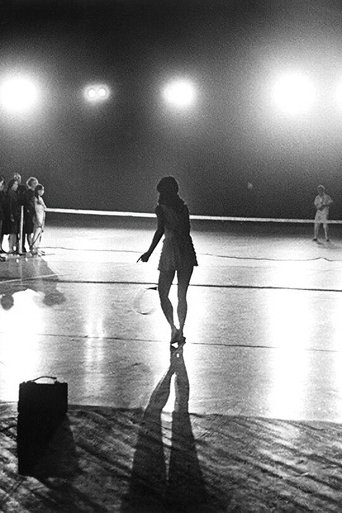
1966 experimental short work by Robert Rauschenberg
 Antic Meet · 1964
Antic Meet
1964
MovieDocumentaryMusic
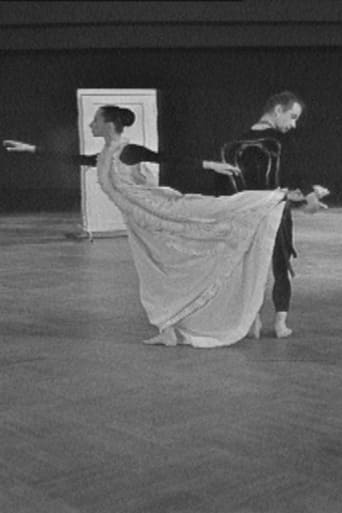
Performed like a series of vaudeville scenes that overlap, Antic Meet consists of ten playful and comedic numbers. The curtains opened with Cunningham moving among the other dancers as a clown-like figure "who falls in love with a society whose rules he doesn't know," and concludes much in the same way, as he attempts to keep up with the dancers, each with their own movements, as they dance diagonally across the stage. Cage provided the musical accompaniment, using a version of Concert for Piano and Orchestra, and Rauschenberg designed the costumes, which included fur coats and parachute dresses over black leotards.