I
Writing
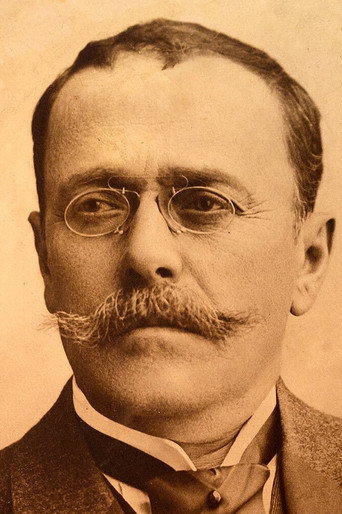
Ion Luca Caragiale
Born January 30, 1852
Died June 9, 1912 · aged 60
No biography available.
Known For
 The Sweet Bread of Exile · 2002
The Sweet Bread of Exile
2002
MovieDocumentary
A documentary about classic Romanian playwright Ion Luca Caragiale's time of exile in Berlin, Germany.
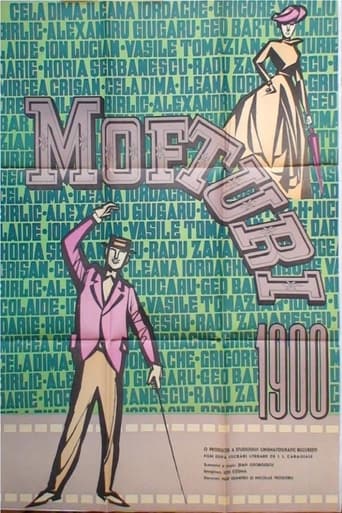 Mofturi 1900 · 1966
Mofturi 1900
★ 9.21966
MovieComedy
Mofturi 1900 is a 1964 Romanian comedic film directed by Jean Georgescu and based on Ion Luca Caragiale's many Moments and Sketches. The sketches used are "Diplomatie" ("Diplomacy"), "Amicii" ("Pals"), "O lacuna" ("A gap"), "Bubico", "C.F.R." (abbreviation of "Romanian Railways") and "Din statiune" ("From resort"). The film stars Grigore Vasiliu Birlic, Iurie Darie and Ion Dichiseanu; and features Ioana Bulcă, Alexandru Giugaru, Mircea Crisan, Geo Barton and others. Set at the beginning of the 20th century, the story revolves around two Mitică characters sitting at a cafe telling stories to each other.
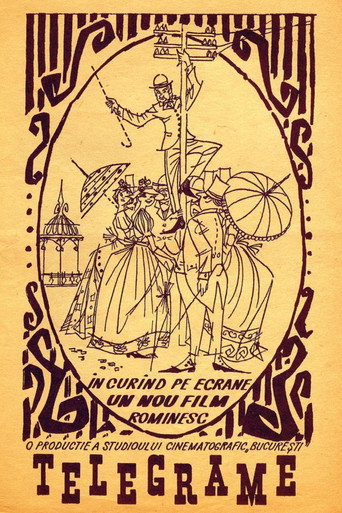 Telegrams · 1960
Telegrams
★ 7.71960
MovieComedy
Geared more for the home crowd with a good knowledge of their own history, this Romanian political comedy takes place at the turn of the 20th century, when two opposing factions are going at each other tooth and nail to win an election. One candidate is a staunch if not deluded conservative and the other is a radical liberal. Anticipating modern election campaigns by a good half a century, the two candidates decide that the best way to win is to sling as much mud as possible. Lacking the Internet and fifteen-second TV spots, they do the best they can -- they send each other virulent telegrams denouncing each other's personal failings.
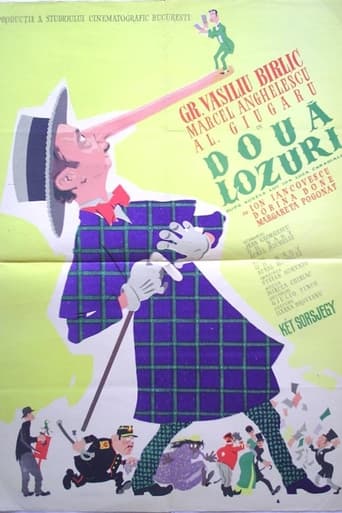 Two Lottery Tickets · 1959
Two Lottery Tickets
★ 8.11959
MovieComedyDrama
1957 film adaptation of Romanian playwright Ion Luca Caragiale's novella “Două loturi” (Two Lottery Tickets, 1901). The scenario was written by director Jean Georgescu, one of the most skilled Romanian filmmakers of the 1940s and 1950s, while the directing belongs to Aurel Miheleş and Gheorghe Naghi, at that time both recently graduated from the All-Union State Institute of Cinematography in Moscow. This is the second feature film in colour from Romania. Despite the great public success, the film was often criticized by reviewers, mostly for its unhandy directing from the two debutants. Miheleş and Naghi would however continue their collaboration and release another two Caragiale adaptations, of which “Telegrame” (Telegrams, 1959) was nominated for the Palme d'Or (Golden Palm) at the 1960 edition of the Cannes festival.
 Fürchte dich nicht, Jakob! · 1982
Fürchte dich nicht, Jakob!
★ 8.01982
MovieDrama
The village innkeeper Lejba Sibal and his pregnant wife Sura are threatened by Lejba's former farmhand Georg, who wants to kill them both at Easter. After Lejba has sought help from the authorities in vain, he decides to fight back himself.
 Romanian Farmer · 1952
Romanian Farmer
★ 6.51952
MovieComedyHistory
 Chain of Weakness · 1952
Chain of Weakness
★ 6.51952
MovieComedy
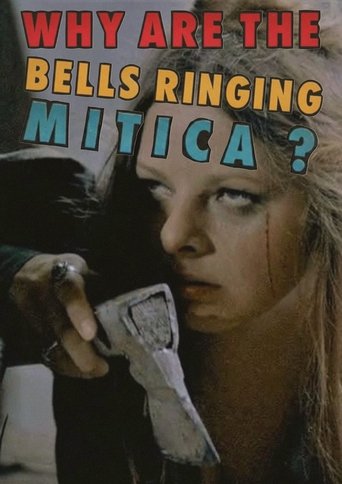 Why Are the Bells Ringing, Mitica? · 1981
Why Are the Bells Ringing, Mitica?
★ 6.61981
MovieComedyDrama
Based on a theatrical text by Romanian writer Ion Luca Caragiale (1852-1912), who was a bitter and funny witness of the turn-of-the-20th-century Romanian bourgeois mores, Carnival Scenes manages to preserve and further enhance the slightly hysteric atmosphere of his plays. Pintilie creates a strange combination of carnival scenes which is brought to the screen as a burlesque, fast-paced, screwball comedy with a meditative undertone. This film was banned in Romania for a decade until the death of Ceausescu in 1989 and was only released after the 1989 revolution.
Filmography
Sort